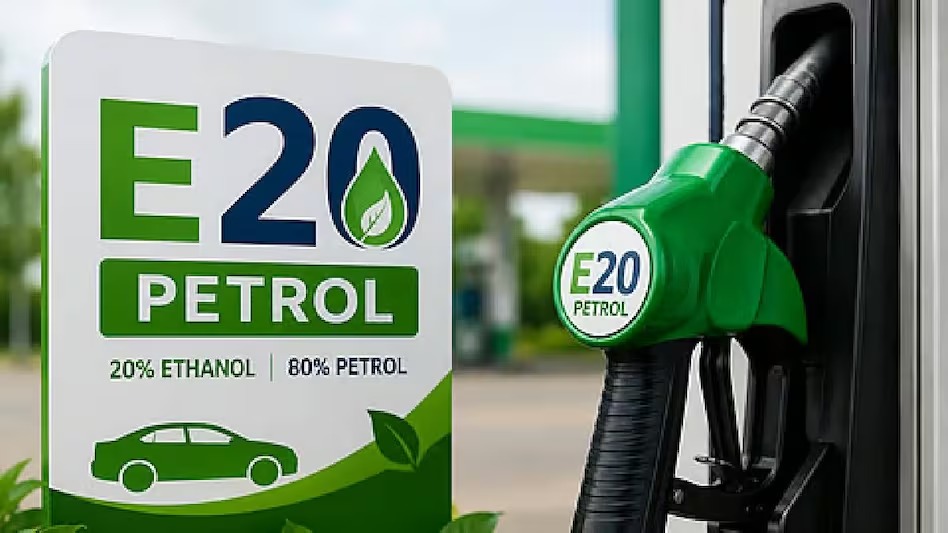
The Central Government confirmed in the Rajya Sabha that no decision has been taken to increase ethanol blending in petrol beyond the 20% (E20) threshold. Officials clarified that any future expansion will strictly follow technical evaluations, stakeholder consultations, and field assessments to safeguard automobile performance and food security.
NEW DELHI, India — The Union Government told Parliament that it has taken no decision to raise the mandatory ethanol blending limit in conventional petrol beyond 20% (E20). Responding to written queries in the Rajya Sabha on the opening day of the Monsoon Session, Minister of State for Petroleum and Natural Gas Suresh Gopi stated that any potential move toward higher blends would only proceed following exhaustive scientific evaluations and multi-stakeholder consultations.
The ministerial response directly addresses consumer and industry queries regarding whether national fuel mandates would exceed the current E20 standard following the Ministry's introduction of high-blend E85 fuel for specialized Flex-Fuel Vehicles (FFVs).
Technical Evaluations and Vehicle Compatibility Standards
In its submission to the Upper House, the Ministry detailed that current E20 rollouts meet standard operational criteria without widespread engine degradation across legacy or modern fleets. Government officials confirmed that any decision to alter base blending standards beyond 20% will require prior consultation with automobile manufacturers, Oil Marketing Companies (OMCs), and research bodies like the Automotive Research Association of India (ARAI).
The government noted that service center evaluations covering over 2.84 crore passenger vehicles and tens of millions of two-wheelers operating on E15 to E20 fuel yielded no substantiated or widespread complaints regarding fuel-pump failures, corrosion, or abnormal engine wear.
Food Security Safeguards and Environmental Regulations
Addressing parliamentary questions on agricultural resource allocation, the Ministry confirmed that the Ethanol Blended Petrol (EBP) Programme operates on an open-ended surplus procurement model. Allocations for the Public Distribution System (PDS), the National Food Security Act (NFSA), and strategic buffer stocks maintain statutory priority before surplus grains or sugar derivatives are diverted to distilleries.
To prevent ground-water depletion, the feedstock basket has shifted toward less water-intensive crops, with maize accounting for approximately 37% of the total ethanol supply in the current supply year. Furthermore, modern grain-based distilleries are mandated to operate as Zero Liquid Discharge (ZLD) units to recycle all process water.
Official Sources Section
Parliamentary submissions, policy updates, and legislative replies are published under statutory protocol by the Ministry of Petroleum and Natural Gas and archived by the Rajya Sabha Secretariat and the Press Information Bureau (PIB).
Quote Section
"According to officials in a written statement submitted to the Rajya Sabha, so far, no decision has been taken by the government for increasing ethanol blending with petrol beyond 20%, and any future decision regarding higher blends will be taken only after detailed scientific and technical studies."
Why It Matters
For Motorists & Vehicle Owners: Provides clarity that standard retail petrol will remain within the E20 blending limit, protecting legacy non-flex engine systems from uncertified higher alcohol blends.
For Automobile Manufacturers: Allows original equipment manufacturers (OEMs) to stabilize production lines around E20-compliant engines without immediate regulatory shifts toward higher base blends.
For Energy & Agriculture Sectors: Maintains long-term demand visibility for grain and sugarcane-derived ethanol while safeguarding national food crop reserves.
Key Facts at a Glance
Parliamentary Confirmation: No decision to raise base petrol ethanol blending past 20%.
Prerequisites for Change: Comprehensive scientific studies and consultations with automakers, OMCs, and research institutes required before any future shift.
Economic Benefits Delivered: Over ₹1.97 lakh crore saved in foreign exchange through crude import reduction since 2014–15.
Food Security Protocol: Only verified surplus grains and sugar are allocated after meeting all national food reserve requirements.
Frequently Asked Questions (FAQ)
Will normal petrol at pumps contain more than 20% ethanol?
No. The government confirmed in Parliament that base petrol sold across retail outlets will remain capped at 20% ethanol (E20), with no decision taken to increase this ratio.
What is the difference between E20 and E85 fuel?
E20 is standard petrol containing up to 20% ethanol meant for standard mass-market vehicles. E85 is a high-blend fuel (85% ethanol) available at designated outlets specifically for specialized Flex-Fuel Vehicles (FFVs) engineered to run on high alcohol ratios.
Does E20 fuel damage older vehicle engines?
Government data and manufacturer service records show no widespread evidence of engine failure or abnormal wear attributable to E20 fuel. Older engines designed for lower blends may experience a minor mileage variation of 3–5%, but operate safely under standard operating conditions.
Source: Written parliamentary reply by the Minister of State for Petroleum and Natural Gas submitted to the Rajya Sabha, official press documentation from the Press Information Bureau (PIB), and policy notifications issued by the Ministry of Petroleum and Natural Gas.