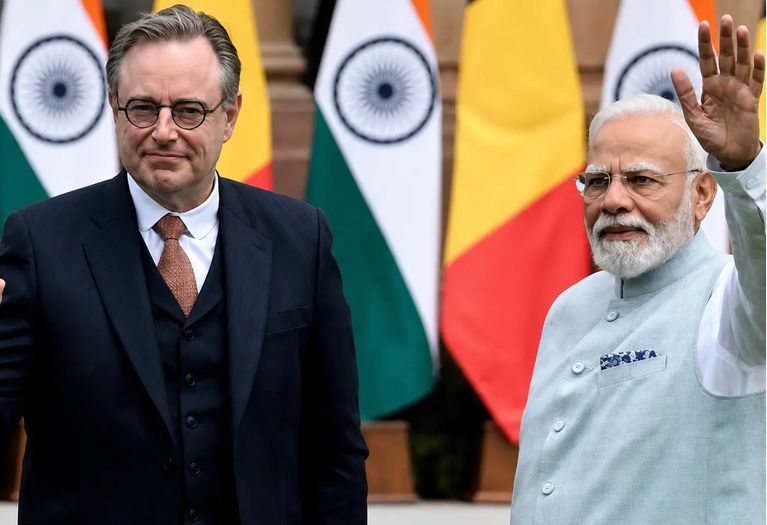
India and Belgium signed a strategic renewable energy cooperation MoU in New Delhi on September 3, 2026. Finalized during Belgian Prime Minister Bart De Wever's official visit, the accord targets green hydrogen, offshore wind, and critical mineral recycling, aiming to double bilateral trade while accelerating global decarbonization goals.
Backed by official government statements, New Delhi and Brussels have formalized a clean energy framework to accelerate global decarbonization and secure industrial supply chains.
Deepening bilateral ties beyond traditional commerce, India and Belgium officially signed a comprehensive memorandum of understanding (MoU) focused on renewable energy cooperation and clean technology. Finalized during Belgian Prime Minister Bart De Wever’s high-level state visit to New Delhi on Thursday, September 3, 2026, the accord targets vital sustainability sectors, including green hydrogen, offshore wind farms, advanced energy storage, and critical mineral recycling.
The agreement was announced following bilateral discussions between Prime Minister Narendra Modi and the visiting Belgian delegation, marking a strategic effort to align European green technology with India's surging domestic energy demands.
Evaluating Green Hydrogen, Critical Minerals, and Strategic Investments
Analyzing the core framework of the newly signed energy accord reveals targeted initiatives designed to bolster long-term energy security and industrial collaboration. According to official joint statements issued by the Ministry of External Affairs (MEA) and corporate trade bodies, key pillars of the agreement include:
Green Hydrogen Value Chain: The partnership expands joint ventures across production, transport, storage, and industrial applications, highlighted by large-scale projects such as electrolyzer manufacturing and green ammonia facilities in regions like Kakinada, Andhra Pradesh.
Critical Mineral Processing: Both governments committed to enhancing technological cooperation in the processing and recycling of critical minerals to secure resilient industrial supply chains.
Offshore Wind and Storage: The framework builds upon a decade of climate dialogue, incorporating pumped hydro systems, solar expansion, and offshore wind technology transfers.
Bilateral Trade Targets: Complementing the energy pact, both nations established a strategic objective to double bilateral trade volume over the next five years, backed by a newly established Investment Fast-Track Mechanism.
Why It Matters
The practical implications of the renewable energy pact affect international clean-tech transfer, industrial manufacturing supply chains, and long-term climate resilience for both nations. For Indian energy consumers and businesses, leveraging European technological expertise in green hydrogen and offshore wind accelerates the transition toward net-zero targets while stabilizing energy costs. For international investors, the structural alignment between Belgian green innovators and Indian industrial scale opens lucrative commercial pathways across renewable infrastructure sectors.
Key Facts at a Glance
Signing Date: September 3, 2026, during Belgian Prime Minister Bart De Wever's visit to New Delhi.
Core Sectors: Green hydrogen, offshore wind, energy storage, and critical mineral recycling.
Trade Objective: Bilateral trade volume targeted to double within the next five years.
Strategic Integration: Complemented by defense co-production initiatives and semiconductor research collaborations.
FAQ Section
What are the main objectives of the India-Belgium renewable energy MoU?
The agreement aims to accelerate decarbonization, facilitate clean-tech transfer, secure resilient supply chains, and expand joint initiatives in green hydrogen, offshore wind, and critical mineral recycling.
Who signed the bilateral agreements during the high-level visit to New Delhi?
The frameworks were finalized following diplomatic talks between Indian Prime Minister Narendra Modi and Belgian Prime Minister Bart De Wever.
How does the energy pact impact broader economic ties between India and Belgium?
Alongside the renewable energy accord, both countries established a joint target to double their annual bilateral trade volume over the next five years.
Where can official documents and joint statements regarding the bilateral visit be accessed?
Official communiques, trade metrics, and ministerial briefings are published regularly on the Ministry of External Affairs (MEA) Portal and the Embassy of India in Brussels Website.
Source: Ministry of External Affairs (MEA) India, LiveMint, The Economic Times, Embassy of India, Brussels