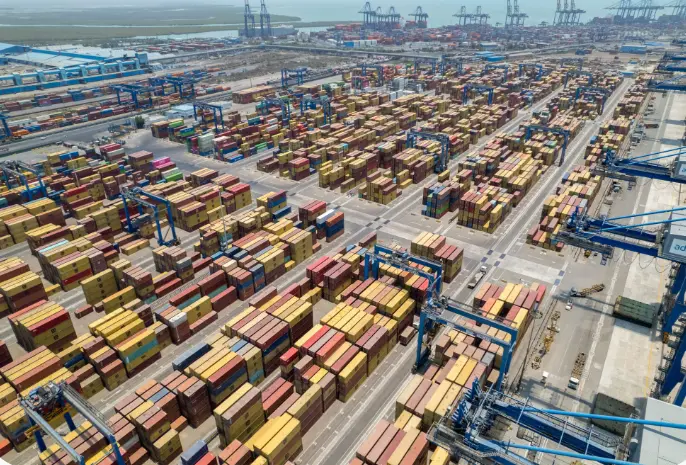
Union Minister Sarbananda Sonowal urged major Indian ports to fast-track green fuel readiness and zero-emission shipping corridors. During a review at TERI in New Delhi on September 3, 2026, Sonowal emphasized alternative marine fuels, shore power integration, and collaborative ecosystem efforts to position India as a global frontrunner in maritime decarbonization.
Backed by official ministerial disclosures, India is accelerating port infrastructure development to establish sustainable, zero-emission maritime trade routes.
Stepping up efforts to align the national maritime sector with global decarbonization timelines, Union Minister of Ports, Shipping and Waterways Sarbananda Sonowal urged key domestic ports to fast-track alternative fuel readiness and zero-emission shipping corridors. Speaking during a comprehensive review meeting held at The Energy and Resources Institute (TERI) campus in Gurugram on Thursday, September 3, 2026, Sonowal stressed that sustainable marine infrastructure is vital for India's long-term economic competitiveness.
The ministerial review brought together policy advisors, research partners, and administrative heads from major domestic ports to evaluate operational transitions toward green bunkering and low-carbon trade routes.
Evaluating Green Corridors, Bunkering Hubs, and Shore Power Integration
Analyzing the strategic roadmap presented during the ministerial review reveals targeted operational milestones across major Indian harbor authorities. According to official announcements from the Ministry of Ports, Shipping and Waterways (MoPSW), key updates include:
Green Fuel Bunkering Progress: Leadership teams from the Deendayal Port Authority, Paradip Port Authority, and V.O. Chidambaranar Port Authority detailed ongoing infrastructure upgrades to support alternative marine fuels such as e-methanol and green ammonia.
Shore Power Deployment: Kamarajar Port Limited reported that its coal handling terminals are fully equipped with shore power facilities, enabling berthed vessels to draw land-based electricity rather than running auxiliary onboard engines, significantly lowering dockside emissions.
Collaborative Research Frameworks: Discussions highlighted the operational mandate of the National Centre of Excellence for Green Ports and Shipping (NCoEGPS), alongside analytical contributions from organizations like the Rocky Mountain Institute (RMI) regarding low-emission corridor mapping.
Ecosystem Synergy: Ministry officials emphasized that achieving full maritime decarbonization requires tight coordination between federal agencies, specialized research institutions, and commercial shipping operators.
Why It Matters
The practical implications of establishing zero-emission shipping corridors affect international trade logistics, port operational costs, and global environmental compliance for cargo carriers. By mandating shore power and scaling green bunkering infrastructure across major hubs like Kandla, Paradip, and Tuticorin, India shields its export-import supply chains from impending international carbon tariffs. For commercial shipping lines, localized availability of green fuels ensures seamless compliance with evolving global maritime emission standards.
Key Facts at a Glance
Review Date: September 3, 2026, at TERI campus, Gurugram.
Key Official: Union Minister Sarbananda Sonowal.
Participating Authorities: Deendayal Port, Paradip Port, V.O. Chidambaranar Port, and Kamarajar Port.
Core Focus: Zero-emission shipping corridors, shore power integration, and green fuel bunkering.
FAQ Section
What are zero-emission shipping corridors in the context of India's maritime policy?
They are specific maritime trade routes decarbonized from end to end, utilizing zero-emission fuels, shore-side electrical power, and clean-energy vessels.
Which ports presented progress on alternative marine fuels during the recent review?
Deendayal Port Authority, Paradip Port Authority, and V.O. Chidambaranar Port Authority presented updates on their green fuel bunkering hub preparations.
How does shore power installation reduce emissions at domestic ports?
Shore power allows docked vessels to plug into land-based electrical grids, eliminating the need to burn onboard diesel fuels while berthed.
Where can official press releases and ministry updates on green shipping be monitored?
Official policy documents and ministerial announcements are published regularly on the Ministry of Ports, Shipping and Waterways Portals and the Press Information Bureau (PIB) Website.
Source: Press Information Bureau (PIB), The Economic Times, Business Standard, Ministry of Ports, Shipping and Waterways