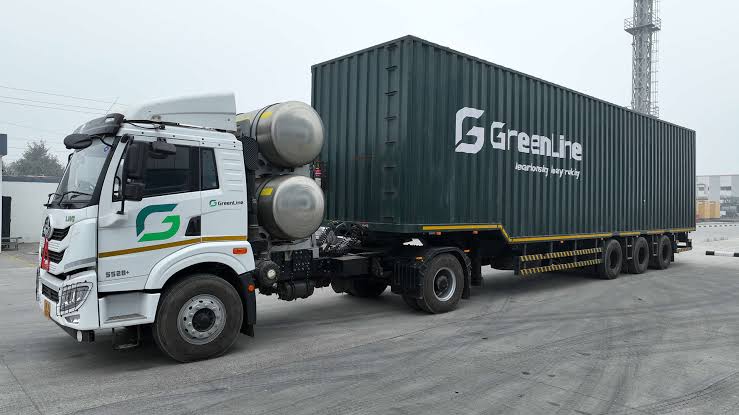
GreenLine Mobility Solutions partnered with FMCG major Dabur India to deploy liquefied natural gas (LNG)-powered heavy commercial vehicles across its long-haul logistics operations. The partnership aims to decarbonize road freight transportation, lower Scope 3 greenhouse gas emissions, and maintain supply chain delivery performance across major national freight corridors.
MUMBAI, India — GreenLine Mobility Solutions Ltd., an Essar Group-backed green logistics company, announced a strategic partnership with fast-moving consumer goods (FMCG) major Dabur India Ltd. on July 22, 2026, to decarbonize the manufacturer's long-haul road transport operations.
Under the arrangement, GreenLine will deploy its fleet of liquefied natural gas (LNG)-powered heavy commercial vehicles across Dabur’s primary supply chain routes. The initiative seeks to cut greenhouse gas emissions from long-distance freight movement while maintaining delivery schedules and operational efficiency across the consumer goods network.
Technical Specifications and Environmental Impact of LNG Freight
Heavy commercial road transport remains a major contributor to logistics-related carbon emissions in India. Transitioning long-distance freight fleets from conventional diesel to LNG offers immediate environmental benefits for large consumer enterprise supply chains.
Compared to diesel-powered heavy commercial vehicles, LNG trucks reduce carbon dioxide emissions by up to 40%. Furthermore, LNG engines cut nitrogen oxide (NOx) emissions by up to 59%, lower particulate matter (PM) by up to 91%, and virtually eliminate sulfur oxides (SOx). A single LNG fuel tank enables an operational travel range of up to 1,400 kilometers, making the technology suitable for heavy-duty, inter-state freight transit.
Fleet Network and Supply Chain Integration
GreenLine currently operates more than 1,000 LNG- and electric-powered heavy commercial trucks across major industrial logistics corridors in India. The company's fleet has logged over 100 million kilometers, helping corporate clients avoid more than 27,000 tonnes of carbon dioxide emissions across sectors such as steel, cement, mining, chemicals, and consumer goods.
To support long-haul fleet transit, GreenLine’s subsidiary, Ultra Gas & Energy Ltd. (UGEL), is constructing a nationwide retail network of LNG refueling stations along primary national highways.
Official Sources Section
Company announcements, strategic roadmap statements, and operational performance metrics have been verified through official corporate releases and statements:
Quote Section
"Reducing the environmental footprint of our supply chain is an important part of Dabur India's sustainability roadmap," said Samrat Sehgal, Global Director of Supply Chain at Dabur India. "Our partnership with GreenLine enables us to integrate lower-emission transportation into our logistics operations while maintaining efficiency and reliability."
"Every such partnership strengthens the momentum towards cleaner freight mobility, bringing us a step closer to transforming India's road logistics ecosystem," added Charles Devlin D'Costa, Vice President of Sales at GreenLine Mobility Solutions Ltd.
Why It Matters
For Consumers & Citizens: Cuts road transport pollutants, improving ambient air quality along busy highway logistics corridors.
For Consumer Goods Companies: Lowers Scope 3 supply-chain carbon footprints to meet corporate Environmental, Social, and Governance (ESG) criteria.
For Logistics Operators: Validates commercial viability and refilling infrastructure readiness for natural gas-powered heavy commercial vehicles.
Key Facts at a Glance
Partnership Focus: Deployment of LNG-powered heavy commercial trucks for Dabur India's logistics network.
Primary Objective: Decarbonization of long-haul freight operations and reduction of supply-chain carbon emissions.
Operational Scope: Integration across long-distance distribution corridors in India.
Fleet Scale: GreenLine operates over 1,000 clean commercial vehicles with over 100 million kilometers traveled.
Frequently Asked Questions
What are the main benefits of deploying LNG trucks in road logistics?
LNG-powered trucks generate up to 40% lower carbon dioxide emissions compared to conventional diesel vehicles while significantly reducing particulate matter, nitrogen oxides, and sulfur oxides.
How far can an LNG-powered heavy truck travel on a single tank?
Modern heavy-duty LNG commercial trucks can cover up to 1,400 kilometers on a single fuel tank, making them effective for long-distance, inter-state freight transit without frequent refueling delays.
Which company operates the LNG trucks for Dabur India?
GreenLine Mobility Solutions Ltd., an Essar Group-backed green mobility operator, provides and manages the LNG fleet for Dabur India.
Source: Official press statements and disclosures published by GreenLine Mobility Solutions Ltd., Essar Group, Dabur India Ltd., and policy guidelines from the Ministry of Road Transport and Highways.