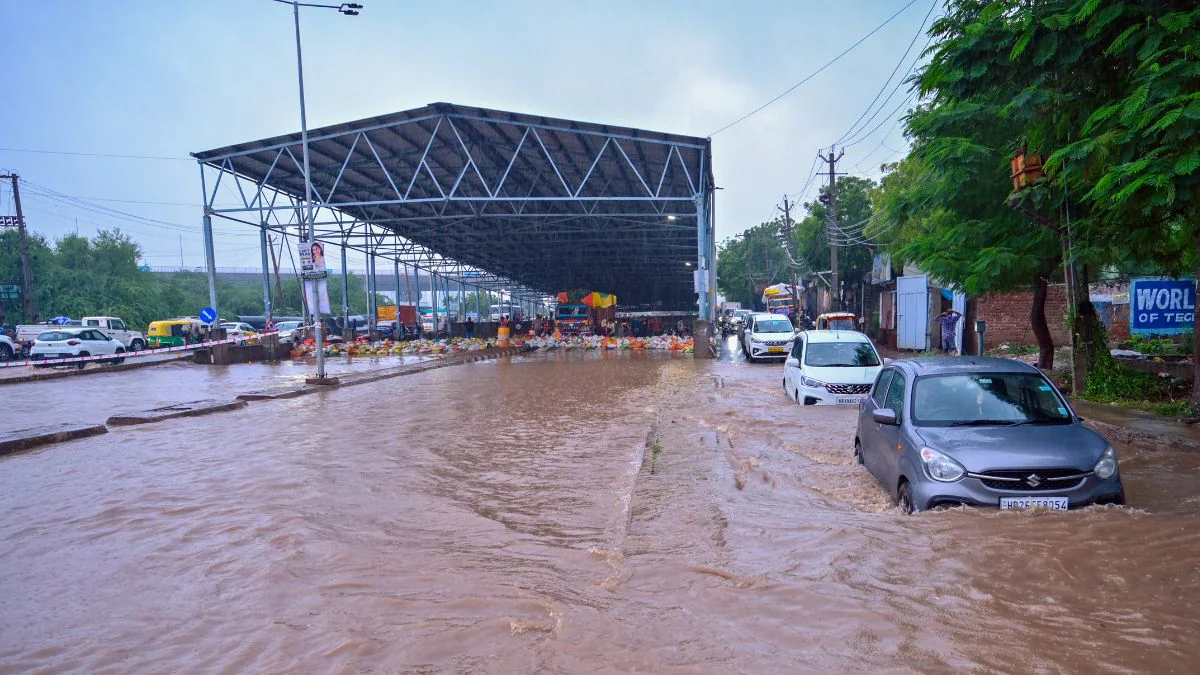
Heavy rainfall across Gurugram caused extensive power outages lasting up to six hours across several sectors and DLF phases. The disruptions, driven by fallen trees on 11kV lines, substation faults, and internal panel failures, forced housing societies onto diesel backup and disrupted remote work across the millennium city.
GURUGRAM — Severe downpours across the National Capital Region triggered widespread electricity cuts and infrastructural breakdowns across Gurugram on Monday and Tuesday, leaving thousands of households and offices without electricity for up to six consecutive hours. The recurring Gurugram rain power outages resulted from fallen trees damaging high-tension overhead lines, localized short circuits, and feeder breakdowns across multiple transmission circles operated by the Dakshin Haryana Bijli Vitran Nigam (DHBVN). With corporate hubs and residential complexes increasingly dependent on continuous power for digital operations and basic water pumping, the persistent grid vulnerability during monsoon showers has brought municipal infrastructure maintenance under renewed scrutiny.
Overhead Line Damage and Substation Failures Across Sectors
The disruption impacted a broad swath of residential societies, gated communities, and commercial districts across both Old and New Gurugram. High-density residential pockets along the Dwarka Expressway—including Sector 37, Sector 10, Sector 69, Sector 70, Sector 71, and Sector 99—reported extended blackouts shortly after rain intensified. Older residential zones and commercial sectors, including DLF Phases I, II, and III, Sushant Lok, and Kadipur Enclave, were similarly impacted.
According to discom field assessments, a major disruption occurred at RMG Residency in Sector 37 after an uprooted tree crashed onto an 11kV high-tension overhead feeder line during peak rainfall, severing power for more than six hours. In DLF Phases I and II, multiple tree limbs collapsed onto low-tension lines and distribution jumpers, forcing emergency field crews to clear physical debris before electrical restoration could safely commence.
Simultaneously, distribution network faults emerged at key power hubs. In Sector 99 and neighboring areas, supply from the 66kV substation in Sector 9 tripped after rainfall entered peripheral electrical installations, while in DLF Phase III, a primary feeder linked to the 66kV Q-block substation suffered an outage late in the evening.
Strain on High-Rise Housing Infrastructure and Commercial Workflows
The recurring Gurugram rain power outages created compounding logistical problems for housing societies and remote professionals. In communities such as Imperia Esfera in Sector 37, persistent outages forced resident welfare associations (RWAs) to operate heavy-duty diesel generator (DG) sets for multiple consecutive days, sharply escalating common utility expenses and raising local environmental concerns.
Corporate employees working remotely reported severe disruptions to work routines, as backup inverter systems drained during prolonged outages, halting broadband connectivity and enterprise communications. In several multistory complexes, the absence of grid power temporarily immobilized central water filtration units and domestic water-lifting pumps, causing localized supply constraints for hundreds of apartment dwellers.
Regulatory Compliance and Distribution Network Upgrades
The recurring nature of the power failures has reignited debate regarding the structural resilience of Gurugram's power distribution infrastructure. While underground cabling projects have been completed in select modern sectors, significant portions of the urban network still depend on exposed overhead wiring and surface transformers vulnerable to monsoon squalls and falling branches.
Discom administrators indicated that multi-agency coordination issues between private real estate developers, local RWAs, and municipal authorities often delay the handover and modernization of internal electrical panels and metering rooms, complicating rapid restoration efforts during severe weather.
Official Sources Section
The operational details, supply timelines, and maintenance records referenced in this report are sourced from administrative bulletins released by Dakshin Haryana Bijli Vitran Nigam (DHBVN), municipal updates from the Municipal Corporation of Gurugram, regulatory frameworks overseen by the Haryana Electricity Regulatory Commission, and field statements from local resident welfare associations.
Discom and Consumer Statements
Utility officials confirmed that maintenance protocols require ground teams to halt field repairs on exposed high-voltage equipment during active lightning and heavy rainfall to protect line workers from electrical hazards.
"Power lines were damaged in the tree collapse, and repair work could begin only after the rain stopped. It took several hours for fixing the entire supply line, after which the supply was restored," a senior DHBVN operational official stated regarding the Sector 37 feeder breakdown.
Discom spokespersons also addressed internal infrastructure issues in high-rise residential layouts:
"A fault in the metering panel installed by the realtor was causing the outage, forcing residents to run a diesel genset every night, while the rain further aggravated the situation. We have communicated this to the RWA to ensure long-term equipment upgrades," the official added.
Residents highlighted the compounding strain of seasonal breakdowns. "At least 400 families living here are suffering badly due to the existing power outage situation," noted Rinki Singh, an affected resident in Sector 37.
Why It Matters
As a key financial and technology center housing multinational corporations, Gurugram relies heavily on uninterrupted utility services. The recurring Gurugram rain power outages expose persistent vulnerabilities in the urban distribution grid, imposing heavy operational costs on businesses, driving reliance on polluting diesel generators, and underscoring the urgent necessity of completing underground cabling and automated feeder switching across all municipal circles.
Key Facts at a Glance
Widespread Disruptions: Heavy rain triggered power cuts lasting between four and six hours across Sectors 10, 37, 69, 71, 99, Sushant Lok, and DLF Phases I–III.
Primary Failure Causes: Collapsed trees on 11kV overhead lines, short circuits, and feeder breakdowns at the 66kV Sector 9 and Q-block substations.
Infrastructural Impact: Extended outages forced heavy reliance on diesel generators and caused temporary disruptions to domestic water supply systems.
Restoration Constraints: Safety guidelines mandate that discom repair crews suspend work on live high-voltage cables until active precipitation ceases.
Frequently Asked Questions
What caused the widespread power outages in Gurugram during the recent rain?
The blackouts were caused by trees falling on 11kV high-tension overhead lines, technical faults in distribution feeders, transformer short circuits, and water-related trips at major 66kV substations.
Which areas experienced the most severe electricity supply cuts?
The most affected localities included Sector 37 (Imperia Esfera and RMG Residency), Sector 10 (Kadipur Enclave), Sector 99, Sectors 69–71, Sushant Lok, and DLF Phases I, II, and III.
Why do power restoration efforts take several hours during monsoon showers?
DHBVN safety regulations require field technicians to wait until heavy rain stops before safely removing fallen branches and repairing damaged overhead wires and jumpers.
How can consumers lodge power outage complaints with the electricity discom?
Consumers can report supply faults directly to DHBVN via their toll-free helpline numbers (1912 / 1800-180-4334) or register grievances through the official DHBVN consumer portal.
Source: Dakshin Haryana Bijli Vitran Nigam, Municipal Corporation of Gurugram, Haryana Electricity Regulatory Commission, Hindustan Times Discom Reports.