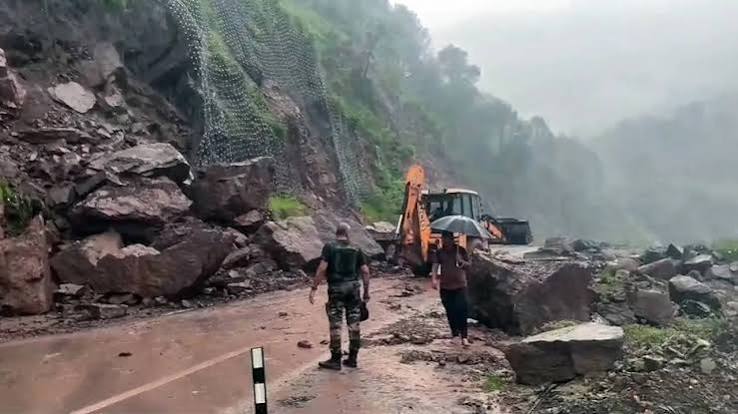
Residents in Swargapur and across Guwahati are living in fear as persistent monsoon rains trigger recurring landslides. Official reports indicate that 95% of the city’s 366 vulnerable sites are at risk due to human interference, such as illegal hill-cutting, prompting heightened alerts from the DDMA and ASDMA.
GUWAHATI — Families in the Swargapur area of Basistha are grappling with heightened anxiety as a string of landslides, fueled by relentless monsoon rainfall, continues to threaten residential settlements. While no injuries or fatalities have been reported in Swargapur, the frequency of these geological events has left residents fearful that further downpours could lead to catastrophic structural collapses.
The instability in Swargapur is part of a broader crisis facing Guwahati this July. Landslide incidents have been documented across multiple vulnerable pockets, including Khanapara, Kahilipara, Maligaon, Lal Ganesh, and Kharghuli. For nine consecutive days in July, Guwahati’s hill slopes have faced repeated failures, raising urgent questions regarding urban planning and the safety of hillside housing.
Human Interference and Slope Instability
While heavy rainfall is the immediate trigger, experts and local officials attribute the city's heightened vulnerability primarily to human-induced factors. A comprehensive vulnerability assessment conducted in June 2026 identified 366 landslide-prone sites across 20 areas of Guwahati. The study revealed that a staggering 95% of these slope failures are linked to man-made activities rather than natural geological processes.
"The construction work was not carried out scientifically," one Khanapara resident noted, describing the loss of livestock and property due to unregulated hill-cutting in neighboring areas bordering Meghalaya. Unplanned urban expansion, the removal of protective vegetation, and inadequate drainage systems have significantly compromised the structural integrity of the city's unsaturated residual soil deposits.
Official Advisory and Emergency Response
The Kamrup Metropolitan District Disaster Management Authority (DDMA) and the Assam State Disaster Management Authority (ASDMA) have intensified their public advisories following the recent collapse incidents. With the India Meteorological Department (IMD) forecasting continued moderate to heavy rainfall, authorities have urged residents—particularly those in hillside settlements—to exercise extreme caution and avoid unnecessary travel.
"In view of the situation, people of Guwahati city have to remain vigilant," an ASDMA statement urged, noting that saturated slopes are increasingly susceptible to sudden failure. Emergency response systems, including the State Disaster Response Force (SDRF), remain on high alert to address potential emergencies.
Why It Matters
The recurring landslides have far-reaching implications for Guwahati’s urban development and public safety. For citizens, the crisis highlights the dangers of settling on vulnerable slopes where land-use regulations are often flouted. For local government and urban planners, the situation underscores an urgent need for stricter enforcement against illegal hill-cutting and a more robust strategy for hillside stabilization before the remainder of the monsoon season unfolds.
Key Facts at a Glance
Widespread Impact: Landslides reported in Swargapur, Khanapara, Maligaon, Kahilipara, Lal Ganesh, and Kharghuli.
Primary Drivers: 95% of landslide vulnerabilities are attributed to man-made factors, including unscientific hill-cutting and unplanned construction.
Emergency Contact: Residents in need of assistance can contact the DDMA Control Room at 9365429314.
Vulnerability Survey: A 2026 survey identified 366 landslide-vulnerable sites across the city.
FAQ
What should residents do during heavy rainfall?
Authorities advise residents in hilly areas to remain vigilant, monitor official weather bulletins, and avoid traveling through unstable zones. If cracks appear in the ground or structures, residents should contact disaster management authorities immediately.
Why are landslides happening so frequently in Guwahati?
While heavy rain acts as the trigger, the city's hill slopes are geologically fragile and have been severely weakened by years of indiscriminate hill-cutting, encroachment, and a lack of proper drainage systems.
Are there safe areas identified for relocation?
While the government has identified vulnerable sites, current advisories focus on immediate safety and monitoring rather than mass relocation, emphasizing the need for residents to be alert to signs of soil movement.
Source: G Plus News, Assam State Disaster Management Authority (ASDMA), India Today NE