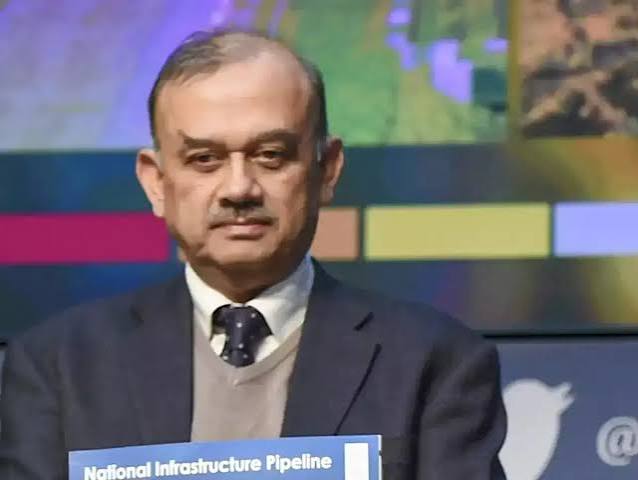
Former HDFC Bank Chairman Atanu Chakraborty has publicly dismissed the lender’s external legal review into his resignation as an "exercise in futility." Chakraborty clarified that his stepping down in March 2026 was a personal "call of conscience" regarding corporate culture and governance practices, not a matter requiring legal verification.
MUMBAI — Former HDFC Bank part-time chairman and independent director Atanu Chakraborty has strongly pushed back against the bank's external legal review of his sudden resignation, clarifying that his decision to step down was purely a "call of conscience" rather than a legal dispute.
Chakraborty’s remarks, made public on June 28, 2026, come immediately after India's largest private-sector lender disclosed to stock exchanges that a three-month independent probe by domestic and international law firms found "no evidence" to substantiate the ethical concerns flagged in his March 2026 resignation letter. The escalating back-and-forth has intensified discussions around boardroom governance at the systemic financial institution.
Conflict Over Scope of Independent Legal Probe
Following Chakraborty's abrupt exit from HDFC Bank on March 18, 2026, the lender's board commissioned an external legal review. The investigation was jointly conducted by domestic firm Wadia Ghandy & Co. and US-based Wilson Sonsini Goodrich & Rosati to independently evaluate corporate governance issues flagged during his tenure.
In regulatory disclosures submitted to the National Stock Exchange of India Limited and the BSE, HDFC Bank asserted that the external law firms reviewed comprehensive board papers, committee records, and internal materials. The lender also claimed that Chakraborty failed to participate or cooperate with the review despite multiple requests.
Chakraborty, a former economic affairs secretary, sharply contested the bank's narrative regarding his non-participation. He categorized the external investigation as a "roving inquiry" and a superfluous exercise.
"I had repeatedly asked, after they approached me for a discussion on this, that they share the terms of reference for these two or three lawyers, including one from a territory outside India," Chakraborty stated. "I have disconnected from the bank. I have nothing to do with them anymore."
The former chairman argued that robust boardroom discussions cannot be fully evaluated via basic compliance checks conducted retrospectively by outside counsel. He maintained that he did not require validation from an external agency for a decision rooted in personal values.
Ethical Disalignments and Operational Oversight
Chakraborty’s initial resignation letter had noted that certain "happenings and practices" over the past two years did not align with his ethical frameworks. While he refrained from breaking specific boardroom confidentiality rules, he pointed to public-domain issues, including customer onboarding practices within the bank's Dubai operations that had previously drawn regulatory scrutiny.
While HDFC Bank executive leadership, including Managing Director and Chief Executive Officer Sashidhar Jagdishan, had previously described some operational matters as "technical lapses," Chakraborty expressed a different view on corporate oversight:
Proactive Governance: Systems should prioritize preventing institutional issues a priori rather than acting after problems surface.
Reputational Risks: Conduct issues that negatively affect a large customer base risk long-term institutional reputation.
Value Maximization: Independent directors carry a fiduciary responsibility to depositors and shareholders, ensuring that short-term transactional gains do not overshadow long-term corporate health.
Furthermore, Chakraborty highlighted broader financial concerns during his tenure, including underperformance in the bank’s share price, compressed current account savings account (CASA) ratios, and an elevated cost-to-income ratio post-merger with HDFC Ltd.
Official Sources Section
According to official regulatory disclosures filed under Regulation 30 of the SEBI (Listing Obligations and Disclosure Requirements) Regulations, 2015, HDFC Bank confirmed that its board has recorded the findings of the external legal review and considers the matter concluded. The interim leadership transition approved by the Reserve Bank of India (RBI) remains in place, with Keki Mistry serving as the interim part-time chairman of the bank.
Quote Section
According to official filings submitted by HDFC Bank to the stock exchanges:
"The review concluded that the available evidence did not support the issues raised in the former chairman's resignation letter. The minutes of meetings attended by Mr. Chakraborty were a product of a comprehensive drafting, review, and approval process, allowing him to record any happenings and practices not in congruence with his personal values."
In response, Chakraborty stated to the media:
"My resignation was a call of conscience, not an allegation requiring legal review. The entire probe was a superfluous exercise."
Why It Matters
For retail investors, institutional stakeholders, and corporate governance analysts, the dispute highlights the delicate role independent directors play within large financial conglomerates. Because HDFC Bank manages approximately 15% of India's total bank deposits, public disagreements regarding internal governance can impact market sentiment and influence regulatory oversight frameworks enforced by central banking authorities.
Key Facts at a Glance
The Departure: Atanu Chakraborty resigned as part-time chairman of HDFC Bank on March 18, 2026, citing ethical mismatches.
The Legal Review: HDFC Bank hired Wadia Ghandy & Co. and Wilson Sonsini Goodrich & Rosati to evaluate the claims; the review found no supporting evidence.
The Refusal: Chakraborty declined to join the probe, citing the bank's failure to provide clear terms of reference.
Current Leadership: Former HDFC Ltd. Vice-Chairman Keki Mistry serves as the interim part-time chairman.
FAQ Section
Q1: Why did Atanu Chakraborty resign from HDFC Bank? A1: Chakraborty resigned in March 2026, citing an incongruence between certain internal practices over the previous two years and his personal values and ethical standards.
Q2: What did HDFC Bank's external legal review conclude? A2: The independent review concluded that there was no documentary evidence or contemporaneous board minutes to substantiate the ethical or governance concerns raised in the resignation letter.
Q3: Why did the former chairman refuse to participate in the bank's review? A3: Chakraborty stated he chose not to engage because the bank failed to provide the explicit terms of reference or the legal framework under which the external law firms were operating.
Q4: Who is the current chairman of HDFC Bank? A4: Following the resignation, the Reserve Bank of India approved the appointment of Keki Mistry as the interim part-time chairman.
Source: HDFC Bank Investor Relations & Disclosures, Corporate Filings to BSE India.