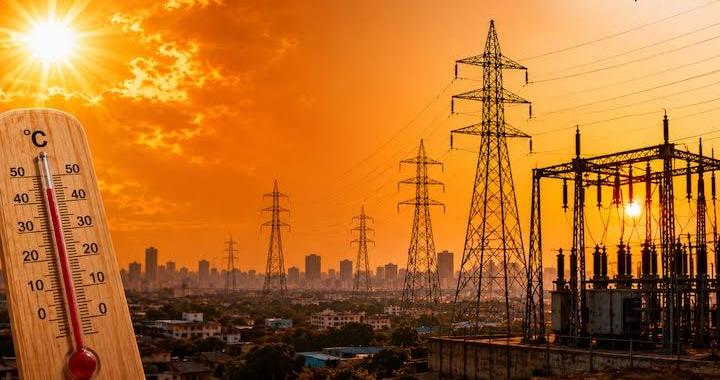
Driven by an intense regional heatwave, Delhi's peak power demand touched an all-time high of 8,748 MW at 3:17 p.m. on Monday, June 29, 2026. Backed by AI demand forecasting and 2,670 MW of renewable power, the upgraded transmission infrastructure successfully met the unprecedented load without major outages.
NEW DELHI — A relentless regional heatwave drove Delhi's peak power demand to an all-time historical high of 8,748 megawatts (MW) on Monday, June 29, 2026. According to real-time telemetry tracking from the Delhi State Load Despatch Center (SLDC), the unprecedented milestone was clocked precisely at 3:17 p.m.. This development highlights the escalating strain placed on urban utilities across northern India by severe summer weather patterns, emphasizing the immediate need for robust grid management and technical upgrades to ensure uninterrupted power supply to the city's 22.5 million residents.
Dissecting the Surge and Discom Performance Metrics
The newly recorded figure of 8,748 MW shatters the national capital's previous historic high of 8,656 MW, which was recorded on June 19, 2024. This reflects a net expansion of 92 MW over the previous maximum threshold. Real-time records from the SLDC indicate that Monday’s consumption levels also surpassed the highest demand logged during the entire 2025 summer season, when consumption topped out at 8,442 MW on June 12, 2025.
To handle this load, regional electricity distribution companies (discoms) mobilized pre-arranged supply contingencies across their designated jurisdictions:
BSES Rajdhani Power Limited (BRPL): Successfully managed and supplied the highest single share of the peak load, delivering ,906 MW across its extensive distribution network in South and West Delhi.
Tata Power Delhi Distribution Limited (Tata Power-DDL): Satisfied its own all-time highest peak demand of 2,497 MW between 3:15 p.m. and 3:30 p.m., ensuring continuous distribution across North and North-West Delhi without line trips.
BSES Yamuna Power Limited (BYPL): Maintained absolute grid stability while supplying 1,876 MW of electrical load to consumers across East and Central Delhi.
Data compiled throughout June 2026 underscores that Delhi's peak power demand crossed the critical 8,000 MW threshold for the third time this month alone, following previous consumption spikes of 8,434 MW on June 10 and 8,296 MW on June 11.
Advanced Forecasting and Green Energy Deployments
To withstand the unprecedented load without widespread blackouts, regional utilities relied heavily on advanced digital infrastructure and specialized commercial power procurement strategies. Representatives from the BSES discoms confirmed that long-term power purchase agreements, cross-state banking arrangements, and bilateral season-ahead contracts were initiated months in advance to hedge against unexpected shortages.
Furthermore, discoms deployed predictive analytics driven by Artificial Intelligence (AI) and Machine Learning (ML) models integrated directly with real-time meteorological feeds. These advanced systems allow engineers to anticipate localized cooling loads down to the hour, maximizing efficiency.
Green energy installations also played an important role in anchoring the grid. Roughly 2,670 MW of eco-friendly power—sourced from utility-scale solar farms, wind networks, pumped storage hydropower facilities, and rooftop solar arrays—was channeled into the transmission lines. To further prevent voltage drops during peak hours, a 20 MW Battery Energy Storage System (BESS) stationed at Kilokri was used to stabilize baseline frequency variations.
Direct Impact on Businesses, Citizens, and the Urban Grid
For everyday citizens and residential consumers, the smooth management of 8,748 MW meant that the continuous use of high-power appliances, particularly air conditioners, remained uninterrupted despite heatwave conditions. This marks a major operational shift from earlier years, when extreme summer spikes frequently led to transformer failures, localized load shedding, and prolonged blackouts.
For commercial enterprises, manufacturing units, and small businesses operating across Delhi's industrial corridors, grid resilience prevented production losses. Sudden power interruptions often damage sensitive machinery, interfere with cooling systems, and disrupt logistics platforms.
For state planners and power infrastructure investors, the successful management of this peak demand shows the value of proactive capital expenditure. However, with the SLDC projecting that Delhi's peak power demand could potentially breach the 9,000 MW line later this season, the energy sector must remain focused on upgrading transformers, expanding sub-stations, and utilizing green energy alternatives to keep pace with rapid urbanization.
Official Sources Section
The underlying real-time electricity statistics, timeslots, and discom allocations used in this coverage were derived from official public briefings published by the Delhi State Load Despatch Center. Operational asset data was cross-verified through corporate statements issued by the communications offices of Tata Power-DDL and the BSES media desk. Broader administrative overviews and policy targets were sourced from the formal infrastructure compliance releases of the Ministry of Power and meteorological measurements archived by the India Meteorological Department.
Quote Section
"Today, Delhi made history by successfully meeting an all-time high peak power demand of 8,748 MW, shattering previous records by nearly 100 MW. This historic execution is the direct result of our government's meticulous Power Master Plan and sustained investments in upgrading Delhi's transmission and distribution grid. The real achievement today is not just the record-breaking numbers, but the fact that the entire city functioned normally with zero breakdowns."
— Ashish Sood, Delhi Power Minister
Why It Matters
The smooth handling of record-breaking power demand indicates that the power grid can successfully withstand intense climate pressures. As heatwaves grow longer and more intense across South Asia, urban areas face the dual challenge of surging consumer demand and thermal stress on transmission lines. Delhi's ability to seamlessly distribute 8,748 MW without major infrastructure breakdowns shows how long-term planning, automated grid monitoring, and diversified energy procurement can effectively prevent urban utility crises.
Key Facts at a Glance
Historical Peak Touched: Delhi's peak power demand hit a record 8,748 MW at 3:17 p.m. on June 29, 2026.
Previous Record Overpassed: The new milestone surpasses the previous peak of 8,656 MW set on June 19, 2024, by 92 MW.
No Outages Reported: The city's transmission grid handled the unprecedented load smoothly with no major infrastructure failures.
AI and Green Tech Usage: Utilities utilized AI-driven demand forecasting alongside 2,670 MW of renewable energy to maintain grid stability.
Higher General Demand: Power demand in June 2026 exceeded corresponding 2025 daily metrics on 22 out of 29 days.
FAQ Section
What exactly triggered this record-breaking power demand in Delhi?
The record spike was driven by intense summer heatwave conditions across the National Capital Region, which led to a simultaneous surge in the use of air conditioners and cooling systems.
Which power distribution utility handled the largest portion of the load?
BSES Rajdhani Power Limited (BRPL) successfully managed the largest share, supplying 3,906 MW to its consumer base in South and West Delhi.
How are Delhi's utilities planning to protect the grid if demand breaches 9,000 MW?
Discoms use long-term bilateral power agreements, season-ahead procurement contracts, and advanced battery storage units like the 20 MW asset at Kilokri to keep the grid balanced during extreme load conditions.
Sources: ANI News, India Meteorological Department, Press Information Bureau