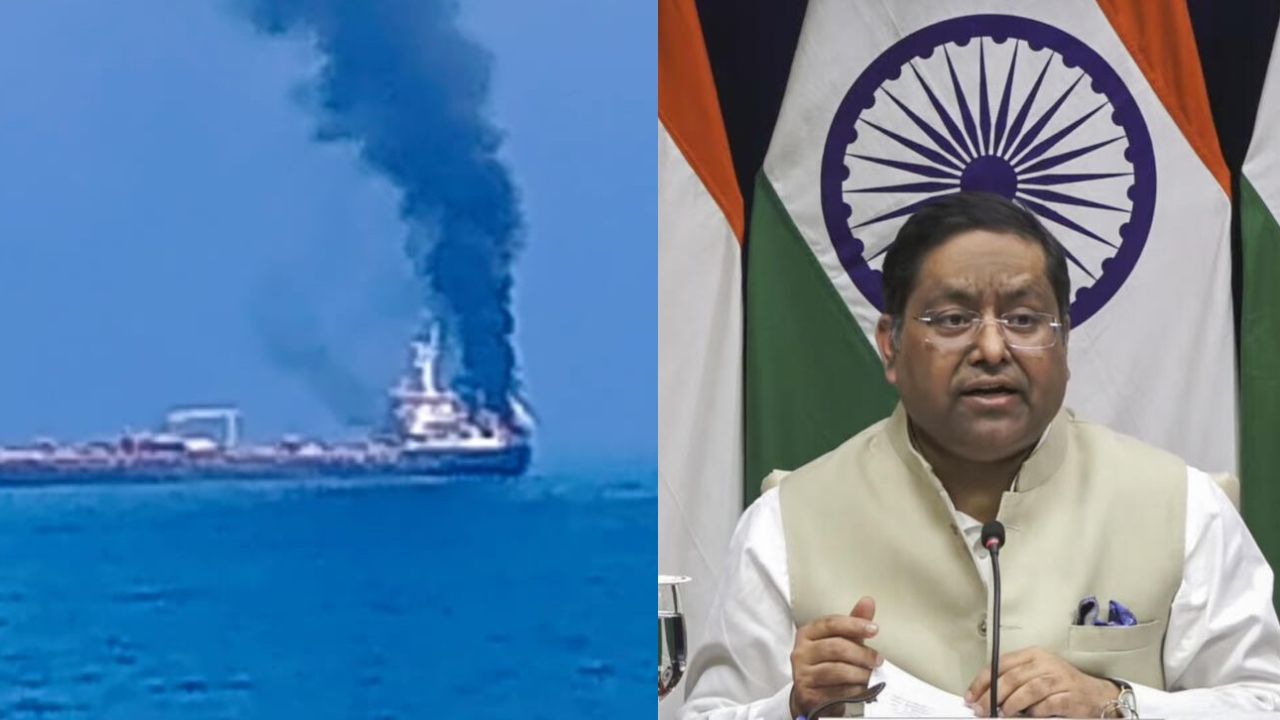
The Union Shipping Ministry has ordered all maritime agencies to maintain absolute readiness to protect Indian seafarers and trade interests. Coordinating with the MEA and Indian Navy, the government has advised crews in conflict-affected waters to exercise maximum caution, using hourly satellite tracking to monitor thousands of mariners.
NEW DELHI — The Union Government on Thursday issued an emergency directive ordering all national maritime agencies to maintain absolute operational readiness to respond to any developing contingency involving Indian seafarers or sovereign maritime interests. The formal orders come directly from the Union Shipping Ministry following a sharp rise in regional security friction across primary global trade chokepoints, including recent heavy naval escalations in the Gulf of Oman near the critical Strait of Hormuz.
In a comprehensive safety advisory addressed to commercial shipping operators, crewing agencies, and port administrators, the government strongly urged all Indian seafarers transiting through conflict-affected waters to exercise the highest degree of caution and constant vigilance. To ensure immediate operational safety, the federal administration has activated a joint security response matrix combining naval, diplomatic, and port monitoring logistics.
Direct Mobilization Across Cross-Border Networks
The new directives establish a live coordination infrastructure designed to eliminate bureaucratic response lags during unexpected blue-water emergencies.
The Ministry of Ports, Shipping and Waterways confirmed it is working directly with the Ministry of External Affairs (MEA), the Indian Navy, the Directorate General of Shipping (DGS), and international maritime command networks. This multilateral collective aims to provide immediate tactical support, real-time intelligence feeds, and emergency evacuation pipelines to Indian crews aboard both domestic and foreign-flagged merchant fleets.
Unpacking the Scope of the High-Seas Risk
The logistical scale of this safety mobilization is substantial due to India's extensive footprint in global maritime labor. Recent sector logs indicate that more than 18,000 Indian seafarers are active throughout the broader Gulf zone.
According to localized tracking databases managed by the Long-Range Identification and Tracking (LRIT) National Data Centre, hundreds of Indian crew members are distributed across sensitive quadrants, with notable concentrations found west of the Strait of Hormuz and within the Gulf of Oman.
Mandated Operational Standard Practices
Mandatory Consular Logs: All active crew members navigating near designated high-risk zones are required to register immediately with local Indian embassies, such as the Embassy of India in Tehran.
Voyage Risk Audits: Recruitment and Placement Service Licensees (RPSLs) and commercial ship operators must perform route-specific, asset-by-asset risk assessments before entering conflict corridors.
Live Vessel Tracking: Tracking operations are being accelerated to hourly intervals for designated vessels to spot unusual detentions, course deviations, or active distress alerts.
Prioritized Commercial Handling: Major Indian ports are setting up dedicated storage arrays and priority offloading tracks for returning commercial vessels to safeguard perishable items and stabilize import-export logistics.
Authoritative Directives from Regulatory Panels
Government statements highlight that while regional tensions remain complex, state infrastructure is explicitly positioned to safeguard civil personnel.
"According to officials from the Ministry of Ports, Shipping and Waterways, the government has directed its operational departments to remain completely prepared for any contingency. Every security protocol has been reinforced to guarantee that our maritime trade lines and citizens remain completely shielded from external operational shocks."
The Directorate General of Shipping emphasized the binding nature of the safety instructions, noting that deviations from the prescribed travel routes or a failure to report crew status will lead to strict regulatory reviews for commercial vessel operators.
Why It Matters
For everyday consumers and industrial enterprises, maritime safety has a direct financial impact on domestic market pricing. India depends heavily on commercial shipping lanes for vital imports, including crude oil, liquid gas, and key industrial manufacturing components.
When regional instability raises maritime security threats, commercial insurance firms quickly implement steep war-risk premiums. These added operational costs trickling down the supply chain cause higher fuel costs, consumer price inflation, and logistics bottlenecks for export-heavy businesses. Protecting seafarers is essential to keeping international cargo flowing smoothly and stabilizing the wider economy.
Key Facts at a Glance
The Government Directive: The Shipping Ministry has formally ordered all national maritime agencies to maintain a constant state of emergency response readiness.
Vigilance Warning: Indian seafarers traveling through conflict-affected maritime corridors have been instructed to practice maximum tactical caution and strict reporting discipline.
Inter-Agency Alliance: Emergency defense logistics are being managed jointly by the Ministry of Ports, Shipping and Waterways, the MEA, and the Indian Navy.
Labor Footprint: Security measures are being scaled up to protect over 18,000 Indian maritime workers active across vulnerable trade lanes in the Gulf region.
Frequently Asked Questions
What specific warnings did the government issue to Indian seafarers?
The Ministry of Ports, Shipping and Waterways issued an urgent safety advisory directing all Indian seafarers transiting conflict-affected waters to maintain the highest degree of caution, follow strict security protocols, and avoid unscheduled onshore tracking.
Which government departments are coordinating on this maritime emergency response?
The maritime emergency platform is actively managed through joint efforts by the Shipping Ministry, the Ministry of External Affairs (MEA), the Indian Navy, and the Directorate General of Shipping (DGS).
How does this tracking system protect mariners in high-risk zones?
The government utilizes the Long-Range Identification and Tracking (LRIT) National Data Centre to monitor commercial ships at hourly intervals. This allows naval and diplomatic rescue networks to respond immediately if an emergency occurs.
Source:
Official security directives issued by the Ministry of Ports, Shipping and Waterways, Government of India (June 11, 2026).
Consular communication advisories published by the Ministry of External Affairs
Operational tracking bulletins and security directives from the Directorate General of Shipping (DGS).
Live maritime positioning summaries from the Long-Range Identification and Tracking (LRIT) National Data Centre.