Union Commerce Minister Piyush Goyal will visit Switzerland from June 12-13 to accelerate the implementation of the India-EFTA trade pact. Meeting with top Swiss officials and pharmaceutical leaders, the visit focuses on resolving operational hurdles, balancing trade, and activating the bloc's projected $100 billion investment commitment to India.
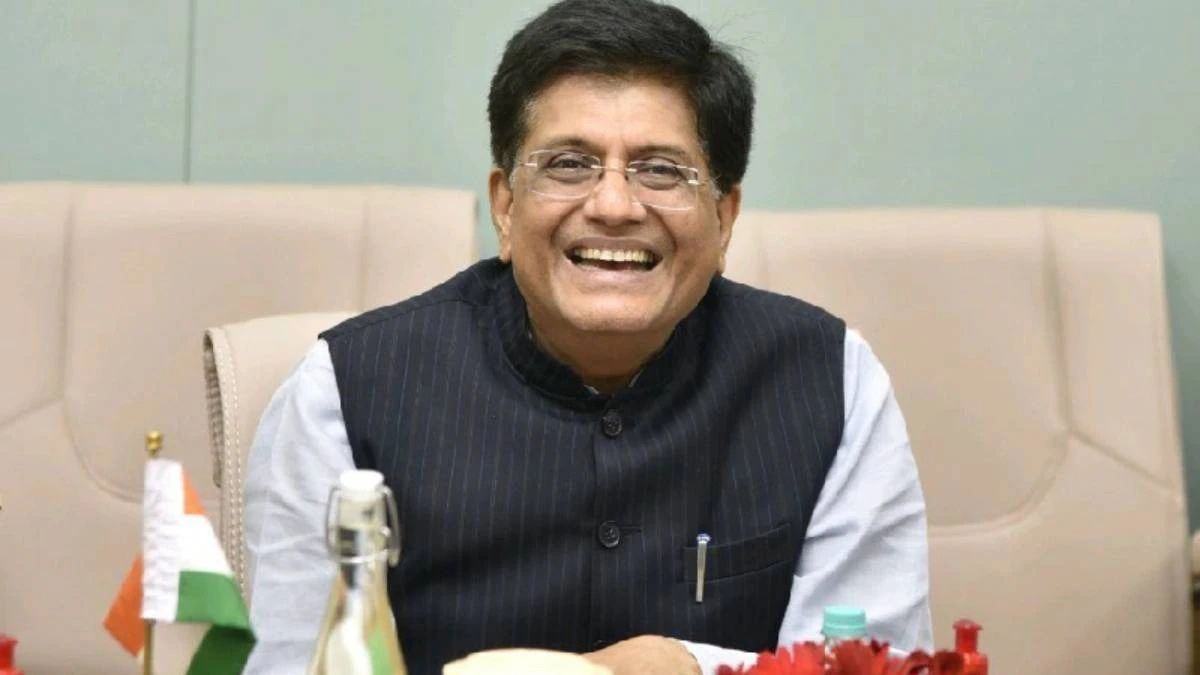
NEW DELHI — Union Minister of Commerce and Industry Piyush Goyal is scheduled to travel to Switzerland next week to accelerate the field-level implementation of the landmark India-EFTA Trade and Economic Partnership Agreement (TEPA). According to an official notification released by the commerce ministry on Thursday, the high-level diplomatic tour will take place from June 12 to 13, centering heavily on structural bilateral talks in the Swiss capital of Berne and commercial hubs in Zurich.
The ministerial mission arrives at an important juncture for India's cross-border trade strategy. The comprehensive free trade pact between India and the four-nation European Free Trade Association (EFTA) bloc—which includes Switzerland, Norway, Liechtenstein, and Iceland—was formally signed in March 2024 and entered into force in October 2025. Goyal’s sudden deployment is aimed directly at smoothing out early operational issues and unlocking massive investment allocations designed to expand high-value manufacturing and institutional collaboration inside the domestic market.
Direct Talks with Swiss State Leadership
The itinerary for the two-day visit features a series of highly technical, closed-door negotiations aimed at setting up smooth regulatory pathways for inter-bloc commerce.
During his stay in Berne, Minister Goyal is scheduled to hold specialized talks with Helene Budliger Artieda, the Swiss State Secretary for Economic Affairs, and Guy Parmelin, the Federal President of Switzerland. Bureaucrats from New Delhi indicate that the main priority of these meetings is to create stable tracking systems to monitor the trade bloc's landmark commitment to inject $100 billion into the Indian economy over a 15-year period.
Aligning Pharmaceutical Networks and Intellectual Property
A vital component of the trade push is a scheduled direct interaction with the executive leadership of the world-class Swiss pharmaceutical industry.
Resolving Technical Roadblocks
Because imports from Switzerland are heavily weighted toward high-precision instruments, advanced chemicals, and specialized medicines, aligning regulatory frameworks is critical.
Minimizing Customs Friction: The Indian delegation aims to establish faster customs clearance procedures for life-saving biological formulas and healthcare shipments.
Balancing the Trade Gap: Total bilateral merchandise trade between the two nations stood at $23.35 billion in FY 2024-25. However, India's exports accounted for just $1.47 billion, while Swiss imports surged to $21.88 billion, creating a clear trade imbalance that New Delhi wants to bridge.
Inter-Ministerial Support: Reflecting the heavy focus on healthcare logistics, Goyal will be accompanied by senior bureaucrats from the Department for Promotion of Industry and Internal Trade (DPIIT) alongside high-ranking representatives from the Ministry of Health and Family Welfare.
Mobilizing Capital Across Zurich's Financial Sector
Following the state level meetings in Berne, the commerce minister will travel to Zurich to host a sequence of investor roundtables with premier Swiss corporations and private asset managers.
"According to officials from the Ministry of Commerce and Industry, the engagements in Zurich are explicitly designed to explore practical avenues to expand bilateral investment flows. The minister will focus on positioning India as a preferred global destination for high-tech industrial manufacturing, sustainable infrastructure, and innovation-led joint ventures under the active TEPA framework."
Why It Matters
For Indian industries and domestic manufacturing sectors, the effective rollout of TEPA provides a highly transparent, long-term framework to secure advanced technology transfers and European capital. The multi-year commitment by the EFTA bloc is projected to directly support the creation of nearly one million skilled jobs inside India, particularly within high-growth domains like precision engineering, clean energy, and pharmaceuticals.
For consumers and retail markets, the reduction of tariff barriers under the trade agreement is expected to diversify the availability of high-end European products, specialized diagnostic equipment, and machinery over the medium term, helping lower operational costs for domestic businesses reliant on Swiss inputs.
Key Facts at a Glance
The Mission Dates: Union Minister Piyush Goyal will conduct an official economic visit to Switzerland from June 12 to 13, 2026.
The Structural Core: Discussions focus on resolving operational bugs within the India-EFTA TEPA, which came into effect in October 2025.
High-Level Meetings: Goyal will hold direct talks with Swiss Federal President Guy Parmelin and Economic State Secretary Helene Budliger Artieda.
The Trade Balance: The visit seeks to address a deep trade gap, following a registered bilateral trade volume of $23.35 billion in FY 2024-25.
Frequently Asked Questions
Which European nations are officially included within the EFTA bloc?
The European Free Trade Association (EFTA) is comprised of four non-European Union nations: Switzerland, Norway, Iceland, and the Principality of Liechtenstein.
What is the core financial commitment made under the India-EFTA trade agreement?
Under the signed TEPA framework, the EFTA member states have committed to facilitating foreign direct investments totaling $100 billion into India over a 15-year timeline, generating roughly one million direct jobs.
Which Indian ministries are joining the trade delegation to Switzerland?
The Commerce Minister is accompanied by senior leadership from the Department for Promotion of Industry and Internal Trade (DPIIT) and the Ministry of Health and Family Welfare.
Official Sources Section: