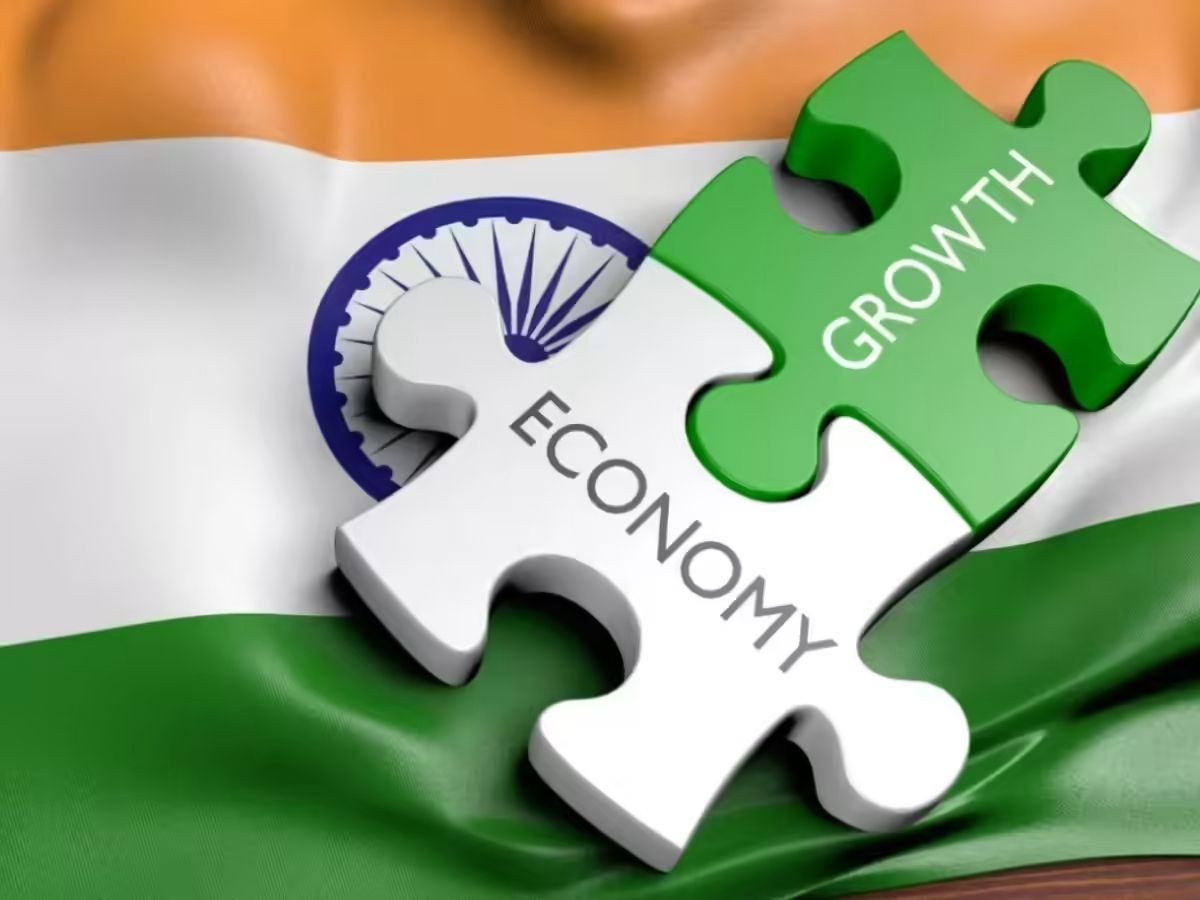
The World Bank's June 2026 report projects India to remain the world's fastest-growing major economy with a 6.6% GDP expansion in FY2026–27. Driven by a strong rural demand recovery and solid policy buffers, India's resilient domestic economy is successfully weathering global headwinds and a worldwide slowdown.
WASHINGTON — In its newly released Global Economic Prospects report, the World Bank confirmed that India will maintain its position as the world's fastest-growing major economy. The multilateral lender upgraded India's Gross Domestic Product (GDP) growth projection to 6.6% for the current fiscal year 2026–27 (April 2026 to March 2027), an upward revision driven by highly resilient domestic spending and a steady recovery in rural consumer demand.
The updated economic forecast highlights India's unique insulation from severe external headwinds today. Ongoing geopolitical conflicts in West Asia have systematically disrupted international energy shipping routes, forcing the World Bank to trim its broader global growth forecast down to 2.5% for 2026. While higher input overheads and costlier fuel import bills are projected to moderate India's output from the 7.7% pace recorded in fiscal year 2025–26, the nation’s underlying growth trajectory continues to safely eclipse major economic peers, including China and the United States.
Navigating the Headwinds of the West Asian Energy Squeeze
The 6.6% expansion projection reflects a calculated balance between robust internal demand and inflationary import costs. The structural performance metrics issued by the international lender outline a distinct V-shaped recovery path stretching across the late 2020s.
According to World Bank economic models, the primary factor cooling immediate private demand growth is the elevated global price of crude oil and chemical fertilizers. However, the multi-state analysis notes that proactive domestic fiscal policy alterations—such as targeted central reductions in local fuel taxes and targeted revisions to Goods and Services Tax (GST) rate slabs—are working effectively to cushion Indian households against aggressive retail inflation.
Domestic Dynamics Shielding the Indian Subcontinent
To evaluate how India has managed to retain its economic momentum amid a global slowdown, the World Bank’s research teams tracked key internal consumer variables. Their findings point to an important shift in consumption patterns across rural agricultural belts.
The Rural Rebound and Fiscal Buffers
For several quarters, weaker rural consumption had limited industrial expansions. The June 2026 data shows that rural private consumption has bounced back strongly, providing a stable foundation alongside steady urban demand.
The World Bank's economic update credits four primary pillars for this stability:
Robust Policy Buffers: Massive foreign exchange reserves held by the Reserve Bank of India (RBI) have effectively shielded the Indian Rupee from speculative international sell-offs.
Fiscal Tax Support: Steady collections of domestic indirect taxes have given the central government ample fiscal space to sustain high-priority infrastructure spending.
Trade De-risking: Ongoing implementations of newly signed free trade agreements (FTAs) have successfully insulated merchandise exports from weakening Western consumer markets.
Rupee-Denominated Debt: The low proportion of foreign-currency-denominated public debt protects state finances from rising global interest rates.
Authoritative Briefings from the World Bank Executive Panel
Multilateral policy directors and development economists noted during the report launch that sustaining structural updates to regional business environments remains essential to turning these projections into long-term employment.
"According to officials and economic analysts tracking emerging markets, India’s core macroeconomic fundamentals are currently among the strongest in the developing world. Financial authorities are focused on converting this macro momentum into larger volumes of localized private corporate investments."
Elaborating on the regional dynamics during a press briefing in Washington, Ayhan Kose, Deputy Chief Economist of the World Bank, stated that India continues to be the fastest-growing large economy in the world. He observed that when looking at the broader picture, the country exhibits incredible dynamism, with stronger-than-expected domestic demand effectively counterbalancing the adverse spillover effects of external geopolitical tensions.
Why It Matters
For everyday consumers and rural households, India’s steady 6.6% growth rate means local job creation and wage structures are less vulnerable to international shocks. The targeted reductions in GST and fuel excise duties directly prevent a sharp contraction in household purchasing power.
For corporate entities, international manufacturers, and institutional investors, the World Bank’s upward revision confirms India's status as a premier global destination for capital allocation. As manufacturing hubs look to diversify their supply chains away from East Asia, India’s domestic market size, coupled with a projected rebound to 7.2% growth in fiscal year 2027–28, offers an attractive, stable environment for long-term investments.
Key Facts at a Glance
The Growth Leader: The World Bank confirms India will remain the world's fastest-growing major economy at 6.6% for FY2026–27.
Global Contrast: India's strong performance comes as the World Bank cuts its global growth forecast to 2.5% due to conflicts in West Asia.
The Rebound Path: Economic growth is projected to climb back to 7.2% in FY2027–28 and hold at 7.0% in FY2028–29.
Consumer Catalysts: A strong recovery in rural private consumption and strategic adjustments to GST rates are driving domestic demand.
Frequently Asked Questions
Why is India’s growth forecast slowing to 6.6% compared to over 7% last year?
The moderation is primarily due to external factors, including higher global energy prices and rising input costs caused by international conflicts, which have lightly cooled private demand.
How does India's economic growth compare to other emerging economies right now?
India significantly outpaces its peers. While the broader group of emerging markets and developing economies is seeing per capita income growth slow to post-pandemic lows, India remains an outlier of strong growth.
What steps are being taken domestically to keep inflation from hurting consumers?
The Indian government has implemented targeted policy measures, including rolling back specific fuel taxes and lowering select GST rates, to limit price pressures on essential goods.
Sources:
The June 2026 Global Economic Prospects Report published by the World Bank Group (Released June 11, 2026).
Official media briefing transcripts featuring Ayhan Kose, Deputy Chief Economist of the World Bank.
Macroeconomic monitoring archives and domestic sales tax ledger updates maintained by the Ministry of Finance, Government of India.
Monetary policy safety briefs from the Reserve Bank of India (RBI) economic research database.