The Andhra Pradesh Star Hotels Association has urged the state government to lobby the Centre for a GST reduction on commercial LPG from 18% to 5%. Citing a 25% spike in operational overheads due to high fuel prices and restrictive Input Tax Credits, hoteliers warn of potential closures.
VIJAYAWADA — A high-level delegation from the Andhra Pradesh Star Hotels Association (ASHA) has officially met with the state government to request an urgent intervention regarding steep fuel taxation. Meeting in Vijayawada on Thursday, July 9, 2026, industry representatives urged Civil Supplies Minister Nadendla Manohar to formally lobby the Central Government to reduce the Goods and Services Tax (GST) on commercial liquefied petroleum gas (LPG). The association stated that the existing tax architecture has severely inflated basic overheads, threatening the operational viability of budget, mid-segment, and star hotels across the region.
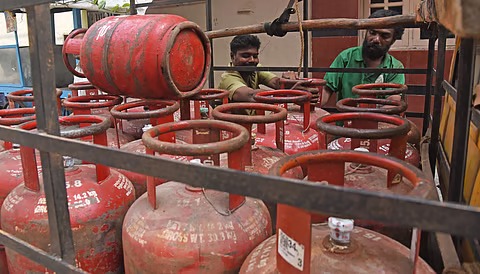
The industry's appeal centers on reducing the current GST slab on 19-kilogram commercial LPG cylinders from 18% down to a concessional 5% rate. By converting this policy change into an active state-level advocacy platform, hoteliers aim to dismantle an inverted tax structure that has left businesses unable to offset high energy costs against thin retail dining margins.
Escalating Energy Overheads and Inverted Tax Friction
The financial distress within the hospitality corridor stems from continuous shifts in bulk cooking gas prices throughout the first half of 2026. According to data archived by the Andhra Pradesh Chambers of Commerce and Industry Federation (AP Chambers), the retail cost of a single 19-kg commercial cylinder in the state had peaked near 3,200 rupees following successive price adjustments fueled by global energy supply disruptions. Although public sector oil marketing firms implemented a minor, localized price reduction of 183.50 rupees per cylinder on July 1, 2026, baseline acquisition costs remain unsustainably high for high-volume commercial kitchens.
The technical challenge is compounded by the restrictive nature of India's dual-tier GST framework for services. ASHA President R.V. Swamy pointed out that while a significant portion of standard restaurants and mid-tier dining rooms fall under a flat 5% outbound GST category, their primary energy input commercial LPG continues to attract the full 18% tax rate.
Compounding this imbalance, prevailing tax statutes bar small-to-medium hospitality operators from effectively leveraging Input Tax Credit (ITC) benefits. The combination of raw material inflation and un-offset energy taxes has pushed overall kitchen operating expenses higher by nearly 25% this season, forcing many restaurants to operate with restricted menus.
Requests for Input Tax Credit and Rental Relief
Beyond the targeted commercial LPG fuel adjustments, the ministerial delegation raised secondary structural grievances that restrict the industry's competitiveness. ASHA formally appealed for the complete restoration of Input Tax Credit (ITC) for the hospitality industry under the national GST regime. Representatives argued that the ongoing withdrawal of ITC has significantly driven up capital investment costs, making it expensive for local properties to upgrade their building infrastructure or procure commercial kitchen appliances.
Parallel efforts are also under review via regional trade organizations. The Vijayawada Hotel Owners Association recently submitted a corresponding petition to joint administrative collectors, flagging regional pricing disparities in commercial Piped Natural Gas (PNG) distributions compared to neighboring industrial zones like Rajahmundry. The hotel body similarly requested the state to look into reducing the 18% GST currently applied to leased commercial properties and restaurant rental premises down to 5% to shield micro-enterprises from sudden eviction or closure risks.
Official Sources Section
The corporate statements, tax calculations, and administrative meetings detailed throughout this journalistic dispatch originate directly from the following public repositories:
Ministerial Review and Government Reassurance
According to officials present during the corporate feedback sessions at the Secretariat, the state leadership is approaching the industry's concerns with an open mind. Civil Supplies Minister Nadendla Manohar gave a patient hearing to the hotel delegation and assured them that the multi-layered tax concerns would be systematically evaluated.
The Minister confirmed that the state intends to flag the commercial LPG tax imbalances at the next formal convention of the central GST Council, which retains the ultimate statutory power to revise national tax brackets. The ASHA delegation included prominent regional infrastructure leaders, including Vivanta Visakhapatnam General Manager Nageswara Rao, ASHA General Secretary Murthy Chittoory, and GRT Vijayawada Managing Director Sharan.
Why It Matters
From a practical perspective, the high tax burden on commercial LPG acts as a hidden tax on everyday consumer dining. When hotels and restaurants face high, un-offset energy costs, they are ultimately forced to pass these expenses onto consumers through higher menu prices, directly driving up food inflation. For the wider economy, providing tax relief to the hospitality sector protects a major source of local employment and stabilizes the allied supply chains that support tourism, logistics, and regional agriculture.
Key Facts at a Glance
The Primary Demand: Hoteliers seek a reduction in the GST on commercial LPG cylinders from 18% down to 5%.
Operational Impact: High energy taxes and raw material price hikes have driven restaurant operating costs up by 25%.
Tax Structural Friction: The hospitality sector is suffering from an inverted tax structure due to the lack of effective Input Tax Credit options.
Government Response: Andhra Pradesh's Civil Supplies Ministry has pledged to examine the proposals for representation at the federal level.
FAQ Section
Why is there a difference between the GST on domestic and commercial LPG?
The national tax framework places a lower 5% concessional GST on domestic household cylinders to keep essential cooking fuel affordable for families. In contrast, commercial 19-kg cylinders used by businesses face a standard 18% rate, as they are treated as commercial production inputs.
What is an inverted tax structure in the context of a restaurant?
An inverted tax structure occurs when a business pays a high tax rate on its core inputs (such as 18% GST on commercial LPG) but sells its final product at a lower tax rate (like 5% GST on restaurant bills) without the ability to claim back the difference through Input Tax Credits.
Can the Andhra Pradesh government change these GST rates independently?
No. Individual state governments do not possess the unilateral authority to alter GST rates. Any formal structural changes to tax slabs must be debated, voted upon, and ratified collectively by the federal GST Council, which includes representatives from all states and the Union Finance Ministry.
Source: The Hindu Andhra Pradesh Bureau, Andhra Pradesh Chambers of Commerce Portal, GST Council Legal Registry.