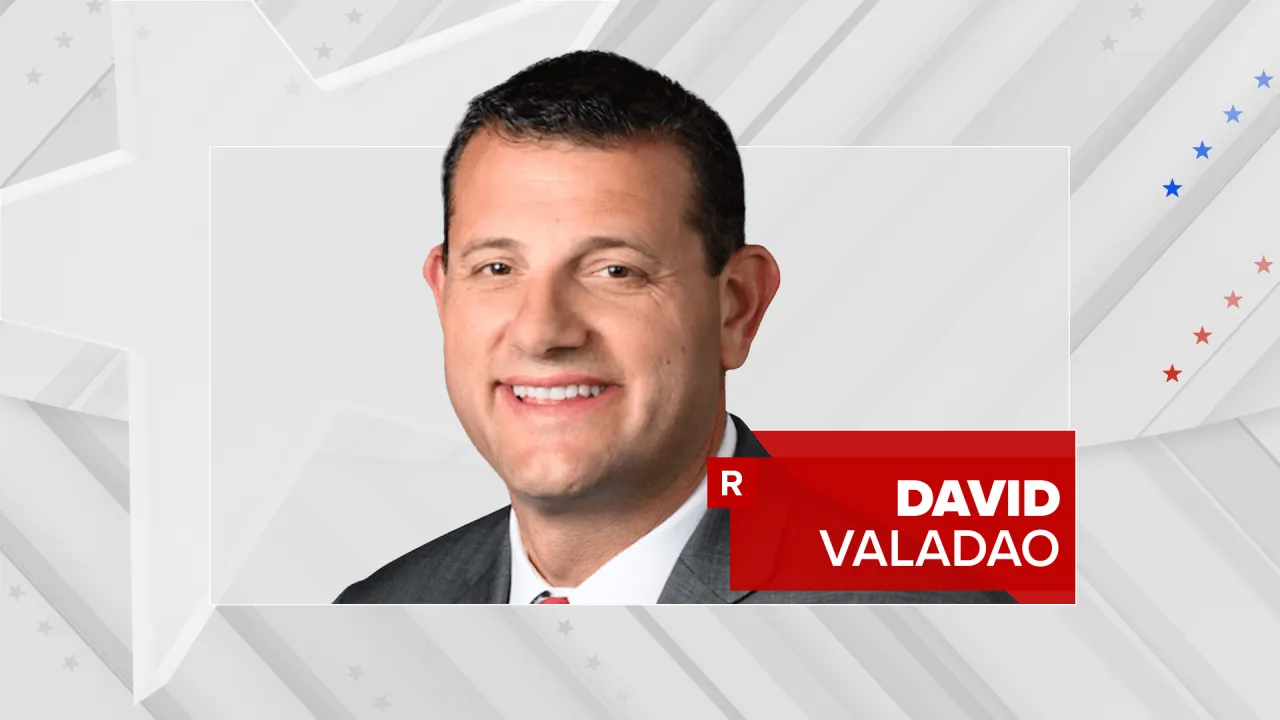
Decision Desk HQ projects incumbent Republican Representative David Valadao will advance to the November general election in California’s 22nd Congressional District. Valadao successfully navigated the state's top-two primary, defending a key Central Valley battleground seat that remains central to the national battle for control of Congress.
BAKERSFIELD, Calif. — Incumbent Republican Representative David Valadao is projected to advance to the November general election in California’s 22nd Congressional District, according to a race call by election data provider Decision Desk HQ (DDHQ). The projections, released following the closure of polling centers during the state’s jungle primary on Tuesday, June 2, 2026, place the sitting congressman in a secure position to defend one of the most vital battleground seats in the United States House of Representatives.
Under California's unique top-two primary system, all candidates appear on the same ballot regardless of party affiliation, with the top two vote-getters moving forward to the autumn ballot. According to primary updates provided by the California Secretary of State, Valadao successfully cleared a field that included prominent regional Democratic challengers, ensuring the Republican Party maintains an active foothold in a heavy agricultural district that has historically fluctuated between both major political parties.
Valadao Defies Lean-Democratic District Trends in San Joaquin Valley
The performance of Representative David Valadao highlights his historical durability in a district that local analysts emphasize is mathematically challenging for Republicans. The 22nd Congressional District, situated within the fertile San Joaquin Valley, encompasses all of Kings County and sections of Tulare and Kern counties, including parts of Bakersfield, Hanford, and Delano.
According to data compiled by the Federal Election Commission, Valadao entered the final leg of the primary race with a substantial financial resource advantage over his challengers, reporting more than $4.2 million in total receipts. His primary opponents, Democrats Jasmeet Bains and Randy Villegas, split a significant portion of the progressive and moderate base, easing the incumbent's path to securing the first-place finish on the nonpartisan ballot.
The general election landscape for this district has historically seen razor-thin margins. Valadao previously won reelection in 2024 by defeating Democrat Rudy Salas with 53.4% of the vote, following an equally competitive 51.5% victory in 2022. Observers note that the district features a high density of working-class households, with a Cook Partisan Voting Index historically favoring Democrats, making Valadao’s continued survival a focus for national committee strategists.
Redistricting Context Shapes the Fall General Election Layout
Political analysts point out that the 2026 primary was conducted under newly adjusted boundary constraints following recent state redistricting adjustments. According to nonpartisan election trackers like the Cook Political Report, the modified boundaries shifted slightly to incorporate areas that demographic experts suggest present a marginally friendlier environment for Democratic mobilization efforts.
Despite the structural headwind, Valadao’s campaign emphasized infrastructure and local resource achievements, specifically pointing to federal bipartisan water management bills and defense health access initiatives designed to support Central Valley veterans.
Official Expectations and Statements from Election Callers
Electoral data tracking bodies validated that the early return trends left no statistical pathway to deny the incumbent an appearance on the November ballot.
"According to officials at Decision Desk HQ, early mail-in ballot tracking and primary day trends indicate that Representative David Valadao has established a insurmountable lead to secure a top-two position," the tracking service noted. "Organizers stated that while the battle for the second slot between the major Democratic candidates remains close as rural precinct counts trickle in, Valadao’s position at the top of the ticket is secure."
Broader Impact on National House Majority Calculations
The outcome of the CA-22 race remains a fundamental pillar in determining which political party commands the legislative gavel in Washington. Central Valley districts are viewed as essential paths to a majority by both national party organizations.
Key Factors Shaping the CA-22 Dynamic:
The Incumbency Advantage: Valadao's localized brand as a dairy farmer has historically enabled him to outpace standard top-of-ticket partisan alignments.
Turnout Disparities: Historic records from the California Secretary of State indicate that lower primary turnout tends to benefit organized conservative voting blocs in rural areas, while general elections draw a broader demographic.
National Financial Influx: With the seat certified as a "Toss-Up" by independent groups, independent expenditure committees are projected to invest millions into localized television and digital advertising markets before November.
Official Sources Section
The analytical updates, financial statistics, and voter roll configurations referenced in this news report are drawn directly from public disclosures by the Federal Election Commission, candidate filing tracking from the California Secretary of State, and statistical modeling logs published by Decision Desk HQ.
Why It Matters
For Central Valley residents and national voters, the advancement of Representative David Valadao ensures that California's 22nd district will remain a multi-million-dollar battleground through November. The race serves as an indicator of whether moderate-leaning Republicans can continue to hold districts with heavy Latino populations and high concentrations of agricultural workers during mid-term cycles.
Key Facts at a Glance
Projected Outcome: DDHQ forecasts incumbent Rep. David Valadao (R) will advance from the top-two primary to the general election.
Financial Advantage: FEC logs show Valadao raised over $4.2 million, outstripping individual Democratic primary challengers.
District Demographics: The San Joaquin Valley seat is a highly competitive, majority-Latino district with deep economic ties to agriculture.
November Outlook: Major national rating publications categorize the seat as a premier battleground that will dictate control of the U.S. House.
Frequently Asked Questions
How does California's top-two primary process affect this race?
In California, all candidates run on a single ballot regardless of party. The two candidates who receive the most votes move on to the November general election, meaning the fall race could be between a Republican and a Democrat, or two candidates of the same party.
Who were the primary Democratic challengers in this election cycle?
The primary field featured notable regional challenges from Democrats Jasmeet Bains and Randy Villegas, who competed to consolidate the Democratic base throughout the Central Valley district.
Why is California's 22nd District considered so important nationally?
The district is one of a handful of seats held by a Republican despite having an overall voter registration profile that leans Democratic. Winning or retaining this seat is crucial for either party seeking to control the majority in the U.S. House of Representatives.
Source: California Secretary of State, Federal Election Commission, Decision Desk HQ Race Boards