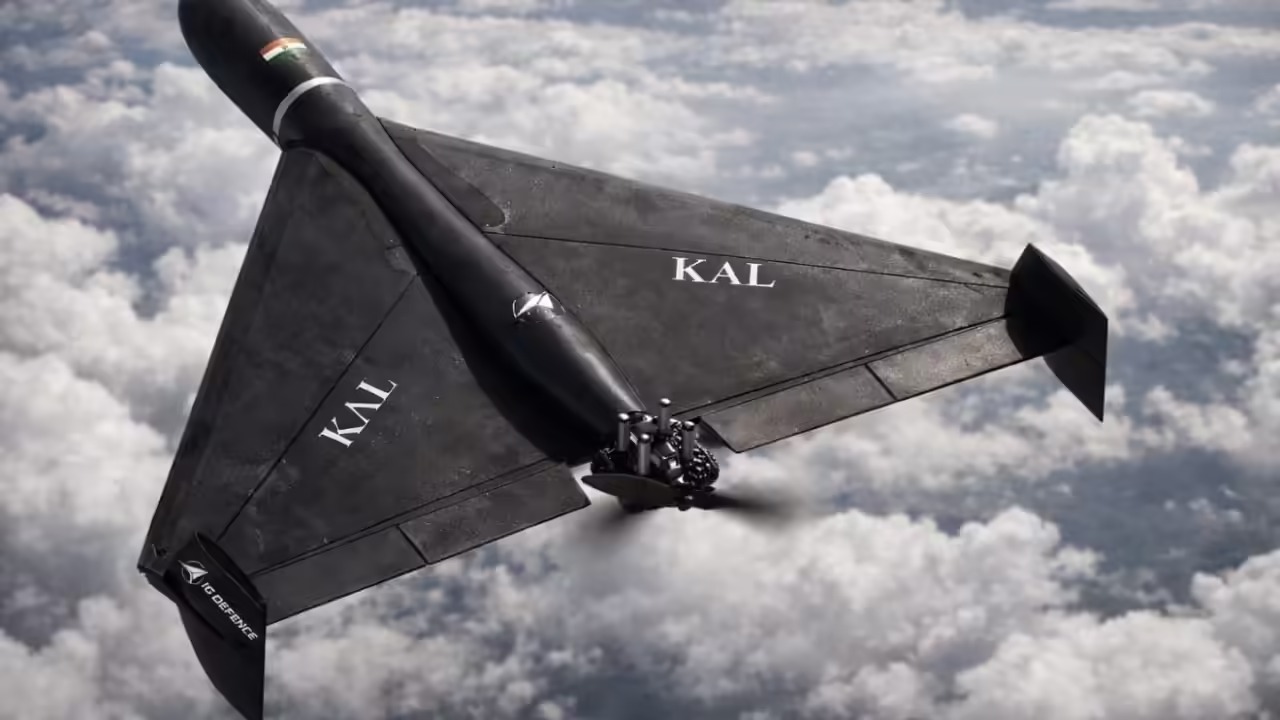
The Indian Air Force has initiated a joint project with domestic private industries to design and manufacture long-range kamikaze drones. Managed by the 5 BRD at Sulur, the program requires a 16,000-foot operational ceiling and a 30 kg payload capacity, while mandating that the platforms remain entirely free from Chinese components.
NEW DELHI — The Indian Air Force (IAF) has officially launched a major manufacturing project to jointly design, develop, and produce advanced indigenous long-range kamikaze drones alongside domestic industrial partners. According to standard military procurement briefs finalized on June 17, 2026, the service has issued a limited tender enquiry targeting prominent local engineering firms and aerospace startups. The initiative seeks to build a secure, self-sustaining defense ecosystem optimized for the changing realities of modern, drone-centric border conflicts.
The defense rollout signals a fundamental shift in how the country's armed forces handle tactical technology acquisition. Rather than relying on standard commercial purchasing loops where the military buys off-the-shelf equipment from foreign vendors, the air force is taking direct ownership of the platform's development timeline. This structural shift guarantees that the military will possess absolute sovereign authority over future updates, ensuring electronic asset configurations remain secure from external tampering.
Direct Technical Controls and Joint Development Architecture
The foundational design program for the fixed-wing, one-way attack unmanned aerial systems (OWA-UAS) is being actively coordinated under a unified defense directive. The IAF has officially appointed the 5 Base Repair Depot (BRD) at Sulur, near Coimbatore in Tamil Nadu, to serve as the specialized nodal agency tasked with overseeing corporate execution, factory testing, and final quality management.
Technical specifications outlined within the regulatory tender require the drone platform to operate at altitudes reaching up to 16,000 feet, featuring full mission capability during both day and night operational windows. The structural frames are engineered to hold a modular explosive payload of at least 30 kilograms.
Furthermore, the flight systems are designed to support complete operational autonomy allowing for automated launch sequence execution, pre-programmed waypoint navigation, and long-duration target loitering with minimal human-in-the-loop dependencies.
Intellectual Property and Supply Chain Sanitization
A defining operational pillar of the new OWA-UAS framework is the military's strict mandate regarding the retention of Intellectual Property Rights (IPR). By holding full platform ownership, the IAF can rapidly execute hardware modifications and custom software patches in response to emerging electronic warfare challenges without being restricted by proprietary vendor controls.
| Operational Parameter | Mandated Performance & Procurement Guidelines |
| Operational Ceiling | Capable of sustained flight paths up to 16,000 feet |
| Payload Capacity | Modular explosive/sensor loading baseline of ≥30 kg |
| Nodal Management Hub | 5 Base Repair Depot (BRD), Sulur, Tamil Nadu |
| Supply Chain Clause | Absolute exclusion of Chinese-origin materials and parts |
To protect the integrity of its data networks, the air force has established a strict supply chain restriction. All submitting manufacturing groups must verify that their platforms are entirely free from Chinese-origin technology, materials, microprocessors, or raw components.
This zero-tolerance policy ensures that the finished loitering munitions rely on trusted, secure regional hardware lines, insulating the frontline strike assets against the threat of built-in hardware vulnerabilities or remote kill-switches.
Official Sources Section
The operational performance benchmarks, engineering lot sizes, and structural IPR clauses cited throughout this release are sourced directly from formal defense procurement specifications and limited tender documents issued by the Ministry of Defence and the Indian Air Force. Strategy parameters mirror public policy frameworks managed under the national Atmanirbhar Bharat aerospace development guidelines.
Quote Section
"According to defense officials familiar with the project's parameters, keeping total ownership of the underlying designs will allow the service to rapidly modify and customize the loitering platforms as operational needs change on the battlefield, giving frontline commanders a major technological edge."
Why It Matters
The decision to build localized kamikaze drones carries immediate practical significance for national security frameworks and regional defense economics. Moving toward a fully domestic manufacturing base shields military logistics networks from cross-border supply chain delays during sudden geopolitical crises. For frontline defense personnel, the deployment of highly autonomous, low-cost loitering munitions provides a precise strike capability against hostile radar nests and hardened border positions, minimizing the exposure of piloted multi-role fighter aircraft to enemy surface-to-air missile threats.
Key Facts at a Glance
Project Objective: The IAF has launched a joint-venture development program to build long-range kamikaze drones with Indian partners.
Operational Capabilities: The fixed-wing platforms must be capable of day and night missions up to altitudes of 16,000 feet.
Sovereign Design Rights: The air force will retain all intellectual property rights (IPR) to facilitate independent software and hardware upgrades.
Supply Line Safety: The tender enforces an absolute ban on Chinese-origin components or materials to eliminate cyber security risks.
Frequently Asked Questions
What exactly is a kamikaze drone in modern combat?
Often classified as one-way attack unmanned aerial systems (OWA-UAS) or loitering munitions, these are specialized unmanned aircraft engineered to navigate to a designated combat zone, locate a target autonomously or via remote control, and destroy it by detonating on impact.
Why is the IAF emphasizing the retention of intellectual property rights (IPR)?
Retaining full design IPR ensures the air force isn't locked into a single defense contractor. This ownership allows the military to independently develop software updates, integrate new payloads, and roll out anti-jamming upgrades quickly as battlefield threats evolve.
Which agency is leading the industrial coordination for this project?
The program is being managed directly by the 5 Base Repair Depot (BRD) located at Sulur near Coimbatore, Tamil Nadu, which serves as the primary technical hub for vetting private aerospace proposals.
Source: