The Kurnool District Consumer Commission ordered ICICI Lombard to pay a ₹50 lakh accidental death claim to a deceased policyholder's nominee. The court ruled that insurers cannot reject claims by demanding post-issuance financial documents or additional police reports when the accidental death is proved by existing police records.
KURNOOL, India — The District Consumer Disputes Redressal Commission in Kurnool, Andhra Pradesh, ordered ICICI Lombard General Insurance Company Limited to pay a ₹50 lakh accidental death insurance claim to a policyholder's nominee. The ruling, delivered by a bench comprising President Karanam Kishore Kumar and members N. Narayana Reddy and S. Nazima Kausar, affirmed that insurance companies cannot introduce new conditions or demand non-essential documents at the claim stage after issuing a policy.
The directive addresses post-contractual hurdles faced by policyholders' families during claim settlements, establishing that insurers are bound by the terms agreed upon at the time of proposal acceptance.
Background of the Dispute
The case originated from a personal accident insurance policy purchased by Gandla Mulaiah, a 58-year-old self-employed resident of Nandyal, Andhra Pradesh. Mulaiah had secured a three-year personal accident policy from ICICI Lombard with a sum assured of ₹50 lakh, effective from June 9, 2025, to June 8, 2028, after paying an annual premium of ₹14,445.
On July 28, 2025—less than two months after purchasing the policy—Mulaiah died in a road accident after being struck by a mini-truck. Following his death, his wife and designated nominee, Gandla Prameela, submitted a claim to ICICI Lombard. The claim was accompanied by standard documents, including the original policy certificate, death certificate, First Information Report (FIR), post-mortem report, inquest report, and the police charge sheet.
Reasons for Claim Repudiation
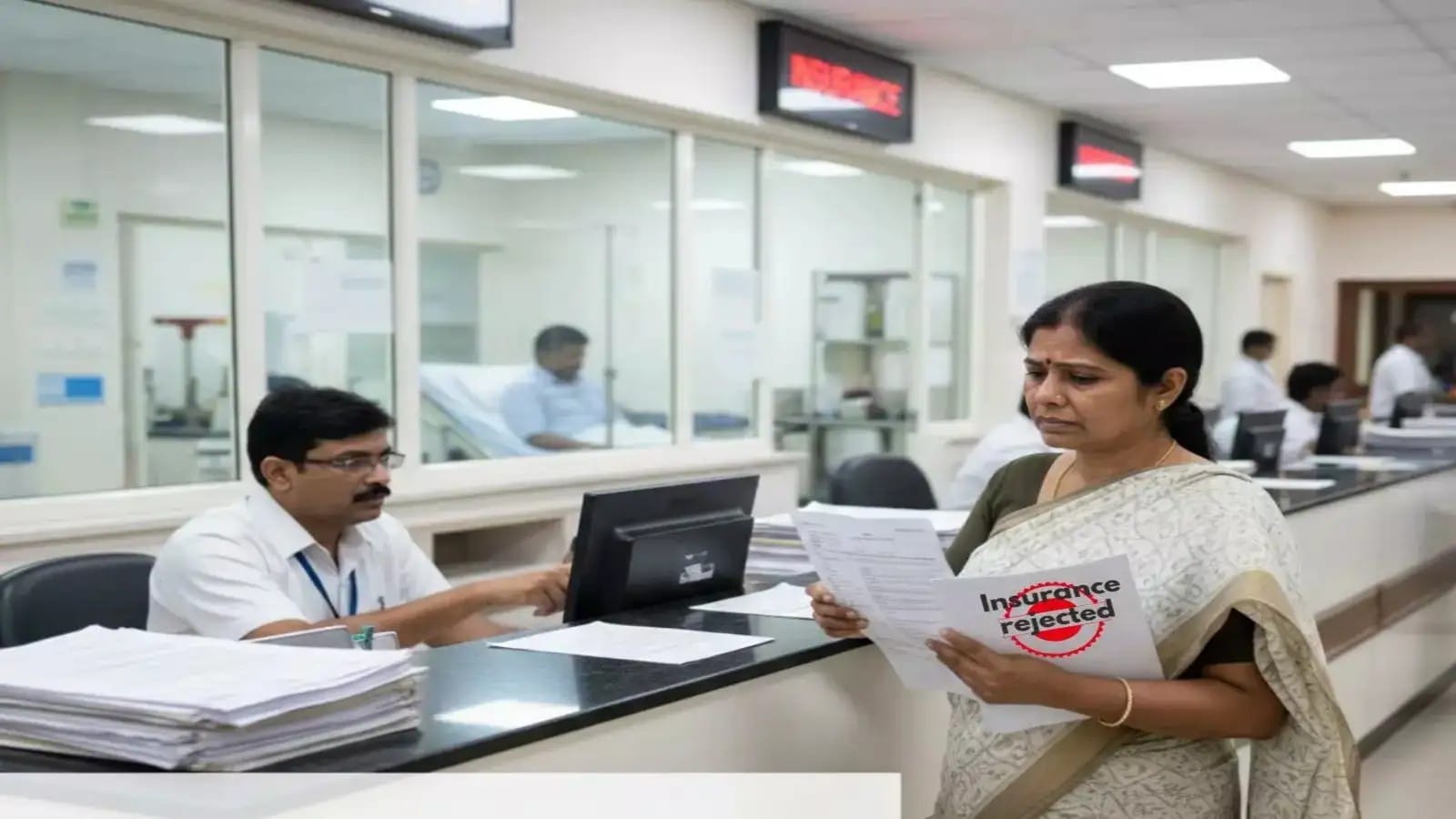
ICICI Lombard repudiated the claim on October 3, 2025, citing the non-submission of a "Police Final Report". In subsequent communications, the insurer expanded its requirements, issuing a 10-point document demand list that included one year of bank statements, Income Tax Returns (ITRs), a court final order, and a Forensic Science Laboratory report.
The insurance provider contended that the police charge sheet did not qualify as the final police report and argued that financial records were required to process the personal accident claim. The nominee filed a complaint with the Kurnool District Consumer Disputes Redressal Commission.
Consumer Court Observations and Ruling
The consumer commission rejected ICICI Lombard's arguments, holding that the police charge sheet filed before the jurisdictional criminal court serves as the final outcome of a police investigation. Consequently, the insurer's insistence on a separate "final police report" was deemed legally unsustainable.
The bench noted that during the proposal stage, ICICI Lombard accepted the policy application and collected the premium without requesting proof of income, tax filings, or bank statements. The commission ruled that having underwritten the risk on those terms, the insurer is legally barred from demanding financial records after an accidental death occurs.
Relying on Supreme Court precedent (Gurmel Singh v. National Insurance Company Ltd.), the commission emphasized that insurance claims cannot be rejected on technical grounds when the occurrence of the insured event is established by evidence.
The commission directed ICICI Lombard to:
Pay the sum assured of ₹50,00,000 to the nominee.
Pay ₹20,000 as compensation for mental agony.
Pay ₹10,000 toward litigation expenses.
The total amount must be paid within 45 days. If the company fails to pay within this period, the ₹50 lakh sum will carry an annual interest rate of 9% from the complaint filing date (November 4, 2025) until realization.
Official Sources Section
Regulatory filings, consumer orders, and case documentation regarding this matter originate from the District Consumer Disputes Redressal Commission, Kurnool. Guidance on claim processing standards and consumer rights is governed by the Insurance Regulatory and Development Authority of India (IRDAI) and the Department of Consumer Affairs.
Quote Section
"The repudiation of the claim on the ground of non-submission of the Police Final Report is unsustainable," the bench observed in its order. "Further, the requirement of furnishing the Income Tax Return and one year's bank statement has not been shown to have any nexus with determining the liability under an accidental death policy. The insurer is estopped from raising such objections at the claim stage, particularly when the claim arises out of an accidental death, which stands independently established by cogent evidence on record."
Why It Matters
This judgment reinforces consumer protection standards across India's general insurance sector. By establishing that insurers cannot request financial documents after a loss occurs if those documents were not required during underwriting, the ruling limits the practice of using post-issuance documentation requests to delay or repudiate valid claims.
Key Facts at a Glance
Payout Order: ICICI Lombard ordered to pay ₹50 lakh sum assured plus ₹30,000 in compensation and legal costs.
45-Day Deadline: Payment must be completed within 45 days; default triggers 9% annual interest backdated to November 2025.
Legal Finding: Police charge sheets constitute valid final investigation reports for insurance claims.
Underwriting Standard: Insurers cannot demand financial records at the claim stage if they were not solicited during proposal acceptance.
Frequently Asked Questions (FAQ)
Can an insurance company ask for income proof after a policyholder dies?
According to the Kurnool Consumer Commission's ruling, an insurer cannot demand Income Tax Returns or bank statements during claim processing if such financial proof was not required when the policy was underwritten and issued.
Does a police charge sheet count as a final report for insurance claims?
Yes. The consumer court clarified that a police charge sheet submitted to a jurisdictional court represents the final outcome of an investigation and provides sufficient evidence of an accidental event.
What happens if ICICI Lombard fails to pay within 45 days?
If the insurer does not comply with the order within 45 days, the ₹50 lakh amount will accrue interest at 9% per annum from November 4, 2025, until the payment is completed.
Source: Official judgment records from the District Consumer Disputes Redressal Commission, Kurnool, regulatory compliance guidelines from the Insurance Regulatory and Development Authority of India (IRDAI), and statutory provisions under the Consumer Protection Act, 2019.