The IMD has issued heightened Orange and Yellow alerts across Maharashtra and Delhi-NCR as an active southwest monsoon front advances. Heavy rains have flooded low-lying areas and caused traffic delays in Mumbai, while lighter showers bring welcome relief and cooler temperatures to northern India.
MUMBAI, INDIA — The India Meteorological Department (IMD) issued a series of severe weather warnings across multiple states, upgrading metropolitan Mumbai and its surrounding districts to an Orange Alert. Concurrently, national capital Delhi and the wider National Capital Region (NCR) have been placed under a Yellow Alert as the advancing southwest monsoon gains significant traction across northern and western India.
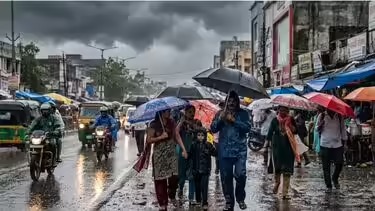
The meteorological developments on Wednesday, July 1, 2026, brought intense downpours that disrupted urban transit networks but offered essential thermal relief. Weather stations reported that strengthening westerly winds are funneling dense moisture off the Arabian Sea directly into the Konkan coastline. This pattern is triggering intense precipitation zones that are now expanding eastward into central and northern states.
Maharashtra Upgraded to Orange Alert as Low-Lying Zones Flood
In Maharashtra, regional disaster management teams have been placed on high visual standby following the IMD’s upgraded warnings. An Orange Alert is active for Mumbai, Thane, Raigad, Ratnagiri, and the vulnerable terrain of the Pune ghats, indicating a high probability of heavy to very heavy localized rainfall. Neighbors in the Palghar district face an even stricter Red Alert warning of extremely heavy standalone thunderstorms.
The immediate real-world impact of the downpour was felt rapidly across Mumbai's infrastructure on Wednesday morning. The Brihanmumbai Municipal Corporation (BMC) shut down the Andheri Subway after water logging reached a depth of 1.5 feet, forcing major traffic diversions across the western suburbs. High winds also caused multiple tree falls, including a major collapse near the DN Nagar Metro Station that damaged a transit vehicle and caused gridlock along Swami Vivekananda (SV) Road.
Despite the immediate travel disruptions, the rain is urgently needed. Municipal filings show that the seven water reservoirs supplying Mumbai have dropped below 7% capacity due to a delayed start to the monsoon season.
Yellow Alert Active for Delhi-NCR as Monsoon Front Advances
Further north, the national capital region is experiencing a parallel weather transition. The IMD maintained its Yellow Alert for Delhi-NCR, forecasting persistent light-to-moderate showers accompanied by gusty surface winds and localized lightning activity. The advancing frontal boundary has successfully broken a prolonged heatwave, cooling regional maximum temperatures closer to seasonal averages.
Regional forecast centers warned that the monsoon's boundary interaction is triggering severe convective storms further east. Heavy thunderstorm alerts have expanded across parts of Uttar Pradesh, Bihar, and eastern Rajasthan. Localized authorities in these states have issued safety advisories warning rural communities about dangerous lightning strikes and sudden wind damage during evening commutes.
Official Sources Section
The weather tracking metrics, regional alerts, and data tables cited in this report were compiled from official media releases published by the India Meteorological Department (IMD) under the Ministry of Earth Sciences. Urban traffic updates and street closure logs are derived from live operational feeds maintained by the Brihanmumbai Municipal Corporation and the Mumbai Traffic Police.
Quote Section
"According to officials at the weather bureau's regional forecasting centers, while the current active monsoon phase is successfully reducing severe seasonal moisture deficits, commuters must minimize unnecessary travel during peak high-tide windows to mitigate the risks of localized flash flooding."
Why It Matters
For millions of urban commuters and logistics businesses across Mumbai and Delhi, these alerts mean a higher risk of travel delays and localized supply chain disruptions. For agricultural producers, the expanding rainfall front is critical to accelerate the planting of summer-sown Kharif crops like rice, corn, and soybeans, which had faced delays due to an unusually dry June. For city planners, the steady downpours are essential to replenish dangerously depleted drinking water reservoirs.
Key Facts at a Glance
Highest Alert Levels: Red Alert issued for Palghar; Orange Alert activated for Mumbai, Thane, and Raigad.
Urban Disruption: The Andheri Subway was closed due to 1.5 feet of flooding, alongside reported tree falls across major transit routes.
Northern Advance: Delhi-NCR placed under a Yellow Alert as cooler monsoon winds replace the recent heatwave.
Reservoir Status: Catchment water levels for Mumbai's supply system remain low at under 7% capacity.
National Impact: Active thunder and lightning warnings have expanded across Uttar Pradesh, Bihar, and Rajasthan.
Frequently Asked Questions
What is the difference between the Orange and Yellow alerts issued by the IMD?
An Orange Alert indicates that authorities and residents should "be prepared" for severe weather that could disrupt transport and power networks. A Yellow Alert is an advisory to "stay aware" of changing, potentially hazardous weather conditions over the next few days.
Why are Mumbai authorities particularly concerned about rains overlapping with high tides?
When heavy rainfall occurs during a marine high tide, urban storm drains cannot discharge effectively into the ocean. This causes water to back up rapidly, severely aggravating street flooding in low-lying areas.
Are schools and offices closed in Mumbai due to the Orange Alert?
Municipal authorities monitor rainfall accumulations hourly. Unless an explicit emergency closure order is issued by the BMC, schools, banks, and public offices remain open, though remote work is encouraged where possible.
Source: India Meteorological Department National Forecasting Center, Brihanmumbai Municipal Corporation Disaster Management Portal.