The Central Board of Direct Taxes (CBDT) has integrated foreign income & assets data received via international exchange networks into the Annual Information Statement (AIS). Taxpayers are advised to review the portal and reconcile calendar-to-fiscal differences ahead of ITR deadlines to avoid steep penalties under the Black Money Act.
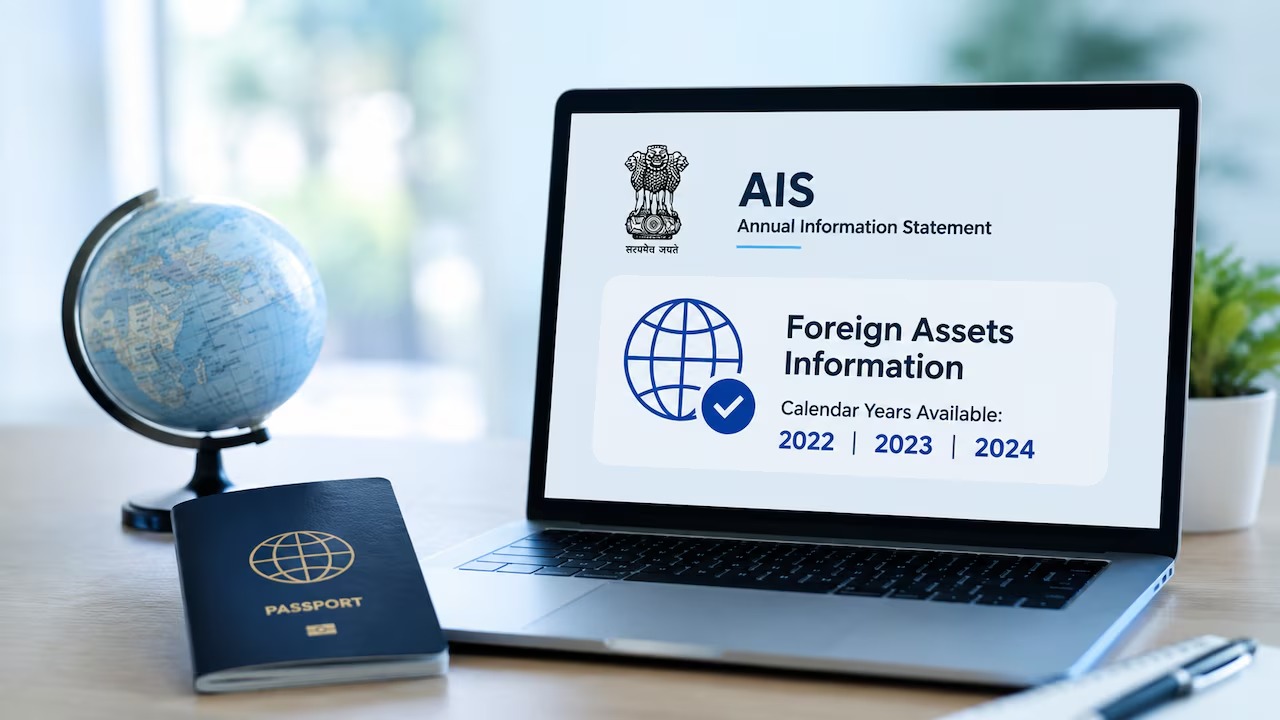
NEW DELHI — In a major push for transparency and digital reporting ahead of the primary income tax return (ITR) filing deadline, the Central Board of Direct Taxes (CBDT) has enabled a new regulatory feature. Eligible resident taxpayers can now directly view inbound information regarding their foreign income & assets via the Annual Information Statement (AIS) on the national tax e-filing portal.
The update stems from administrative orders issued by the CBDT, which formally authorize the Director General of Income-tax (Systems) to map cross-border financial data received from international jurisdictions directly onto individual dashboards. The integration converts previously restricted global intelligence streams into accessible pre-filing data. The move is designed to minimize reporting discrepancies, eliminate inadvertent omissions, and tighten enforcement against undisclosed offshore wealth.
Direct Integration of Global Financial Intelligence
The newly deployed AIS architecture utilizes bulk financial data received from over 100 foreign partner nations under the global Automatic Exchange of Information (AEOI) framework. This continuous data pipeline functions via international compliance standards, including the Common Reporting Standard (CRS) and the Foreign Account Tax Compliance Act (FATCA).
According to official briefings from the Income Tax Department, the systems track a wide variety of overseas holdings. These include:
Foreign savings and current bank accounts
Global custodial account portfolios and stock holdings
Corporate Employee Stock Ownership Plans (ESOPs) or Restricted Stock Units (RSUs)
Overseas immovable properties and international investment contracts
Accrued foreign financial streams, including international interest and dividends
Currently, the portal reflects comprehensive historical data collections covering calendar years 2022 through 2024. Figures for calendar year 2025 are projected to be processed and populated by late September or October 2026 once final transmissions conclude with partner governments.
Meticulous Reconciliation for Calendar and Fiscal Discrepancies
Tax professionals warn that the inclusion of foreign income & assets data in the AIS requires careful accounting work from individuals. A primary challenge involves reconciling the timeline differences between international global reporting and domestic rules. The incoming AEOI data follows the standard Western calendar year (January to December), whereas the Indian tax framework evaluates financial data strictly through the domestic fiscal cycle (April to March).
Consequently, taxpayers cannot simply copy the aggregated summary values visible in the AIS directly onto their ITR forms. Instead, individuals must cross-reference their foreign brokerage statements, extract precise month-wise details, and calculate corresponding amounts that align accurately with the Indian financial year.
If an individual qualifies under the status of a Resident and Ordinarily Resident (ROR) and holds international financial interests, selecting basic filing layouts like ITR-1 or ITR-4 is legally invalid. Such filers must use the detailed ITR-2 or ITR-3 layouts to satisfy disclosures.
Penalties and Compliance Windows Under the Law
The direct visibility of international assets in the AIS establishes an automated data benchmark for systemic risk assessment. If automated algorithms detect that an individual has left Schedule FA completely blank despite active AEOI listings, the system will automatically flag the account for immediate compliance inquiries or statutory notices.
Under Section 43 of the Black Money Act, 2015, the penalty for failing to disclose or misreporting foreign holdings amounts to a flat ₹10 lakh per financial year, alongside potential criminal prosecution.
However, current regulatory measures provide specific relief under the Foreign Assets of Small Taxpayers Disclosure Scheme, 2026. Non-immovable legacy foreign assets—such as old student bank accounts or standard corporate ESOP allocations—with a combined total value below ₹20 lakh are shielded from the severe ₹10 lakh penalty and prosecution risks. Legal professionals note the CBDT's data upload timeline appears structured to let small taxpayers voluntarily correct past disclosure omissions using this specialized window.
Official Sources Section
Regulatory mechanisms, filing parameters, and compliance details cited in this news report are drawn from official directives and gazette notifications published by the Central Board of Direct Taxes (CBDT), public circulars issued by the Ministry of Finance, and statutory provisions of the Black Money Act, 2015.
Quote Section
Tax authorities are reminding individuals that the digital pre-fill updates are meant to serve as a supportive tool rather than an absolute log.
According to officials at the e-filing helpdesk, SMS and email notifications are being distributed to keep taxpayers informed about these changes. Financial consultants emphasize that the ultimate responsibility for accuracy rests with the filer. Senior tax experts stated that:
"The inclusion of global information in the AIS aims to help taxpayers meet their voluntary compliance steps. However, the AIS is not an exhaustive repository. If an offshore bank account or foreign stock portfolio does not show up on the online portal, the taxpayer is still legally required to declare it in Schedule FA. Leaving it out because it wasn't visible in the AIS will not protect an individual from penalties under the Black Money Act."
Why It Matters
For Indian residents holding global portfolios, tech workers earning foreign equity benefits, and citizens with legacy overseas bank accounts, this update demands a shift in how they prepare their tax returns.
The integration of foreign income & assets data into the AIS means the tax department can now instantly identify undisclosed overseas holdings. To avoid severe financial penalties and protracted legal disputes, taxpayers must thoroughly reconcile their records before submitting their final filings.
Key Facts at a Glance
System Expansion: The CBDT has officially integrated international foreign asset data received from over 100 partner countries into the visible AIS portal.
Data Timeline: The platform currently shows historical foreign holdings from calendar years 2022 to 2024, with 2025 data expected by October 2026.
Reporting Mismatch: International data is structured by the calendar year, requiring taxpayers to manually adjust figures to fit India's fiscal year layout.
Severe Penalties: Missing or inaccurate declarations in ITR Schedule FA can trigger flat penalties of ₹10 lakh per year under the Black Money Act.
Exemption Threshold: Small taxpayers holding legacy assets below a total value of ₹20 lakh are protected from these steep fines under a 2026 relief scheme.
FAQ Section
How do I view my foreign income & assets information in the AIS?
Taxpayers can review their details by logging into the official e-filing portal, navigating to the 'Services' tab, and selecting 'Annual Information Statement (AIS)'. From there, head to the Compliance Portal's 'Reports' section and select 'Foreign Assets Information' to download the corresponding data files.
What should I do if the foreign information in my AIS contains incorrect amounts?
If there is a mismatch between your personal banking records and the portal data, you should submit digital feedback directly through the e-filing compliance interface. Additionally, you must retain all original foreign bank statements and investment documents to support the figures declared in your ITR.
Am I required to fill out Schedule FA if my overseas investments generated no income?
Yes. Every resident taxpayer holding legal or beneficial ownership of any foreign account, equity share, or property must disclose it in Schedule FA. This rule applies even if the asset produced no income or yield during the relevant financial year.
Source: Central Board of Direct Taxes (CBDT) AEOI Portal Guidelines; Ministry of Finance Revenue Department Circulars; Section 43 of the Black Money (Undisclosed Foreign Income and Assets) Act, 2015.










![The Central Consumer Protection Authority [CCPA] Imposes ₹1 Lakh Penalty on SpiceJet for Using Dark Patterns](/storage/news/1784346237_6a5af67d57f1e.webp)
