India and Australia have finalized administrative arrangements to activate long-term uranium exports and signed a comprehensive joint statement to build resilient supply chains for critical minerals and clean energy. The pact also introduces a Maritime Security Collaboration Roadmap to protect energy product flows across the Indo-Pacific.
MELBOURNE — In a major geopolitical intervention to secure Indo-Pacific resource corridors, India and Australia have issued a comprehensive joint statement establishing resilient industrial networks for energy products, critical minerals, and advanced technology.
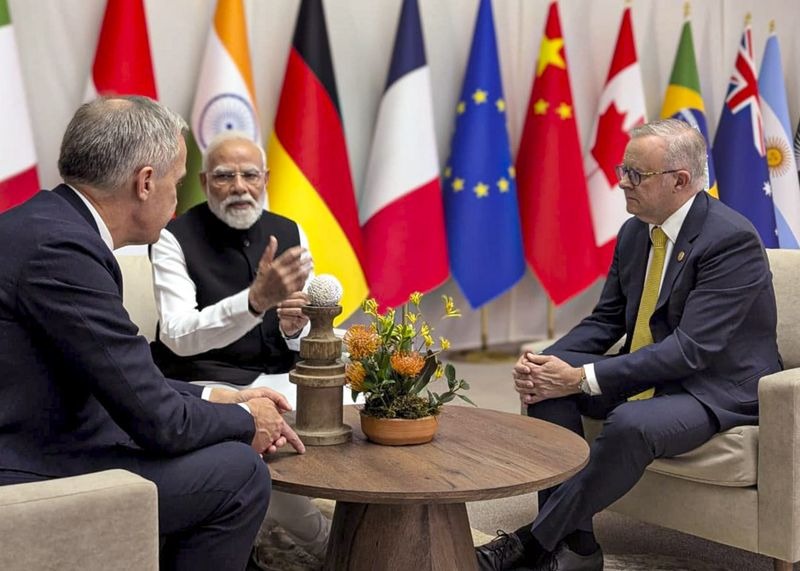
Formalized on July 9, 2026, during the Third Australia-India Annual Summit in Melbourne, the sweeping bilateral pact was sealed directly between Indian Prime Minister Narendra Modi and Australian Prime Minister Anthony Albanese. Amid persistent disruptions affecting international maritime trade, both nations have finalized long-delayed administrative arrangements enabling the immediate export of Australian uranium to India, while simultaneously locking in multi-billion dollar framework investments to develop alternative clean energy and semiconductor supply chains.
Finalizing Uranium Protocols and Sustaining Energy Trade
A foundational milestone of the updated bilateral framework is the formalization of the operational protocols required to trigger commercial nuclear fuel shipments. Operating under the guidelines of the initial Australia-India Nuclear Cooperation Agreement, both administrations confirmed they have finalized the administrative arrangements necessary to enable the export of Australian uranium to India. The fuel transfers will remain strictly designated for exclusively peaceful civilian power generation and will operate under the continuous monitoring of the International Atomic Energy Agency (IAEA) safeguards.
Recognizing severe volatility along global trade lines, the joint statement explicitly commits both nations to support and enhance the continuous flow of energy products. The unified commercial architecture leverages Australia’s position as a premier exporter of liquefied natural gas (LNG) alongside India’s vast operational capacity as a key supplier of refined liquid fuels and downstream petroleum products to Oceania. By removing administrative friction, the leaders seek to stabilize domestic fuel tariffs against external geopolitical shocks.
Shielding Critical Minerals and High-Tech Supply Chains
Moving aggressively to insulate technical industries from single-source dependencies, the prime ministers pledged to develop more supply chains, critical infrastructure, and connectivity, with a specific focus on critical minerals and clean energy platforms. The industrial alignment addresses growing global shortfalls in raw lithium, cobalt, nickel, and processed rare-earth components mandatory for constructing electric vehicles (EVs), grid-scale storage batteries, and specialized semiconductors.
The joint supply chain blueprint introduces clear operational mechanisms:
Coordinated Capital Deployment: Backing private market ventures through state export credit channels and development finance institutions.
Industrial Synergy: Merging Australia’s massive upstream mineral extraction reserves straight with India’s expanding downstream electronics manufacturing clusters.
GIFT City Integration: Utilizing specialized economic zones to facilitate cross-border joint ventures and fast-track industrial capital processing.
This initiative is closely supported by the recently activated Quad Critical Minerals Initiative alongside the United States and Japan, which aims to mobilize up to $20 billion in public-private funding to build fair, secure, and diversified clean‑tech markets.
Launching the Maritime Security Collaboration Roadmap
Addressing shifting balance‑of‑power dynamics inside shared oceanic channels, India and Australia agreed to enhance maritime cooperation via the newly inaugurated Maritime Security Collaboration Roadmap. The defense guide targets a deep-sea step‑change, expanding maritime domain awareness and undersea surveillance tracking across critical Indian Ocean trade lanes.
The defense architecture commits both democracies to expanding deep strategic dialogue and comprehensive defense cooperation. Operationally, the navies will expand cooperation with the United States and Japan, utilizing the full maritime capabilities of the Quad to build capability and cooperation towards a positive vision for an open, stable, peaceful, and prosperous Indo-Pacific region.
Official Sources Section
The comprehensive summit agendas, legal declarations, and resource target sheets are officially logged and maintained via the Prime Minister of Australia Media Centre and the corporate archives of India's Ministry of External Affairs. All strategic financial allocation programs operate in structural alignment with guidelines set by the federal Ministry of Finance.
Joint Executive Commentary
"Australia and India have finalised the administrative arrangements necessary to enable the export of Australian uranium to India for exclusively peaceful purposes," stated Australian Prime Minister Anthony Albanese in a formal address distributed by the Cabinet. "By deepening our resource trade and launching our new Joint Declaration on Defence and Security Cooperation, we are actively responding to emerging challenges to keep our region open, stable, and prosperous."
"According to officials accompanying the Indian diplomatic delegation in Melbourne, the multi-sector supply chain agreement marks a critical transition from basic bilateral trade into deep industrial co-investment. Lenders, technology corporations, and mining groups now possess a transparent, state-backed five-year policy runway to establish high-volume processing operations across both nations without fearing sudden regulatory alterations."
Why It Matters
For consumer tech markets, automobile builders, and green energy firms, the agreement ensures a secure, non-debt-creating supply of the critical minerals required to manufacture electronics and batteries, lowering reliance on single-country processing loops. For maritime operators and regional shipping lines, the synchronized security roadmap secures primary deep-sea corridors, protecting bulk commodity shipments from maritime coercion or arbitrary blockades.
Key Facts at a Glance
Nuclear Progress: Administrative arrangements are finalized to begin long-term Australian uranium exports to fuel Indian reactors.
Energy Trade: Reaffirmed absolute backing to sustain the continuous flow of LNG, refined liquid fuels, and downstream products.
Industrial Focus: Unified mandate to develop resilient supply chains for critical minerals, clean energy, and hardware connectivity.
Defense Strategy: Launched the Maritime Security Collaboration Roadmap alongside Quad allies to defend the Indo-Pacific region.
Frequently Asked Questions
How will the newly enabled uranium exports be monitored for safety?
All exported uranium will be utilized exclusively for peaceful, civilian power generation and remains subject to continuous audits by the International Atomic Energy Agency (IAEA).
What specific minerals are covered under the critical infrastructure pact?
The strategic partnership primarily covers elements critical to advanced technical industries, including lithium, cobalt, nickel, rare-earth magnets, and titanium.
How does the Maritime Security Roadmap impact merchant shipping?
By expanding joint anti-submarine tracking, aerial patrols, and real-time domain awareness, it directly reduces security risks and insurance premiums for cargo vessels traveling across the Indian Ocean.
Source: Summit briefing books published by the Prime Minister of Australia Media Centre, diplomatic circulars archived by the Ministry of External Affairs, and project framework registries managed by the National Security Council Secretariat.