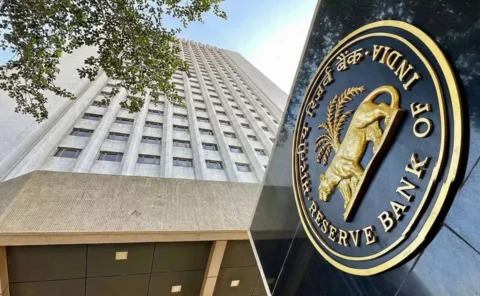
The India Central Bank Chief announced that upside risks to national inflation have reduced, aided by a significant de-escalation of conflict in West Asia. While global currency uncertainty remains an ongoing regulatory concern, the central bank confirmed that inflation shows no signs of generalizing across the broader domestic economy.
MUMBAI — The India Central Bank Chief signaled a notable shift toward domestic economic stabilization on Wednesday, June 24, 2026, stating that the primary upside risks to retail inflation have reduced. Speaking in an exclusive broadcast interview with national financial network ET Now, the regulator highlighted that while global currency fluctuations and external macroeconomic uncertainties remain active operational concerns, a sudden cooling of geopolitical tensions in West Asia has injected significant stability into global commodity supply chains. These remarks are vital today as they indicate a highly anticipated softening of the central bank's hawkish stance, offering relief to financial markets, corporate lenders, and retail consumers navigating elevated borrowing costs.
Easing Geopolitical Pressures Stabilize Sovereign Import Matrix
According to the official commentary delivered by the India Central Bank Chief, international policy environments have improved compared to the severe volatility experienced during the first half of the fiscal year. The central bank leadership emphasized that a measurable de-escalation in the West Asia conflict represents a significant positive development for emerging economies.
Because India relies on external imports to satisfy more than 80% of its domestic crude oil requirements, persistent friction along vital maritime shipping lines such as the Strait of Hormuz previously threatened to push global Brent crude values past $110 per barrel, risking imported inflationary spikes across manufacturing networks. The recent easing of these geopolitical blockades has stabilized energy prices, directly reducing input cost pressures for commercial manufacturing corporations and lowering the structural probability of fuel price hikes for ordinary consumers.
Broad Structural Measures Show No Signs of Generalizing Inflation
Addressing domestic price developments, the India Central Bank Chief explicitly clarified that the institution does not observe structural signs of inflation generalizing across the broader economy. While volatile weather patterns and localized spatial monsoon distributions occasionally generate temporary price spikes in specific agricultural categories, these supply-side shocks have remained largely isolated.
Core inflation which eliminates volatile food and fuel categories remains well within predictable limits. Financial tracking data shows that consumer demand across urban centers remains resilient without triggering dangerous wage-price spirals or broad-based demand-driven inflation. This structural separation allows the Monetary Policy Committee (MPC) to closely monitor individual supply disruptions without being forced into aggressive, reactive interest rate adjustments that could slow down underlying national gross domestic product (GDP) growth.
Currency Adjustments and Global Monetary Policy Divergence
Despite the optimistic outlook regarding domestic consumer prices, the India Central Bank Chief explicitly emphasized that international currency markets and external structural uncertainties remain primary focal points for regulatory watchdogs. The persistent strength of the US Dollar Index, driven by divergent monetary policies among Western central banks, continues to exert conversational pressure on emerging market currencies, including the Indian Rupee.
For institutional investors, multinational businesses, and import-dependent businesses, global currency uncertainty increases the total cost of managing foreign exchange risk. The central bank continues to deploy active liquidity management strategies and utilizes its foreign exchange reserves to curb erratic intraday rupee depreciation, ensuring that imported raw materials do not experience artificial cost escalations.
Official Sources Section
The macroeconomic observations, policy positions, and direct quotes referenced in this report are based on official broadcast interviews and public statements distributed by the Reserve Bank of India (RBI). Supplementary data on consumer price indexes, core sector expansion metrics, and crude import dependencies are verified via regular updates issued by the Ministry of Statistics and Programme Implementation (MoSPI) and the Ministry of Finance.
Quote Section
"According to officials and the monetary leadership, the broad economic framework remains resilient against external shocks, and the baseline structural indicators indicate a steady path toward long-term stabilization."
"Currency and external uncertainty is what we are all concerned about," stated the India Central Bank Chief during the financial press briefing. "However, the de-escalation in the West Asia conflict is a big positive, and we do not see signs of inflation generalizing yet as upside risks have reduced."
Why It Matters
The regulatory perspective shared by the central bank chief has immediate practical implications for everyday citizens and corporate entities. For retail consumers and home loan borrowers, a documented drop in inflation upside risks reduces the likelihood of future interest rate hikes, paving the way for eventual borrowing cost reductions in the upcoming quarters. For corporate boards and industrial investors, greater clarity regarding energy price stability allows for more predictable capital expenditure allocations, fostering robust domestic job creation and manufacturing expansion.
Key Facts at a Glance
Geopolitical Relief: The India Central Bank Chief described the cooling of conflicts in West Asia as a major positive catalyst for global energy supply lines.
Risk Mitigation: Total upside risks confronting domestic retail consumer price inflation have decreased significantly.
Price Isolation: Central bank trackers report no definitive signs of localized food price spikes generalizing into the broader core economy.
External Watch: Foreign currency fluctuations and US dollar dominance remain the primary external concerns for domestic financial regulators.
FAQ Section
Q1: Why does the de-escalation in West Asia benefit the Indian economy?
As a major net importer of global crude oil, any reduction in geopolitical friction secures vital trade lanes and prevents sharp energy price spikes, keeping domestic transport and production costs stable.
Q2: What does it mean when inflation is not "generalizing"?
It indicates that while certain items like specific vegetables or seasonal goods may experience brief price increases due to weather, those hikes are not spreading across other non-related goods and services like clothing, housing, or manufacturing components.
Q3: How are currency uncertainties affecting domestic businesses?
A stronger global US dollar raises the cost of importing dollar-denominated materials, forcing the central bank to actively monitor exchange desks to prevent excessive currency volatility.
Q4: Will this outlook lead to immediate home loan EMI cuts?
While an immediate cut is not guaranteed, the reduction in headline inflation upside risks signals that the central bank is unlikely to increase benchmark interest rates further, opening the door for eventual policy easing.
Sources: