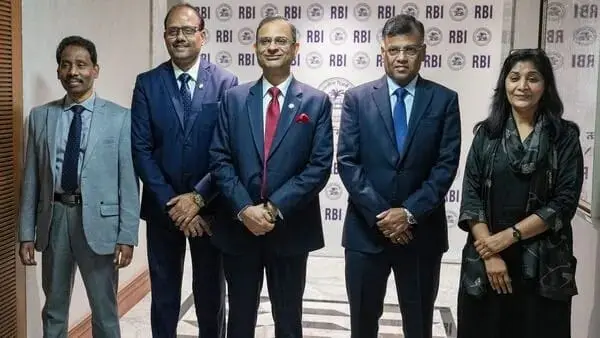
The Reserve Bank of India reported commercial bank cash balances at 8.03 trillion rupees as of September 11, with the government's surplus cash balance at nil. Refinance allocations reached 35.84 billion rupees, while banks borrowed 1.69 billion rupees via the Marginal Standing Facility,reflecting stable short-term liquidity conditions across domestic markets.
MUMBAI - Scheduled commercial banks maintained aggregate cash balances of 8.03 trillion rupees with the Reserve Bank of India (RBI) as of September 11, 2026, according to official central bank data. The data release highlights prevailing liquidity trends across the Indian banking sector, reflecting how financial institutions manage short-term capital requirements, statutory reserves, and overnight funding needs.
The update arrives as monetary authorities monitor systemic liquidity adjustments following recent foreign currency inflows and regular central bank operations. Understanding these daily metrics is crucial for tracking how commercial banks balance their reserve requirements and interact with the central bank’s liquidity management windows.
Breakdown of Bank Cash Balances and Government Accounts
According to the official money market operations statement released by the RBI, scheduled commercial banks’ cash holdings stood at 8.03 trillion rupees. Concurrently, the Government of India’s surplus cash balance reckoned for auctions with the central bank was recorded as nil on September 11.
The absence of a government cash surplus at the central bank indicates that government expenditures and tax flows have balanced out temporarily, leaving central government accounts flat ahead of upcoming fiscal outlays and scheduled debt issuances. Market participants closely track these balances to gauge immediate government borrowing pressures and short-term cash management bills.
Refinance Facilities and Marginal Standing Facility Usage
The central bank data further detailed that institutional recourse to refinancing windows and emergency lending facilities remained subdued on September 11. Specifically, the RBI noted that total refinance extended to the banking system stood at 35.84 billion rupees.
Meanwhile, commercial bank borrowing through the Marginal Standing Facility (MSF)—the penal window allowing banks to dip into emergency funds against excess government securities—totaled a modest 1.69 billion rupees. The low uptake under the MSF underscores that commercial lenders are largely self-sufficient in meeting their immediate end-of-day liquidity matching without heavy reliance on central bank intervention.
Official Sources Section
Data, statistics, and operational figures cited in this report are sourced directly from official announcements and daily statistical releases published by the Reserve Bank of India. Additional regulatory context is drawn from official monetary policy frameworks governed by the central bank.
Quote Section
According to officials, daily liquidity operations and standing facilities are deployed dynamically to ensure orderly conditions in the domestic money market and maintain alignment with prevailing monetary policy stances.
Why It Matters
For corporate borrowers, retail consumers, and financial market investors, the level of commercial bank cash balances and central bank refinancing metrics serves as a vital health indicator for the broader economy. High cash balances and low utilization of emergency windows like the MSF demonstrate that the banking system possesses adequate liquidity buffers. This stability helps anchor short-term borrowing costs, influences corporate lending rates, and ensures that banks can seamlessly extend credit to productive sectors without experiencing liquidity crunches.
Key Facts at a Glance
Bank Cash Balances: Commercial banks held 8.03 trillion rupees in cash balances with the RBI as of September 11.
Government Surplus: The Government of India's surplus cash balance with the central bank for auctions stood at nil.
Refinance Allocation: Total central bank refinance reached 35.84 billion rupees on the reporting date.
Marginal Standing Facility: Indian banks borrowed just 1.69 billion rupees via the MSF window.
FAQ Section
What do commercial bank cash balances with the RBI signify?
Cash balances represent the funds that scheduled commercial banks maintain with the central bank to meet statutory reserve requirements, such as the Cash Reserve Ratio (CRR), and to facilitate interbank settlement obligations.
Why is the government's surplus cash balance at nil important?
A zero surplus cash balance indicates that government cash inflows from revenues match or closely track immediate expenditures, temporarily removing the need for the central bank to manage surplus government funds through separate auction mechanisms.
What is the Marginal Standing Facility (MSF)?
The MSF is a dedicated window that enables scheduled commercial banks to borrow overnight funds from the RBI in emergency scenarios by pledging government securities beyond their statutory liquidity ratio requirements.
How do these liquidity figures affect retail bank customers?
Stable cash balances and low reliance on emergency windows ensure that retail lending rates, home loan costs, and deposit rates remain steady, preventing erratic volatility in consumer credit markets.
Source: Reserve Bank of India (RBI)