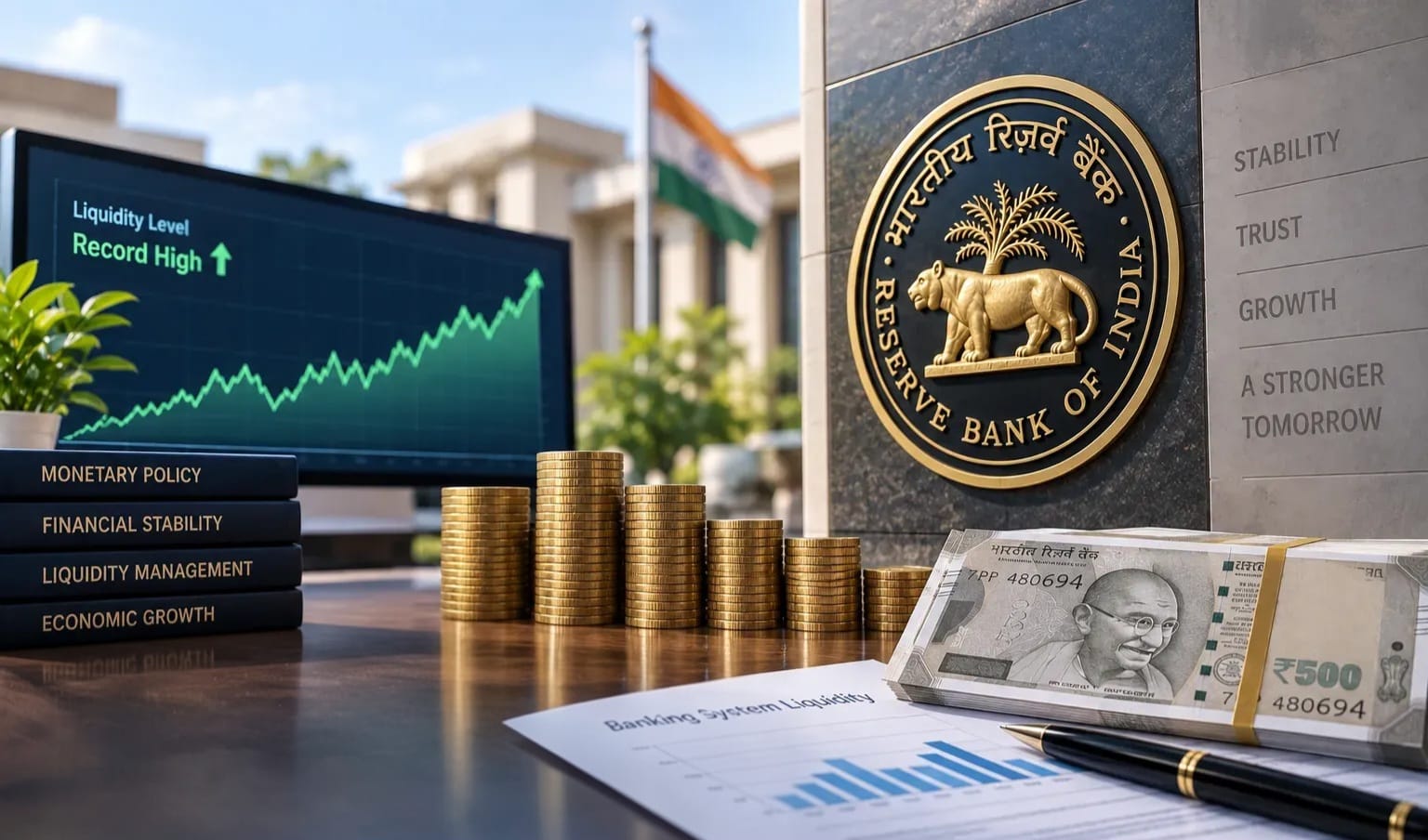
The Reserve Bank of India faces growing calls to ensure its daily liquidity management operations do not undermine the interest rate decisions set by its Monetary Policy Committee. Analysts stress that uncoordinated liquidity tightening or easing can distort market borrowing costs and disrupt policy transmission across the financial sector.
Understanding the Policy Conflict in Mumbai
The Reserve Bank of India (RBI) is facing mounting scrutiny from macroeconomists over potential friction between its daily liquidity management operations and the overarching intent of its rate-setting panel. While the Monetary Policy Committee (MPC) maintains the benchmark repo rate at 5.25% with a neutral stance, disparate interventions in the banking system's cash flows risk sending mixed signals to financial markets. Financial analysts note that surplus liquidity or sudden cash tightening tools executed outside committee deliberations can inadvertently ease or squeeze credit conditions, effectively working against carefully calibrated rate decisions.
Background on Liquidity Adjustments and Rate-Setting
System liquidity - measured via the net position under the Liquidity Adjustment Facility (LAF) - has frequently swung between tight deficits and substantial surpluses averaging over ₹1.0 lakh crore. The RBI utilizes variable rate repo and reverse repo auctions to manage these short-term cash fluctuations. However, economists argue that when liquidity tightening or infusion measures are deployed aggressively to manage foreign exchange volatility or short-term bond yields, they can override the transmission mechanisms intended by the MPC.
Impact on Borrowers, Businesses, and Investors
For commercial banks, corporate borrowers, and retail consumers, conflicting signals create unnecessary volatility in lending and deposit rates. When liquidity conditions tighten independently of policy rates, short-term money market rates spike, raising corporate borrowing costs even when the official repo rate remains unchanged. Conversely, persistent liquidity gluts can stall the transmission of rate cuts or hikes. Bond market investors and foreign institutional participants also face confusion regarding the central bank’s near-term monetary direction, complicating asset pricing and capital allocation strategies across Indian markets.
Official Sources and Regulatory Perspective
According to official announcements from the Reserve Bank of India, the central bank remains committed to aligning headline inflation with its medium-term target while preserving financial stability. Organizers and monetary authorities stated that liquidity management operations are dynamically adjusted to account for external shocks, capital flows, and government cash balances. Nevertheless, regulatory filings and policy minutes emphasize that maintaining seamless transmission requires harmony between liquidity operations and interest rate objectives.
"The Monetary Policy Committee underscores that it will maintain a close vigil and remain resolute in its commitment to align inflation with the target while supporting resilient economic growth," according to official RBI policy statements.
Why It Matters
Coherence between liquidity management and rate policy directly dictates the cost of credit for everyday consumers and expanding enterprises. If liquidity injections offset a cautious monetary stance, inflationary pressures could re-emerge unchecked. Conversely, uncoordinated tightening can choke credit flow to productive manufacturing and service sectors, dampening broader macroeconomic momentum without explicit committee approval.
Key Facts at a Glance
Policy Benchmark: The MPC maintained the policy repo rate at 5.25% under a neutral stance.
Liquidity Fluctuations: Net banking system liquidity under the LAF has experienced large swings, averaging surpluses near ₹1.0 lakh crore.
Transmission Risks: Unsynchronized liquidity operations can distort short-term money market rates and disrupt planned monetary transmission.
Core Mandate: The primary statutory objective remains anchoring consumer price inflation around the 4% target while sustaining economic growth.
Frequently Asked Questions
What is the primary conflict between liquidity moves and rate-setting decisions?
Liquidity operations control the volume of cash in the banking system, while rate-setting decisions determine the cost of borrowing. If liquidity is heavily restricted or flooded independently of the repo rate, it alters market interest rates and distorts the intended impact of the central bank's monetary stance.
How does system liquidity affect retail loan interest rates?
When banking liquidity is abundant, banks often keep lending rates stable or lower them to deploy excess funds. If liquidity tightens sharply, funding costs rise for banks, which are subsequently passed on to retail borrowers through higher EMIs on floating-rate loans.
What is the current stance of the Reserve Bank of India?
The RBI maintains a neutral policy stance, allowing the Monetary Policy Committee flexibility to evaluate evolving inflation metrics, global supply chain risks, and domestic growth indicators before taking definitive rate actions.
Why must the central bank synchronize its toolkits?
Synchronization ensures that market participants receive clear, unified signals. Transparency prevents speculative volatility in debt and currency markets and protects credit availability for businesses and consumers.
Source: Reserve Bank of India, IndiaBonds Policy Overview