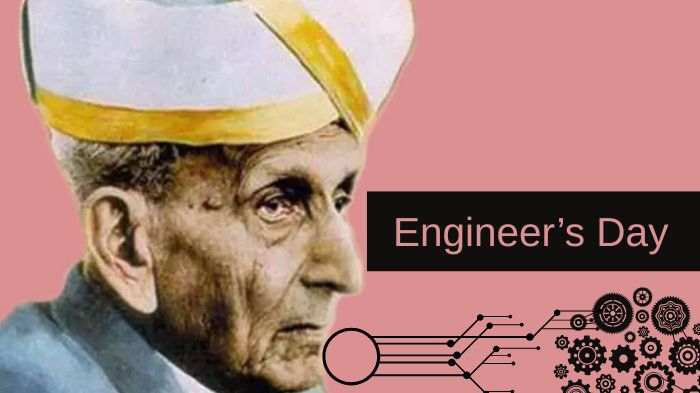
Prime Minister Narendra Modi commemorated National Engineers' Day by paying homage to Bharat Ratna Sir M. Visvesvaraya on his birth anniversary. Hailing engineers as vital "Karmayogis," the Prime Minister emphasized their indispensable role in advancing digital public goods, transportation networks, and sustainable industrial infrastructure across the country.
NEW DELHI — Prime Minister Narendra Modi paid tribute to legendary civil engineer and Bharat Ratna recipient Sir M. Visvesvaraya on the occasion of National Engineers' Day on Tuesday, characterizing the country's engineering workforce as "Karmayogis" who serve as the driving engine of national modernization. In an official address issued from the capital, the Prime Minister emphasized that indigenous technical innovation across infrastructure, space exploration, manufacturing, and digital public architecture remains fundamental to transforming India into a developed economy by 2047.
Tributes to Sir M. Visvesvaraya and Historical Significance
India observes National Engineers' Day annually on September 15 to commemorate the birth anniversary of Sir Mokshagundam Visvesvaraya, born in 1861 in Muddenahalli, present-day Karnataka. Recognized internationally for his civil engineering feats, Visvesvaraya designed the Krishna Raja Sagara dam in Mysuru, implemented automatic floodgates at Khadakwasla reservoir near Pune, and established modern irrigation and flood-protection systems across Hyderabad and coastal regions.
Instituted formally by the central government in 1968, the day honors Visvesvaraya’s multidisciplinary contributions to public planning, industrial research, and education. Educational institutions, professional societies, and government ministries hold technical colloquiums and project exhibitions nationwide to benchmark engineering advancements against historical standards of durability and public service.
The Role of Engineers as 'Karmayogis' in Modern Development
In his message, Modi referred to the nation's technical fraternity as dedicated "Karmayogis"—action-oriented professionals whose technical outputs directly influence everyday public convenience and systemic efficiency. He emphasized that the definition of modern engineering in India has evolved beyond traditional civil works to encompass complex digital infrastructure, advanced electronics fabrication, quantum technology, and sustainable energy transitions.
Addressing the scale of technical deployment, government representatives noted that engineers are leading flagship initiatives such as the PM Gati Shakti National Master Plan, urban metro transit networks, and high-speed rail corridors. The administration underscored that domestic technical talent has achieved notable milestones in self-reliance, pointing to indigenous manufacturing successes under the "Make in India" initiative and large-scale digital platforms including the Unified Payments Interface (UPI) and the Open Network for Digital Commerce (ONDC).
Industry Impact and the Global Competitive Landscape
The observance comes amid growing international demand for Indian technical specialists across software, aerospace, and green hydrogen supply chains. Major industry associations and technology councils marked National Engineers' Day by discussing the alignment of academic engineering curricula with artificial intelligence, semiconductor manufacturing, and robotics.
Corporate engineering leaders highlighted that domestic firms are rapidly scaling private enterprise operations, evidenced by private satellite deployments, advanced naval defense production, and large-scale semiconductor packaging plants currently under construction in Gujarat and Assam. Industry analysts noted that retaining domestic engineering talent and fostering research and development at premier institutions—such as the Indian Institutes of Technology (IITs)—is essential to maintaining technical sovereignty in critical technology domains.
Socio-Economic Implications for Citizens and Infrastructure
The emphasis on engineering outcomes directly affects citizen welfare, municipal governance, and consumer access. Modernized civil engineering standards have lowered logistics costs through access-controlled expressway corridors, while hydrological engineering interventions help mitigate monsoon flooding in vulnerable urban river basins.
For consumers and businesses, engineering advances drive lower energy costs via grid-scale solar parks and provide reliable high-speed broadband through domestic fiberization projects. The Prime Minister's address called upon young graduates to prioritize sustainable solutions, climate-resilient construction, and ethical computing standards to ensure economic growth balances environmental longevity.
Official Sources Section
According to official press releases published by the Prime Minister's Office and notifications issued through the Press Information Bureau, formal tributes were led by executive leadership, Union ministers, and state dignitaries. Parallel technical conferences were coordinated by The Institution of Engineers (India) to evaluate academic accreditation and professional certification across technical colleges.
Quote Section
According to official releases from the Prime Minister's Office, Narendra Modi stated: "Greetings on National Engineers' Day to all hardworking engineers. Our engineers are the backbone of our nation's progress, showing immense dedication and innovation across sectors. They are true Karmayogis whose problem-solving capabilities drive our journey toward a Viksit Bharat."
The Prime Minister added: "We remember with profound respect the great visionary, Bharat Ratna Sir M. Visvesvaraya, on his birth anniversary. His pioneering legacy in engineering and nation-building continues to inspire generations of innovators to serve society through knowledge and technology."
Why It Matters
Technical capacity forms the bedrock of economic competitiveness and national security. Recognizing engineers validates their role in building critical transport corridors, secure digital payments, clean energy grids, and domestic defense manufacturing, ensuring that national development goals translate into durable, scalable public utility.
Key Facts at a Glance
Annual Observance: India marks National Engineers' Day every year on September 15 to honor the birth anniversary of Sir M. Visvesvaraya.
National Recognition: Prime Minister Narendra Modi characterized Indian engineers as "Karmayogis" spearheading modernization across industrial sectors.
Historical Legacy: Visvesvaraya, a 1955 Bharat Ratna recipient, pioneered iconic civil structures including the Krishna Raja Sagara dam and patented automatic weir floodgates.
Focus Areas: Central and state programs emphasized advancements in digital public infrastructure, green energy corridors, semiconductors, and logistics.
Frequently Asked Questions
Why is National Engineers' Day celebrated on September 15 in India?
The date marks the birth anniversary of Sir M. Visvesvaraya, born on September 15, 1861, who is regarded as one of India's most accomplished civil engineers and institution builders.
What did PM Modi mean by referring to engineers as 'Karmayogis'?
The term denotes duty-bound, action-oriented contributors whose practical skills and problem-solving drive foundational public works, industrial output, and national modernization.
What are Sir M. Visvesvaraya's most famous engineering contributions?
His major works include the design and construction of the Krishna Raja Sagara dam in Mysuru, the development of automatic floodgates installed at Khadakwasla reservoir, and urban drainage and flood protection plans for Hyderabad.
How does engineering affect India's economic growth targets?
Engineering drives productivity by delivering physical infrastructure like expressways and ports, enabling digital transformation through communications systems, and powering high-tech manufacturing in electronics, defense, and renewable energy.
Source: Prime Minister's Office (PMO); Press Information Bureau (PIB); The Institution of Engineers (India)