The Madras High Court ruled that a daughter’s right to inherit her deceased father’s ancestral property remains intact even if her mother remarries. Under the Hindu Succession Act, 1956, coparcenary rights vest at birth, meaning a surviving parent's subsequent marriage cannot divest or extinguish a child's legal inheritance claim.
CHENNAI — The Madras High Court has held that a daughter does not lose her legal right to inherit a share in her deceased father's ancestral property solely because her mother remarried after his demise. Delivering the verdict in a property dispute originating from Tamil Nadu, the court clarified that under the Hindu Succession Act, 1956, coparcenary property rights vest in children by birth and cannot be curtailed or extinguished by the matrimonial decisions or remarriage of a surviving parent.
Core Legal Principles Behind the Inheritance Ruling
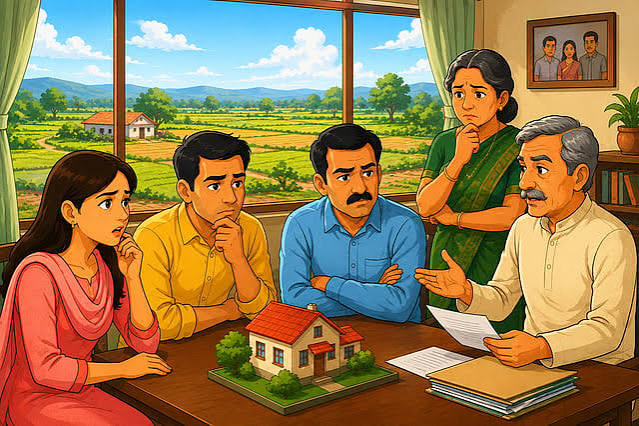
The ruling arrived during the adjudication of a second appeal concerning ancestral assets partitioned in the absence of a daughter born from a man's earlier marriage. After the man passed away, the surviving wife contracted a second marriage, taking her minor daughter with her. Family members subsequently executed partition deeds excluding the daughter, arguing that her relocation and her mother’s subsequent union severed her ancestral linkages to her biological father’s coparcenary unit.
Justice of the Madras High Court rejected that defense, pointing out that coparcenary rights under Section 6 of the Hindu Succession Act, 1956, operate strictly as an entitlement by birth. The bench observed that the status of a daughter as a coparcener—formalized on an equal footing with sons via the Hindu Succession (Amendment) Act, 2005—is independent of her mother’s marital status. A mother’s entry into a second marriage impacts her own personal status and maintenance entitlements under specific provisions, but it carries no statutory authority to dilute, forfeit, or transfer her child's hereditary title.
Clarification on Mother's Remarriage and Children's Rights
The High Court drew a sharp legal boundary between the personal property or maintenance claims of a widow and the independent rights of a child. Under historical provisions such as the Hindu Widows' Remarriage Act, 1856, questions frequently arose regarding a widow’s forfeiture of her late husband’s property upon entering a subsequent marriage. However, the court emphasized that those historic strictures never extended to a child’s direct inheritance from the father.
The court further noted that the Hindu Succession Act treats children as Class-I legal heirs in their own individual capacities. When a male Hindu dies intestate holding a share in ancestral property, his surviving children inherit directly. The bench noted that no provision under contemporary Hindu statutory law treats a parent's remarriage as a disqualification factor under Section 25 through Section 28 of the Hindu Succession Act, which specifically catalog disqualifications such as unworthiness by murder.
Broader Legal and Societal Impact
The judgment delivers clarity to property litigation, probate processes, and land registry transactions across southern India. Revenue officials and civil courts frequently encounter partition challenges where children from prior marriages find themselves excluded by uncles, cousins, or subsequent stepfamilies claiming estrangement or remarriage-induced disinheritance.
For women and minor children, the judgment provides legal protection against disinheritance following parental bereavement and subsequent blended family arrangements. Legal experts noted that partition deeds executed without joining all legal coparceners remain legally voidable, and the Madras High Court's reaffirmation confirms that daughters can initiate partition suits to reclaim their rightful shares regardless of the passage of time or maternal remarriage.
Official Sources
According to court filings and official certified copies of the decree from the Madras High Court Registry, the ruling stems from an appeal examining Section 6 and Section 8 of the Hindu Succession Act, 1956. The registry documents confirm that the bench set aside lower appellate findings that had erroneously tied the daughter's rights to her mother's personal choices.
Official Statements and Observations
According to the bench's written judgment, "The statutory right of a daughter to inherit her father's ancestral property is an independent birthright protected by statute. A subsequent marriage contracted by her mother cannot divest the daughter of her status as an heir, nor does it extinguish her legitimate share in her father’s estate."
Counsel for the appellant noted during proceedings that treating maternal remarriage as a bar to a child's estate would contravene both the text of the Hindu Succession Act and the non-discrimination guarantees under the Constitution of India.
Why It Matters
Property partitions frequently run into protracted litigation when family lines shift through remarriage or adoption. This decision reaffirms that ancestral property rights operate on statutory lineages of birth rather than shifting domestic arrangements, giving financial security to daughters and deterring co-heirs from executing unilateral property transfers.
Key Facts at a Glance
Birthright Protection: A daughter’s claim to her father’s ancestral coparcenary property is acquired by birth and remains irrevocable.
Mother's Remarriage: The remarriage of a widow has zero legal bearing on her biological child’s right to inherit property from the deceased father.
Statutory Authority: The ruling reinforces rights recognized under the Hindu Succession Act, 1956, and its 2005 amendment.
Invalid Partitions: Property settlements or partitions carried out by other relatives excluding a daughter on grounds of maternal remarriage are legally deficient.
Frequently Asked Questions
Does a daughter lose her inheritance rights if her mother remarries?
No. The Madras High Court clarified that a daughter retains her full inheritance rights to her biological father’s ancestral property regardless of whether her mother remarries.
Which law governs a daughter’s share in ancestral property in India?
Inheritance of ancestral property for Hindus is governed by the Hindu Succession Act, 1956, specifically Section 6 as amended in 2005, which designates daughters as coparceners by birth.
Can relatives divide property without informing daughters of a deceased brother?
No. Any partition of ancestral property that excludes a legal heir or coparcener can be challenged in a civil court and set aside.
Source: Madras High Court Official Judgment Repository; Ministry of Law and Justice, Government of India