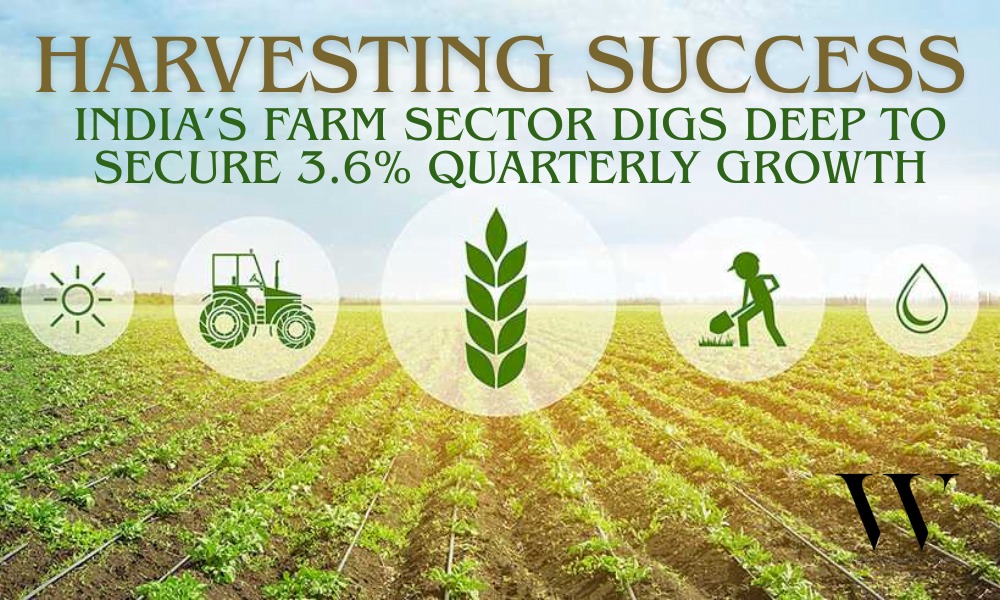
India’s agriculture and allied sectors recorded a 3.6 percent year-on-year growth rate during the final quarter of the 2025–26 fiscal year, according to the latest government data. This expansion reflects a stabilization in primary activities, providing a critical boost to rural income and consumption patterns as the nation maintains its status as one of the fastest-growing major economies. The 3.6 percent growth for the January-March quarter signifies a period of consistent output, aided by favorable seasonal conditions and effective management of supply chains. As the primary pillar of rural employment, the agricultural sector’s steady performance remains essential to India’s broader macroeconomic stability, bridging the gap between volatile crop cycles and the more rapid expansion seen in manufacturing and services.
Sectoral Drivers of Agricultural Growth
The growth in the agricultural sector was supported by balanced contributions from crops, livestock, and fisheries. While crop production remains susceptible to climatic variations, the allied sectors—specifically livestock and fisheries—have continued to provide a buffer, exhibiting stable growth rates that mitigate the risks of localized output fluctuations.
Crop Performance: Improved farming techniques and efficient input management helped stabilize foodgrain production throughout the latter half of the fiscal year.
Allied Activities: Livestock and fisheries sectors continued to record steady growth, effectively diversifying rural revenue streams and reducing dependency on traditional farming cycles.
Policy Support: Government initiatives focused on agri-tech integration and resource efficiency played a significant role in maintaining this upward trend during the March quarter.
According to the Ministry of Agriculture and Farmers Welfare, these efforts are part of a long-term strategy to ensure food security and enhance the profitability of farming households across the country.
Rural Demand and Macroeconomic Stability
The 3.6 percent growth in the farm sector has played a pivotal role in underpinning rural demand, which is a key component of India’s overall GDP. By sustaining household incomes, the agricultural sector has supported broad-based consumption expenditure, complementing the robust performance observed in urban manufacturing hubs.
Official data highlights that as the share of allied sectors—such as livestock and fisheries—in the total agricultural Gross Value Added (GVA) increases, the overall sector becomes less sensitive to the volatility typically associated with traditional monsoon-dependent crop yields. This shift is viewed by economists as a structural improvement, fostering a more resilient agrarian economy capable of weathering global price shifts.
Impact on Citizens and Investors
For the average citizen, particularly in rural India, this sustained agricultural performance translates into improved financial security and predictable income streams. For businesses and agro-tech investors, the data validates the growing opportunity in the rural market, where infrastructure and technology are increasingly being deployed to boost output.
As India moves into the new fiscal year, the government remains committed to supporting this momentum through state-specific agricultural roadmaps and continued investment in climate-resilient farming technologies. These policies are designed to ensure that the primary sector continues to contribute effectively to India’s long-term growth trajectory.
Official Sources Section
The production and economic data for the agriculture sector are sourced from the Ministry of Agriculture and Farmers Welfare and the National Statistical Office (NSO). Quarterly performance metrics are aligned with official national accounts releases provided by the government.
Quote Section
"According to officials at the ministry, the agriculture sector's 3.6 percent growth in the final quarter reflects a stabilizing primary economy. Organizers stated that the focus on allied activities and technological adoption has successfully bolstered rural resilience and maintained foodgrain output levels despite global market pressures."
Why It Matters
The 3.6 percent growth rate in the agricultural sector is a key indicator of India’s economic health. It ensures that rural consumption remains buoyant, which in turn supports the national economic engine. For farmers, this growth reinforces the effectiveness of ongoing reforms, while for the country, it solidifies the foundation for sustainable, broad-based development.
Key Facts at a Glance
Growth Rate: The agricultural and allied sector recorded a 3.6 percent year-on-year growth for the March quarter (Q4 FY26).
Stabilizing Force: Growth in allied sectors like livestock and fisheries has provided stability against crop production volatility.
Economic Contribution: Steady agricultural performance is a primary driver for rural demand and national GDP stability.
Technological Shift: Government efforts are increasingly focused on climate-resilient farming and agri-tech to sustain long-term growth.
FAQ Section
What contributed to the 3.6% growth in the agriculture sector?
The growth was driven by steady foodgrain production, bolstered by favorable seasonal conditions, and stable performance in allied sectors like livestock and fisheries.
Why is allied sector growth important for Indian agriculture?
Allied sectors provide a cushion against the volatility of traditional farming, ensuring that rural households have diversified income streams that are less sensitive to weather-related risks.
What is the impact of this growth on the overall Indian economy?
Strong agricultural growth sustains rural consumption, which is a critical pillar of India’s GDP, ensuring that demand remains strong across both rural and urban markets.
Source: Ministry of Agriculture and Farmers Welfare, Ministry of Statistics and Programme Implementation, Press Information Bureau.