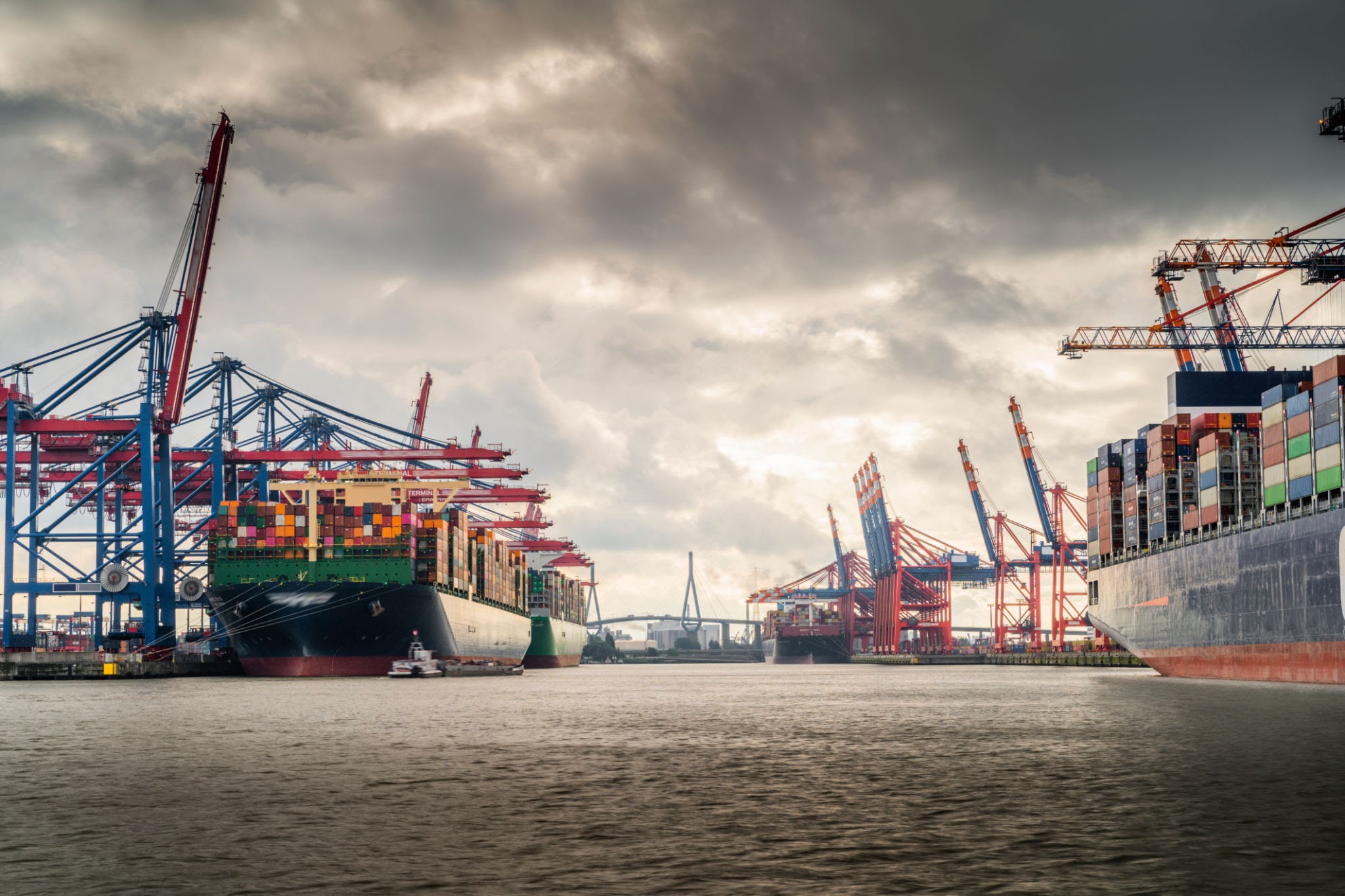
Massive cargo container ships dock at an active marine shipping terminal. The US decision to launch Section 301 investigations into 60 global economies over forced labor lapses places nearly all inbound US maritime trade under heightened compliance scrutiny, threatening fresh tariff pressures on primary manufacturing hubs worldwide.
WASHINGTON — The Office of the United States Trade Representative (USTR) has officially initiated sweeping trade investigations against 60 of the world's largest economies. The probes, launched under Section 301(b) of the Trade Act of 1974, target major trading partners including China, India, Mexico, Japan, Canada, the United Kingdom, and the European Union. Washington alleges these economies have failed to establish and enforce sufficient domestic bans on goods produced with forced labor, granting foreign manufacturers an unfair market advantage over American firms. Covering nations that represent more than 99% of total US import volume, the development marks a massive structural shift in US trade policy, threatening wide-ranging retaliatory tariffs if compliance standards are not met.
Unfair Competition and the Section 301 Mechanism
The federal investigations will systematically evaluate whether the acts, policies, and practices of these 60 economies fail to effectively prohibit the importation and trade of goods produced via forced labor. According to the USTR, a lack of local enforcement allows foreign companies to operate with artificially suppressed labor costs. This discrepancy heavily disadvantages American businesses and domestic workers who operate under strict labor protections.
By utilizing Section 301 the same regulatory tool used to implement significant trade measures in recent years the US government is bypassing standard diplomatic gridlocks. The investigation seeks to determine if these foreign practices are "unreasonable or discriminatory" and directly burden US commerce. If the USTR returns an affirmative finding at the conclusion of the probes, the White House holds the authority to levy substantial, tailored tariffs or strict import limits on the targeted economies.
Replacing Universal Levies After Supreme Court Ruling
Independent trade analysts note that this aggressive legal move serves a dual economic purpose. In February 2026, a US Supreme Court ruling struck down a separate set of blanket global tariffs that had been enacted under the International Emergency Economic Powers Act. Following that judicial setback, the administration enacted a temporary 10% emergency duty slated to expire later this summer.
The newly initiated Section 301 investigations provide a distinct, highly resilient statutory pathway to rebuild structural tariff pressures. Because Section 301 explicitly addresses unfair trade practices that penalize domestic commerce, it offers a sturdy legal defense against future domestic court challenges. Experts project that final determinations from these investigations could pave the way for a permanent, targeted tariff regime as early as July 2026.
Extensive Multi-Sector Disruptions for Supply Chains
The sheer scale of the 60 listed economies means that global multi-tier supply chains are facing imminent logistical and compliance re-evaluations. Industries with highly fragmented, multi-layered international sourcing structures most notably the automotive, consumer electronics, footwear, and textile sectors bear the highest exposure.
For international investors, travelers, and businesses, the threat of reactive trade measures could mean elevated operational costs, shifting import prices, and localized cargo delays. US importers will likely face heightened pressure to supply definitive, verifiable tracking maps proving their products are completely free from forced labor across every layer of production.
Official Sources Section
The formal investigation has been instituted via official administrative procedures under the direction of the executive branch. Documentation, procedural deadlines, and legal frameworks have been published in the preliminary Federal Register notices by the Office of the United States Trade Representative. Operational frameworks cite statistical figures from the International Labour Organization (ILO), tracking global illicit trade patterns and forced private economy profit margins.
Quote Section
In an official public announcement detailing the legal filing, US Trade Representative Jamieson Greer emphasized the administration's stance on leveling international commercial fields:
"Despite the international consensus against forced labor, governments have failed to impose and effectively enforce measures banning goods produced with forced labor from entering their markets. For too long, American workers and firms have been forced to compete against foreign producers who may have an artificial cost advantage gained from the scourge of forced labor."
Why It Matters
For everyday consumers and multinational companies, this development signals a fundamental rewriting of trade compliance. If trading partners do not rapidly adopt parallel import restrictions matching US standards, punitive tariffs will likely hit everyday products, from vehicles to clothing. Businesses must prepare for an era where complete supply chain visibility is no longer an option, but a strict baseline for entering the American marketplace.
Key Facts at a Glance
60 Targeted Economies: Includes major US trading partners such as China, India, Canada, Mexico, Japan, the UK, and the European Union.
99% Import Volume: The targeted nations collectively accounted for more than 99% of all merchandise imported into the US in 2024.
Legal Grounding: Probes are conducted under Section 301(b) of the Trade Act of 1974, targeting practices that burden US commerce.
Enforcement Timeline: Analysts predict new tailored tariffs could emerge around July 2026, coinciding with the expiration of temporary import duties.
FAQ Section
What is the primary objective of these new US trade investigations?
The investigations aim to determine if foreign governments are failing to ban goods made with forced labor, creating an artificial cost advantage that harms US workers and businesses.
Which major economies are included in the USTR probe?
A total of 60 major economies are named, notably including the European Union, China, India, Mexico, Canada, Japan, South Korea, Brazil, and the United Kingdom.
How does this decision connect to previous tariff rulings?
Following a February 2026 Supreme Court decision that invalidated previous blanket tariffs, these Section 301 investigations offer the administration a legally sound mechanism to maintain strategic trade pressures.
What happens if an economy is found non-compliant?
If the USTR concludes that a country is failing to police forced labor within its trade networks, the US can legally impose new domestic tariffs, restrict specific product imports, or suspend existing trade concessions.
Source: Office of the United States Trade Representative (USTR) Press Releases, Federal Register Notice for Section 301 Investigations (March 2026), International Labour Organization (ILO) Global Estimates.