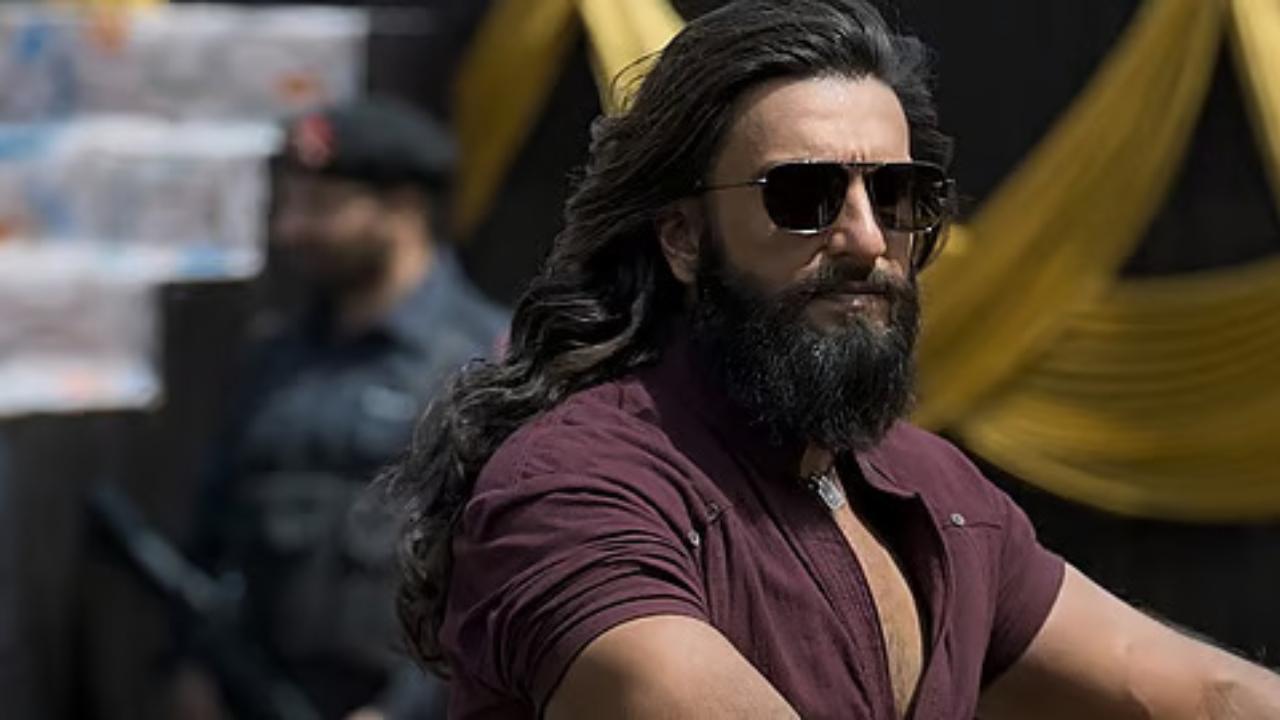
The featured promotional still displays actor Ranveer Singh portraying deep-cover intelligence operative Jaskirat Singh Rangi inside the high-stakes espionage world of Dhurandhar. The cinematic image highlights the gritty tone, realistic styling, and intense action sequences that came to define director Aditya Dhar's critically acclaimed and historically lucrative box-office duology.
MUMBAI: Fresh financial disclosures from the makers of the Dhurandhar film franchise reveal that lead actor Ranveer Singh did not charge his standard multi-crore upfront salary for the box-office espionage series. Instead, the actor and director Aditya Dhar opted for a backend profit-sharing structure designed to limit rising production overheads and manage fiscal risks during filming.
The strategy minimized initial corporate exposure for the production houses and allowed the creative team to reinvest capital directly into the film's extensive physical production. This development comes forward as the second installment, Dhurandhar 2: The Revenge, concludes a historic theatrical run, grossing over ₹1,812 crore worldwide before its digital release on JioHotstar on June 4, 2026.
The Risk-Sharing Structure Behind the Spy Franchise
In an industry where top-tier talent typically demands significant guaranteed remuneration prior to principal photography, the financial architecture of Dhurandhar marks a notable shift toward corporate risk distribution. Speaking to media outlets, executive leadership from co-producing entity Jio Studios detailed how the production managed a budget that expanded significantly beyond its initial projections.
According to studio data, the complex filming schedule across international and domestic locations eventually cost twice the amount originally allocated. To balance the ledger, the primary creative drivers accepted lower upfront guarantees in exchange for backend equity.
The budget mitigation allowed the technical crew to shoot the duology back-to-back across diverse geographic zones, including Punjab, Ladakh, Maharashtra, and Thailand. Production costs were further managed by leveraging long-term backend payouts, which converted fixed production costs into variable performance-based expenses.
Studio Executives Detail Financial Restructuring
The financial strategy was confirmed by senior studio executives who managed the corporate funding and distribution parameters of the duology. The corporate model aligned the financial interests of the lead actor and director directly with the box-office collections realized by the distributors.
Official Statements on Backend Deals
According to official statements from Jyoti Deshpande, co-producer under Jio Studios, the structure was necessary to distribute both the risk and the subsequent rewards of an escalating budget.
"In Dhurandhar, Ranveer came with a smaller fixed fee and a backend deal, and therefore benefited from that arrangement," Deshpande stated in an interview with ET Digital. "The same was true for Aditya, who also came in with a smaller fixed fee and a backend. He ended up making a significant upside along with us. That's how you distribute both the risk and the reward."
Deshpande further noted that the final production evolved into a comprehensive journey that yielded two full-length feature films, ensuring all equity partners achieved high returns on their deferred compensation contracts.
Broader Impact on the Bollywood Financial Ecosystem
The commercial success of Dhurandhar under a deferred payment system provides a working case study for financial analysts and production houses navigating inflation in Hindi cinema. Historically, high upfront actor fees have strained mid-to-large-budget productions, occasionally leaving projects financially unviable if theatrical footfalls underperform.
Implications for Investors and Producers
Lower Financial Thresholds: Replicating this profit-sharing arrangement minimizes initial banking and institutional credit exposure for film financiers.
Resource Reallocation: Capital saved from upfront talent fees can be redirected to visual effects, action choreography, and on-location logistics.
Mitigated Box Office Volatility: Distributors face reduced downside risk during opening weekend performance fluctuations.
Official Sources Section
Data regarding the financial metrics, cast compensation structures, and corporate strategies for the Dhurandhar franchise have been compiled from formal corporate communications by Jio Studios, financial performance disclosures reported via ET Digital, and global theatrical tracking metrics certified by regional box-office monitoring agencies.
Why It Matters
For general audiences and industry professionals, this shift highlights a evolving financial standard within Indian cinema. When high-profile actors transition from fixed-fee structures to backend equity, it signals an increased institutional trust in complex, high-budget franchises. For consumers, this model incentivizes production houses to invest capital into superior technical execution and narrative scope rather than allocating majority budgets to talent acquisition alone.
Key Facts at a Glance
Financial Model: Ranveer Singh accepted a minimized upfront fixed fee paired with a backend profit-sharing structure for both films.
Budget Expansion: Total production expenditures for the franchise doubled original estimates, requiring dynamic corporate restructuring.
Global Box Office: Dhurandhar 2: The Revenge secured an estimated ₹1,812 crore globally, validating the equity payout model for the stakeholders.
Streaming Transition: The franchise shifts to domestic digital streaming platforms on June 4, 2026, opening secondary revenue windows.
Frequently Asked Questions
What is a backend profit-sharing contract in cinema?
A backend contract lowers the guaranteed money paid to talent before production begins. Instead, the individual receives a specified percentage of the film's net profits or gross box-office revenues after the studio recovers its initial investments.
Why did the production cost double during filming?
The scale of the project expanded from a single feature film into a comprehensive two-part duology. The expanded timeline required simultaneous back-to-back shooting schedules across multiple high-security and international locations.
Where can audiences watch the film following its theatrical run?
The final film of the duology, Dhurandhar 2: The Revenge, is scheduled to stream on JioHotstar starting June 4, 2026, for domestic subscribers, while international markets retain streaming distribution via alternative regional platforms.
Source: Jio Studios Corporate Announcements, ET Digital Media Reports, Box Office Tracking Agencies