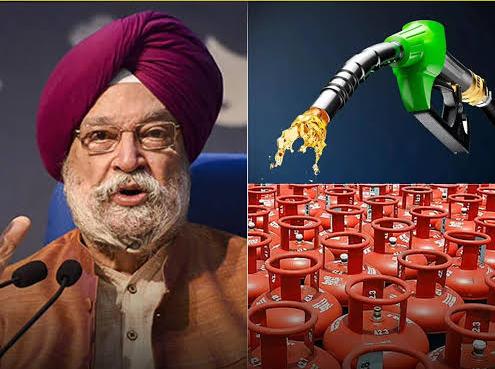
Union Minister Hardeep Singh Puri announced that India holds total oil and gas reserves for 76 to 80 days. Speaking to CNN-News18 on June 8, 2026, he highlighted expanding imports from Western suppliers and Mozambique, reassuring markets that overall fuel prices are expected to come down in the coming months.
NEW DELHI, INDIA — In a major national energy policy brief on Monday, June 8, 2026, India’s Union Minister of Petroleum and Natural Gas, Hardeep Singh Puri, confirmed that the country possesses total oil and gas reserves sufficient to sustain national consumption for 76 to 80 days. In an exclusive television appearance on local broadcaster CNN-News18, the minister systematically outlined India's comprehensive strategies to counter regional market shortages. He declared that expanding energy supply routes from Western Hemisphere suppliers and escalating liquefied natural gas (LNG) imports from Mozambique will comfortably stabilize internal demand, which is projected to push international fuel prices downward over the coming months.
India Bolsters Strategic Total Oil and Gas Reserves
The announcement comes at a vital turning point for South Asia's largest developing market as global energy logistics experience continued turbulence. To address baseline supply vulnerabilities, the Indian government has built up comprehensive buffer networks across the subcontinent.
According to the official minister statement broadcast on CNN-News18, the nationwide baseline infrastructure incorporates a combination of deep-underground caverns managed by the Indian Strategic Petroleum Reserves Limited, commercial refinery storehouses, port pipelines, and floating high-seas inventory. Together, these channels hold total oil and gas reserves capable of powering the economy for roughly 76 to 80 days without requiring fresh cross-border shipments.
Government officials confirmed that domestic oil and gas pipelines remain fully operational. This domestic safety net protects local utilities and logistics channels against any localized blockades or surprise supply halts along conventional West Asian oceanic pathways.
Western Hemisphere and Mozambique Diversify Energy Influx
To permanently break reliance on singular regional trade corridors, India is rapidly diversifying its baseline energy import basket. In his detailed brief to CNN-News18, Minister Puri stated that production assets located across the Western Hemisphere will play an active role in making up for any localized energy shortages.
Beyond increased imports from the Americas, India is banking on a large-scale increase in natural gas imports from East Africa. The minister noted that the central government expects more and more gas to come from Mozambique in the subsequent production cycles.
Indian state-backed corporations, including ONGC Videsh Limited and Oil India Limited, hold massive operational stakes in Mozambique’s Rovuma Offshore Area 1 project. The resumption of gas production at these multi-billion-dollar fields allows the state to secure cheaper, long-term supply agreements, avoiding volatile spot-market prices.
Market Outlook: Lower Prices Projected for Coming Months
Despite recent upward pressure on global energy markets, Indian state authorities maintain a highly optimistic forecast regarding global commodity price corrections. Minister Puri emphasized that he does not expect international crude oil prices to remain at their current high levels for a very long time.
As global production volumes from the Western Hemisphere rise and supply channels stabilize, international pricing frameworks are anticipated to adjust. The minister stated directly that India expects to maintain enough stocks of oil and gas, adding that prices are anticipated to come down in the coming months. This dual forecast of abundant domestic inventory and declining global crude costs provides substantial macroeconomic relief for the country heading into the next fiscal quarter.
Impact on Citizens, Industry, and Financial Markets
For Citizens and Commercial Transport Operators
The official projection that retail prices are expected to come down in the coming months offers direct relief to everyday commuters and private shipping operators. High retail fuel prices typically drive inflation across agricultural goods and consumer products. Stabilizing retail costs directly safeguards the purchasing power of middle-income households.
For Industrial and Energy-Intensive Businesses
Heavy manufacturing plants, chemical companies, and power utilities that consume large volumes of natural gas can rely on steady fuel allocations. The anticipated influx of Mozambique gas guarantees long-term supply consistency, allowing local factory managers to plan operations without fearing unexpected fuel rationing.
For Public Stock Investors and Oil Marketing Firms
The confirmation of healthy total oil and gas reserves, alongside alternative Western sourcing, eliminates under-recovery concerns for domestic oil marketing corporations (OMCs). Shares of public sector energy enterprises traditionally show a positive response when raw import costs ease, providing a solid foundation for institutional investment.
Official Sources Section
The baseline data, operational horizons, and international trade percentages utilized in this report correspond directly to public sector communications broadcast by CNN-News18 and official oversight updates tracked by the Ministry of Petroleum and Natural Gas.
Quote Section
In his exclusive interview with CNN-News18 on June 8, 2026, Union Minister Hardeep Singh Puri provided clarity on the domestic inventory position:
"We have total oil and gas reserves for 76-80 days across our strategic storages, corporate refinery channels, and floating port systems."
Addressing global logistics adjustments and alternative international supply streams, Minister Puri added:
"Western Hemisphere suppliers will make up for energy shortages. Furthermore, we expect more and more gas to come from Mozambique. We don't expect oil prices to be this high for a very long time, and we expect enough stocks of oil, gas, with prices to come down in coming months."
Why It Matters
Securing nearly 80 days of total oil and gas reserves allows India to safely manage sudden supply disruptions without harming its domestic industrial output. By expanding trade channels with Western Hemisphere suppliers and tapping long-term gas holdings in Mozambique, India successfully reduces its vulnerability to regional geopolitics. This strategic shift keeps fuel affordable for local businesses and protects consumers from sudden price spikes.
Key Facts at a Glance
National Inventory Capacity: India holds total oil and gas reserves to comfortably cover 76–80 days of standard consumption.
Alternative Supply Strategy: Energy providers from the Western Hemisphere are designated to fill any unexpected supply gaps.
East African Gas Integration: Inbound liquefied natural gas shipments from Mozambique are projected to scale up consistently.
Price Projections: Government leadership expects global energy prices to come down over the coming months.
FAQ Section
Exactly how much emergency fuel inventory does India possess?
India maintains combined total oil and gas reserves across strategic underground caverns, local industrial refineries, and maritime port facilities sufficient to power national demand for 76 to 80 days.
Which international regions are helping India diversify its energy imports?
The government is expanding its energy portfolio by sourcing crude from suppliers across the Western Hemisphere and importing progressive volumes of natural gas from Mozambique.
What is the near-term outlook for fuel prices inside India?
Petroleum Minister Hardeep Singh Puri stated that the government expects domestic fuel and gas prices to come down in the coming months as global supply lines normalize.
Sources: CNN News-18, Ministry of Petroleum and Natural Gas