India and Japan signed a strategic pact on July 2, 2026, to cooperate on critical mineral exploration and battery technology. The agreement, finalized during the 16th Annual Summit, seeks to secure supply chains for high-tech industries and promote long-term industrial collaboration between the two Indo-Pacific partners.
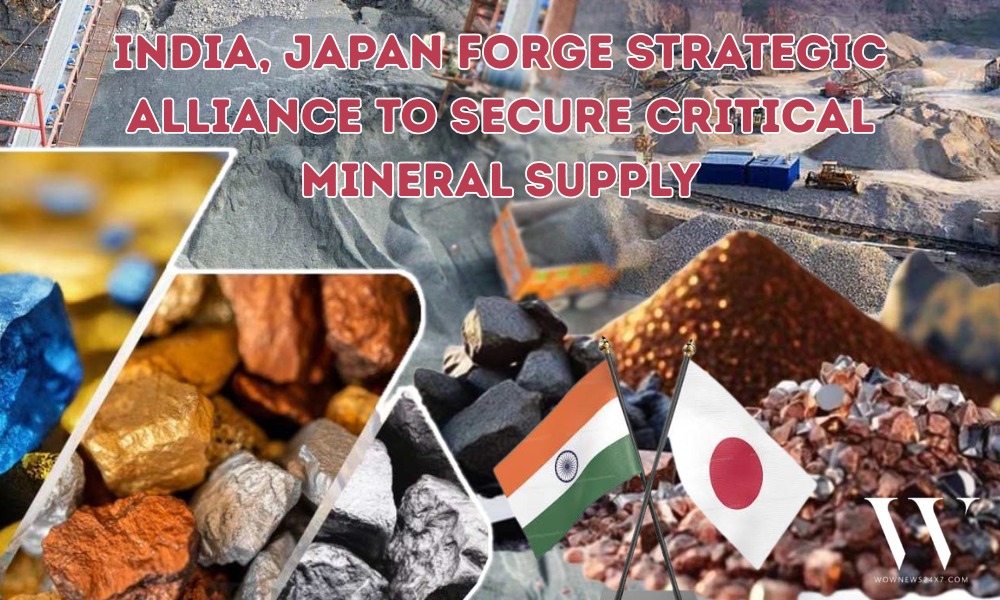
NEW DELHI — India and Japan formalized a landmark agreement today, July 2, 2026, to cooperate on geology and the exploration of critical minerals, marking a significant step in the two nations' efforts to fortify industrial supply chains. The pact was signed during the 16th India-Japan Annual Summit in New Delhi, where Prime Minister Narendra Modi and Japanese Prime Minister Sanae Takaichi oversaw a series of strategic deals aimed at securing economic resilience.
The agreement, which focuses on the exploration of high-tech minerals, involves the Geological Survey of India and the Japan Organization for Metals and Energy Security (JOGMEC). This partnership is designed to establish a formal framework for technical cooperation and promote bilateral dialogue on mineral exploration, a critical move as global economies pivot toward renewable energy, semiconductors, and advanced manufacturing.
Strengthening Economic Security and Resource Resilience
The move to formalize cooperation on critical minerals comes amid growing global concerns over economic coercion and supply chain fragility. With Japan seeking to diversify its rare earth element sources following increased export restrictions from other regions, the collaboration with India—a nation with vast, yet largely untapped geological potential—offers a strategic alternative.
According to official statements released following the summit, the collaboration will extend beyond simple resource extraction. The partnership emphasizes the development of parallel industrial ecosystems, including potential cooperation in refining, material processing, and advanced manufacturing. Both governments expressed a commitment to creating highly reliable supply chains that are not vulnerable to the geopolitical volatility associated with single-country dominance.
Battery Sector and Clean Energy Integration
In addition to the geological and mineral pact, India and Japan have agreed to deepen collaboration in the battery sector. This initiative is part of a broader roadmap for economic security that includes semiconductors, quantum technologies, and next-generation mobility.
The Ministry of External Affairs (MEA) highlighted that the agreement on batteries is essential for accelerating the energy transition in both nations. By combining Japan’s advanced manufacturing expertise and financing with India’s industrial scale and resource potential, the two countries aim to establish a competitive and resilient framework for the next generation of energy storage and electric vehicle (EV) supply chains.
Impact on Strategic Industries
For businesses and investors, this partnership signals a long-term commitment to shared industrial development. The 16th India-Japan Annual Summit also saw a commitment to attract ¥10 trillion in Japanese investment into India over the next decade. Industry observers note that the alignment between the two nations is likely to facilitate new joint ventures in AI, semiconductors, and green technology, providing a stable environment for firms looking to move manufacturing operations into the Indo-Pacific region.
Why It Matters
The partnership is a direct response to the "Great Powers Era 2.0," where critical minerals and technology are viewed as pillars of national security. By formalizing this, India and Japan are moving away from traditional trade models toward deep-rooted industrial integration. For the average consumer and citizen, this means more stable access to technologies ranging from smartphones to EVs, as the supply chains for these products become more diversified and reliable.
Key Facts at a Glance
Strategic Alliance: India and Japan have signed a memorandum for technical cooperation between the Geological Survey of India and JOGMEC.
Sector Focus: The pact covers critical minerals, battery supply chains, semiconductors, and quantum technologies.
Investment Target: Both nations reaffirmed a commitment to attract ¥10 trillion in Japanese investment into India over the next 10 years.
Diversification: The agreement serves as a strategic hedge against supply chain disruptions and economic coercion by ensuring resource independence.
Frequently Asked Questions (FAQ)
What are the primary minerals included in the agreement?
While broad, the agreement focuses on "critical minerals" generally associated with high-tech industries, with a strong emphasis on rare earth elements required for magnets, batteries, and electronics.
How does this affect Japanese companies in India?
The government aims to double the number of Japanese companies operating in India, with new frameworks providing easier access to financing, technical cooperation, and regulatory support.
Does this agreement replace existing supply chains?
No, it is intended to supplement and diversify existing supply chains, reducing dependence on single, high-risk suppliers through a "trusted partnership" model.
Source: Ministry of External Affairs (India), Ministry of Foreign Affairs of Japan, JOGMEC