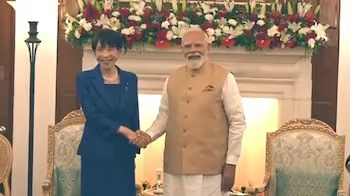
Prime Minister Narendra Modi and Japanese PM Sanae Takaichi have signed a strategic roadmap focusing on economic security and defense co-development. The 16th India-Japan Annual Summit emphasized semiconductor resilience, critical minerals, and military tech innovation, aiming to accelerate the 10 trillion yen Japanese investment target into the Indian economy
Prime Minister Narendra Modi and Japanese Prime Minister Sanae Takaichi have unveiled a landmark strategic roadmap to fortify economic security and deepen co-development in defense technology.
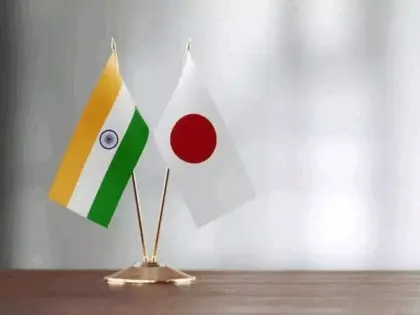
NEW DELHI — Prime Minister Narendra Modi and Japanese Prime Minister Sanae Takaichi held the 16th India-Japan Annual Summit on Thursday, July 2, 2026, marking a significant evolution in the "Special Strategic and Global Partnership" between the two nations. The leaders emphasized a shared commitment to resilient supply chains, artificial intelligence (AI), and advanced defense manufacturing.
Following high-level bilateral talks at Hyderabad House in New Delhi, the two sides announced a comprehensive roadmap for economic security. The initiative is designed to address vulnerabilities in global supply chains, focusing heavily on critical minerals, semiconductors, and pharmaceuticals. This strategic alignment aims to reduce over-reliance on single-country dependencies in the Indo-Pacific region.
Expanding Defense Industrial Cooperation
Defense cooperation, a cornerstone of the bilateral relationship since 2014, has entered a transformative phase. Building on the momentum of the November 2024 Memorandum of Implementation—which marked the first joint defense equipment development—the leaders confirmed plans to expand co-development projects.
"Our defense collaboration is moving from simple exchanges to the co-development of sophisticated military technology," noted government officials following the summit. The partnership seeks to leverage Japan’s industrial precision and India’s growing manufacturing capacity, particularly in naval systems and stealth technology. The ongoing success of the UNICORN (Unified Complex Radio Antenna) mast project serves as a model for future joint ventures in defense equipment and technology transfer.
A New Era of Economic Security
The summit highlighted a coordinated approach to economic security, an agenda gaining primacy due to shifting geopolitical dynamics in the Indo-Pacific. The newly adopted roadmap includes:
Semiconductor Resilience: Deepening research and production partnerships to secure high-tech manufacturing pipelines.
Critical Minerals: Establishing sustainable supply lines for rare earth elements essential to modern technology and defense electronics.
Sovereign AI: Launching a joint initiative to build localized Large Language Models (LLMs) tailored for industrial and governance needs.
According to a press statement from the Ministry of External Affairs, the economic security framework provides a structured mechanism for public-private partnerships, ensuring that Japanese investment—which includes a 10 trillion yen target over the next decade—is directed toward high-impact, strategic sectors.
Why It Matters
For businesses and investors, the summit signals a long-term commitment to de-risking high-tech manufacturing. By harmonizing regulatory frameworks and promoting interoperability between their security forces, India and Japan are positioning themselves as a robust alternative in global production networks. For the broader Indo-Pacific, this convergence serves as a stabilizer, promoting a "Free and Open" region through improved logistics, connectivity, and technological self-reliance.
Key Facts at a Glance
Summit Significance: 16th India-Japan Annual Summit held in New Delhi, marking the first visit by PM Sanae Takaichi.
Economic Target: Operationalization of a 10 trillion yen (approx. $67 billion) investment roadmap.
Strategic Pillars: Focus on semiconductors, AI, critical minerals, and clean energy.
Defense Progress: Elevation of joint defense co-development following the successful UNICORN radar mast project.
Frameworks: Implementation of the Economic Security Initiative and the 2+2 Foreign and Defence Ministerial Dialogue.
Frequently Asked Questions (FAQ)
1. What is the goal of the new economic security roadmap?
The roadmap aims to secure critical supply chains, particularly in semiconductors and minerals, reducing dependency on volatile single-country markets.
2. How will defense cooperation change?
The partnership is shifting toward joint co-development of defense equipment and deeper interoperability between the armed forces of India and Japan.
3. What is the significance of the 10 trillion yen investment?
This target represents the total Japanese private sector investment planned for India over the next decade, focusing on infrastructure, clean energy, and high-tech manufacturing.
4. How does this impact the Indo-Pacific region?
By aligning their economic and defense strategies, both nations seek to promote regional stability and maintain a "Free and Open Indo-Pacific" in the face of evolving security challenges.
Source: Ministry of External Affairs (India), The New Indian Express, DD India, Drishti IAS.