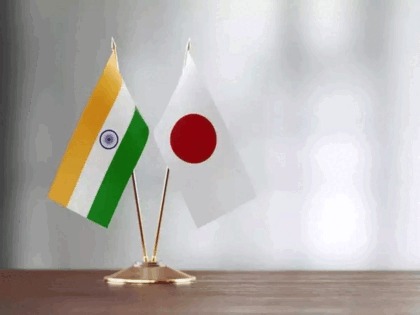
India and Japan have signed landmark pacts on July 2, 2026, to deepen cooperation in artificial intelligence, energy security, and critical metals. Prime Ministers Narendra Modi and Sanae Takaichi established a joint roadmap to enhance economic resilience, bolster supply chains, and foster technological innovation between the two nations.
The bilateral summit in New Delhi yields major agreements on artificial intelligence, critical metals, and energy security to fortify resilient supply chains.
NEW DELHI, India — Indian Prime Minister Narendra Modi and Japanese Prime Minister Sanae Takaichi signed a series of landmark agreements on Thursday, July 2, 2026, aimed at deepening strategic cooperation between the two nations. The pacts, formalized during the 16th India-Japan Annual Summit, establish a robust framework for collaboration in artificial intelligence (AI), critical metals, and energy security, reflecting a shared commitment to economic resilience in the Indo-Pacific.
The summit marks Prime Minister Takaichi’s first official state visit to India since assuming office. Following bilateral talks, the leaders announced a joint roadmap for economic security, designed to insulate both economies from global supply chain disruptions and geopolitical uncertainties.
Advancing AI and Technological Integration
A cornerstone of the summit’s outcomes is the "Japan-India Artificial Intelligence Cooperation Initiative." This long-term framework is set to integrate research institutions, technology firms, and universities from both countries. The initiative focuses on the joint development of domain-specific AI solutions for critical sectors, including manufacturing, healthcare, and mobility.
According to official disclosures, the cooperation will extend to large language model development, AI governance, and safety research. The agreement also includes provisions for digital infrastructure resilience, specifically targeting advancements in semiconductor manufacturing and data center security. As part of this tech-forward agenda, Japan is expected to facilitate the movement of 500 highly skilled Indian IT professionals to Japan by 2030.
Strengthening Metals and Energy Security
With the global energy landscape facing recurring shocks, the two leaders prioritized energy resilience as a key pillar of their partnership. The summit resulted in a concrete pact on Liquefied Natural Gas (LNG) security, which includes the establishment of a joint task force for LNG stockpiling and real-time information sharing.
The agreements also address the urgent need for critical minerals and metals. By streamlining exploration and supply chain logistics, India and Japan aim to reduce their over-reliance on limited sources for the raw materials essential to modern electronics and defense industries. This focus on "metals and energy security" is a direct response to recent export controls and non-market practices that have affected global trade.
Official Sources and Diplomatic Context
The agreements were signed in the presence of both Prime Ministers at the conclusion of their bilateral meeting in New Delhi. According to Ministry of External Affairs briefings, these pacts are part of a broader strategy to uphold the Special Strategic and Global Partnership established between the two nations. The summit also served as a platform for the Japan-India Joint Economic Forum, where private-sector leaders discussed investments estimated at approximately ¥2 trillion (roughly $12.5 billion) across semiconductors, clean energy, and manufacturing.
Quote Section
According to officials, the partnership is "anchored in trust, shared values, and strategic convergence." Organizers stated that the summit provides the necessary momentum to harmonize Japan’s proactive economic resilience policies with India’s Atmanirbhar Bharat (Self-Reliant India) initiative, particularly in high-tech manufacturing and defense industrial collaboration.
Why It Matters
For businesses and investors, these pacts offer a predictable framework for cross-border collaboration in high-growth sectors. For the general public, the focus on energy security—specifically LNG stockpiling—is intended to protect consumers from the volatility of global fuel prices. Furthermore, the collaboration on AI and critical metals ensures that both nations remain competitive in a rapidly digitizing global economy, while simultaneously mitigating risks associated with economic coercion and supply chain bottlenecks.
Key Facts at a Glance
New AI Roadmap: Launch of the Japan-India Artificial Intelligence Cooperation Initiative for joint research in manufacturing, healthcare, and mobility.
Energy Security: Establishment of a joint task force for LNG stockpiling and market intelligence sharing to counter supply disruptions.
Economic Security: A formal joint declaration denouncing economic coercion and emphasizing supply chain diversification for critical minerals.
Human Capital: Commitment to facilitate the movement of 500 skilled Indian IT professionals to Japan by 2030.
Investment Surge: Over 120 MoUs signed between private firms, with Japanese industry announcing significant investments in Indian technology and infrastructure.
FAQ
1. What is the main focus of the India-Japan AI cooperation?
The initiative focuses on building vertical AI solutions for sectors like healthcare and manufacturing, while also collaborating on AI governance, safety, and large language models.
2. How will the new energy pact benefit India and Japan?
By creating a joint task force for LNG stockpiling and information sharing, the two countries aim to insulate themselves from global supply shortages and volatile energy pricing.
3. Why are critical metals included in the summit agreements?
Both nations are seeking to diversify their supply chains for raw materials and critical minerals to reduce dependency on limited or unstable global suppliers.
4. When will the private sector investments materialize?
These investments, totaling approximately $12.5 billion, are part of a decade-long plan aimed at strengthening manufacturing, clean energy, and semiconductor production in India.
Source: Ministry of External Affairs (MEA), The Economic Times, Deccan Herald, Japan External Trade Organization (JETRO)