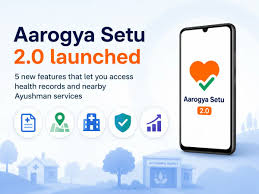
Union Health Minister JP Nadda has launched Aarogya Setu 2.0, transforming the pandemic-era app into India's primary digital health platform. Built on the ABDM framework, it features AI-powered medical record digitization, a centralized PM-JAY insurance wallet, and real-time emergency resource mapping to streamline healthcare delivery nationwide.
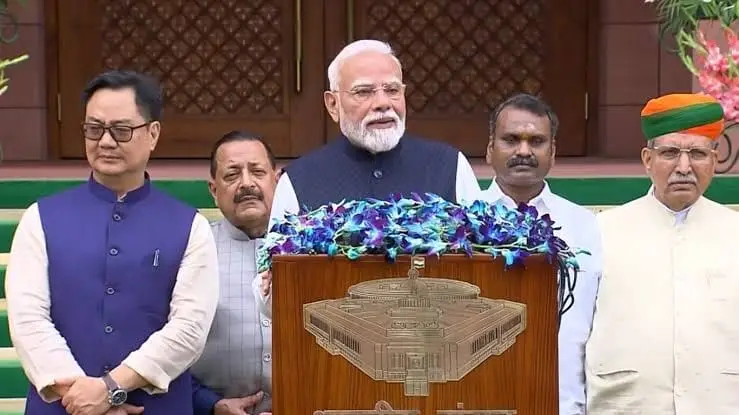
NEW DELHI — Union Health Minister Jagat Prakash Nadda has officially launched Aarogya Setu 2.0, establishing a unified national mobile platform designed to anchor India’s next major digital health push. The upgraded application was unveiled during an extensive administrative assembly at Vigyan Bhawan in New Delhi on June 29, 2026. Developed under the regulatory oversight of the National Health Authority (NHA), Aarogya Setu 2.0 completely transitions the platform away from its original, pandemic-specific contact tracing functions. It is now positioned as an all-in-one, citizen-centric gateway for comprehensive medical record management, insurance claims processing, and emergency service tracking across the country.
Technical Integration Anchored by Ayushman Bharat Digital Mission
The structural architecture of Aarogya Setu 2.0 forms the front-facing layer of India's evolving Digital Public Infrastructure (DPI) for healthcare. According to official release briefs, the primary engine driving the application is the Ayushman Bharat Digital Mission (ABDM) framework. This protocol allows users to instantly generate and link their unique 14-digit Ayushman Bharat Health Account (ABHA) numbers directly inside the app interface.
A breakthrough feature introduced in this digital health push is the deployment of integrated artificial intelligence tools. The application incorporates built-in machine learning models trained to scan, parse, and digitize static physical medical files. When a user uploads paper-based laboratory reports, doctor prescriptions, or clinical discharge summaries formatted as images or PDFs, the platform automatically extracts the medical parameters. This information is then used to construct an ongoing, longitudinal digital medical history and a personalized health dashboard.
Financial Transparency and Insurance Claims Exchange
Beyond centralizing clinical summaries, Aarogya Setu 2.0 introduces deep functional synchronization with state-sponsored and private health insurance systems. The app features a dedicated Pradhan Mantri Jan Arogya Yojana (PM-JAY) electronic wallet. This interface allows eligible beneficiaries to track their total family-wise coverage allowances, check real-time account balances, view active transaction histories, and find empanelled hospitals providing cashless medical care.
Aarogya Setu 2.0 Architecture & Ecosystem Interoperability
Core Framework: Ayushman Bharat Digital Mission (ABDM) Interoperable Registry
Identity Layer: 14-Digit Ayushman Bharat Health Account (ABHA) Token Generation
Insurance Protocol: Integrated National Health Claims Exchange (NHCX) Data Node
Standard Vocabulary: Common LOINC Codes for India (CLCI) Diagnostic Mapping
The digital health push also connects directly to the newly established National Health Claims Exchange (NHCX). The exchange acts as an interoperable digital highway that standardizes claim transmissions between hospitals, private insurers, and government programs. By handling insurance workflows inside the app, the system aims to drastically reduce administrative delays, minimize formatting disputes, and cut down on out-of-pocket costs tied to manual paperwork lag.
Emergency Discovery Vectors and Citizen Privacy Frameworks
To support active medical interventions, Aarogya Setu 2.0 utilizes real-time global positioning system (GPS) mapping to coordinate local health resources. Within a customizable radius ranging from 5 to 50 kilometers, users can locate participating clinics, public blood banks, and diagnostic hubs. The platform includes a direct data stream from the e-RaktKosh ledger, giving users real-time visibility into local blood unit inventories before they travel to an emergency care unit.
Addressing past structural criticisms concerning electronic user data collection, the National Health Authority has implemented a rigorous, consent-based governance system called "My Consent." The app gives citizens granular, auditable control over their personal health files. No hospital, laboratory, or insurance agent can view or download an individual’s medical records without explicit, time-bound approval authorized directly through the user's mobile interface.
Official Sources Section
The operational parameters, software features, and administrative targets referenced in this national update are verified through official state channels:
Quote Section
"According to officials at the Ministry of Health and Family Welfare, the deployment of Aarogya Setu 2.0 successfully consolidates a fragmented health tech ecosystem. Leveraging an active base of nearly 20 crore historic downloads, the platform provides an immediate channel to scale paperless healthcare access across both rural and urban geographies."
Why It Matters
The rollout of Aarogya Setu 2.0 carries practical, everyday implications for consumers, hospitals, and corporate insurers. For everyday citizens, having a unified digital health dashboard removes the burden of carrying physical stacks of paper files to every medical consultation. For the broader healthcare market, the synchronization of the NHCX platform inside a highly accessible mobile app streamlines data standards, allowing hospitals to resolve claims faster and reducing the overhead costs associated with redundant medical testing.
Key Facts at a Glance
App Rebranding: Aarogya Setu 2.0 transitions from a pandemic contract-tracing tool into an interoperable personal health record platform.
AI Transcription: Integrates machine learning components to automatically convert physical prescriptions and PDFs into structured medical data.
Coverage Management: Incorporates a dedicated PM-JAY wallet for tracking government health insurance limits and family consumption metrics.
Inventory Tracking: Links with the e-RaktKosh network to show real-time blood unit availability at nearby hospitals and blood banks.
FAQ Section
1. Does Aarogya Setu 2.0 require a separate user account if I used the old app?
No, the application utilizes the historic download framework. Users can simply update their existing application through official app stores to unlock the 2.0 interface and connect it to their ABHA profiles.
2. How does the app protect my private health data from unauthorized access?
The application features a dedicated "My Consent" module. This framework ensures all medical data transfers are completely consent-based, allowing you to track, approve, or deny records-sharing requests from doctors and insurers.
3. What is the National Health Claims Exchange (NHCX) integrated into the app?
The NHCX is a digital public infrastructure layer that standardizes health insurance information exchange. Its integration helps speed up claim settlements and cuts down on the paperwork friction that often occurs between hospitals and insurance companies.
4. Can I manage health profiles for my family members under a single device?
Yes, the app includes a family management feature that allows a primary user to link and organize medical records for children, spouses, or elderly parents under a single account, eliminating the need for multiple phone logins.
Source: National health digital infrastructure briefs, official press releases, and executive statements compiled from the data registries of the Press Information Bureau and the National Health Authority.