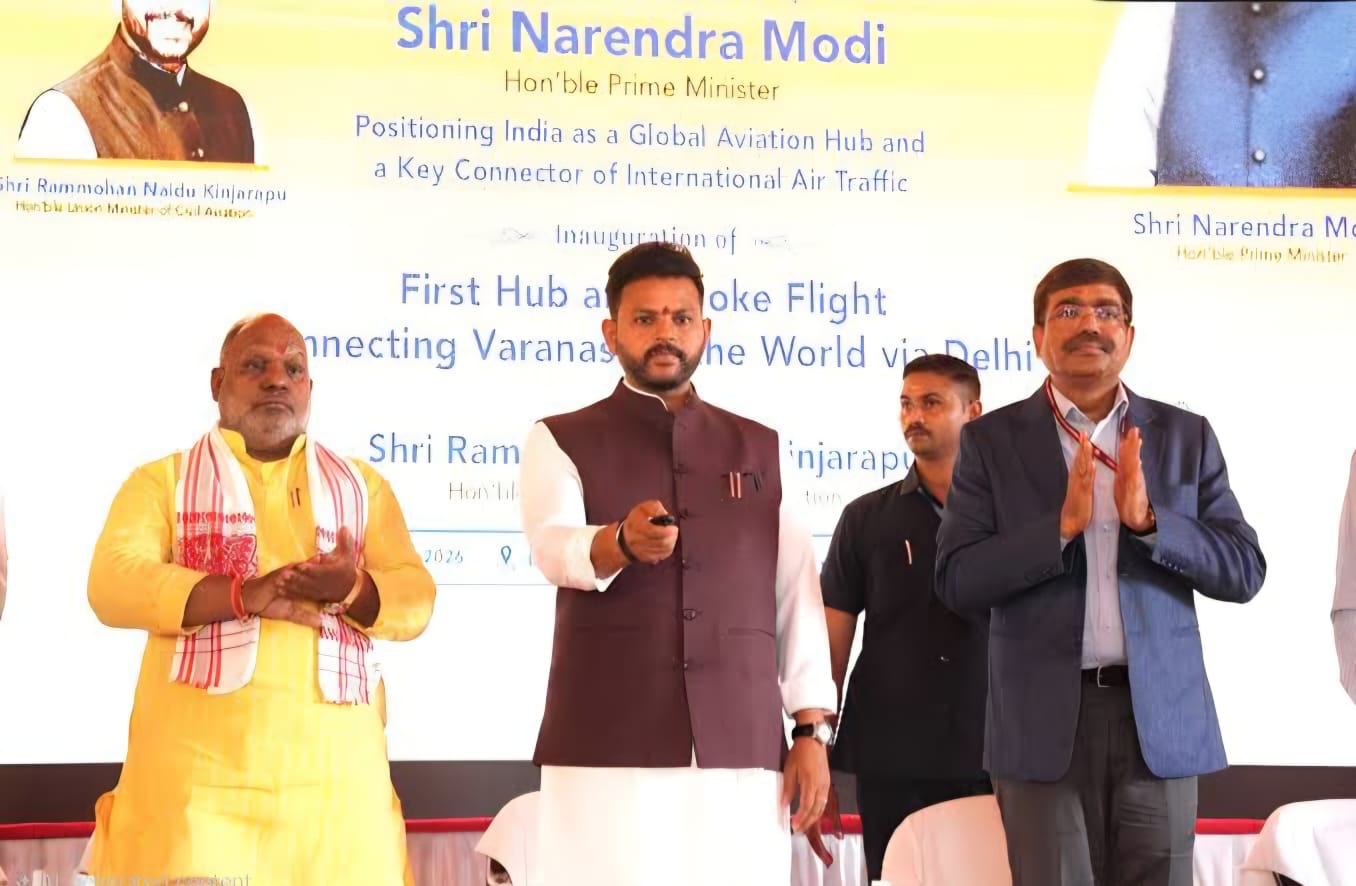
VARANASI — Union Civil Aviation Minister K. Ram Mohan Naidu officially inaugurated India's first "Easy Connect" flight under a newly formalized national hub-and-spoke aviation model at Lal Bahadur Shastri International Airport on Thursday. The inaugural service, operated by Air India as flight AI111...
VARANASI — Union Civil Aviation Minister K. Ram Mohan Naidu officially inaugurated India's first "Easy Connect" flight under a newly formalized national hub-and-spoke aviation model at Lal Bahadur Shastri International Airport on Thursday. The inaugural service, operated by Air India as flight AI1111, departed Varanasi for New Delhi, carrying international transit passengers who seamlessly connected onward to multiple global destinations without repeating security check-ins or baggage handling at the primary hub. This milestone operationalizes the central government's structural policy to streamline international travel for non-metro cities, aiming to capture a massive share of outbound traffic that historically transited through foreign airports.
Technical Integration of the Spoke-to-Hub Framework
Under the new administrative guidelines outlined by the Ministry of Civil Aviation, the hub-and-spoke architecture radically alters how international departures are processed from India’s regional interior. Travelers originating from a designated "spoke" airport can now execute through-check-in, check their luggage to their final global destination, and complete all international customs and immigration formalities at their local terminal.
Once these border procedures are satisfied at the point of origin, the local terminal serves as the official international point of departure. To maintain strict security protocols and protect operational integrity, aviation authorities have designated both legs of the domestic-international transition as international operations. Passengers are issued separate physical boarding cards carrying distinct visual identifiers to completely prevent the intermixing of domestic and international travelers on the tarmac and inside the transit lounges.
Economic Projections and Nationwide Structural Rollout
According to comprehensive macroeconomic feasibility studies conducted by the government, the strategic establishment of dedicated domestic aviation hubs is projected to generate roughly 0.4 million direct and indirect jobs while adding $30 billion to India’s GDP by 2030. Looking ahead to the centenary timeline of 2047, the cumulative fiscal impact is estimated to support 16 million jobs and contribute nearly $1.4 trillion to the national economy, positioning India as a prominent global transit center.
During the high-profile launch ceremony, Minister Naidu announced that six additional destinations will be systematically integrated into this hub-and-spoke infrastructure over the next six weeks. Air India Chief Executive Officer and Managing Director Campbell Wilson confirmed that the carrier will progressively scale the "Easy Connect" framework to 11 more cities, including Amritsar, Vadodara, Ahmedabad, Kochi, Goa, Guwahati, Mumbai, Hyderabad, Patna, Chennai, and Visakhapatnam.
Official Sources Section
The infrastructure statistics, regulatory frameworks, operational mandates, and long-term economic forecasts cited in this report are compiled directly from public media releases issued by the Ministry of Civil Aviation, regulatory filings from the Airports Authority of India (AAI), and corporate route announcements published by Air India Limited.
Quote Section
Highlighting the structural and cultural shift in Indian civil aviation, Union Civil Aviation Minister K. Ram Mohan Naidu stated on record during the plenary briefing:
"Today we take a major step forward towards realising our vision of making air travel more accessible and building a future-ready, self-reliant Indian aviation industry that is efficient, inclusive, and globally competitive. Our new hub-and-spoke model paves the way for a monumental shift in how our citizens travel—regardless of the city one lives in India. One can begin their international journey from their home city and travel across the globe with ease and confidence, on India’s own wings."
Air India CEO and MD Campbell Wilson added:
"Air India flight 1111 connects Varanasi seamlessly to 17 destinations such as London, Frankfurt, Singapore and others. In the coming months, we will expand to connect more cities across India. This initiative operationalises the framework to simplify the complicated transit to travel outside of India from the interior airports."
Why It Matters
The implementation of the "Easy Connect" framework addresses a major economic leakage in the Indian travel market, where roughly 35% of international fliers currently route through overseas hubs like Dubai, Doha, or Singapore. By consolidating baggage and immigration procedures locally, Indian carriers can directly feed international traffic through metropolitan gateways like New Delhi. For passengers, this eliminates the logistical stress of retrieving baggage and changing terminals during domestic-to-international transfers, saving hours of transit time.
Key Facts at a Glance
The Launch: Civil Aviation Minister K. Ram Mohan Naidu launched the first "Easy Connect" hub-and-spoke flight from Varanasi to Delhi on June 25, 2026.
Streamlined Security: Outbound travelers complete final international immigration and baggage check-in at their home airport, remaining entirely airside during their hub transfer.
Immediate Reach: The inaugural flight AI1111 enables tight, four-hour connections from Delhi to 17 global cities, including London, Frankfurt, Rome, Milan, Zurich, and Dubai.
Expansion Roadmap: Six more regional cities will join the hub-and-spoke grid within six weeks, with 11 more major cities slated for a phased rollout by Air India.
Mandatory Requirement: To utilize the seamless transit process, Indian passport holders are required to complete mandatory DigiYatra enrollment before departure.
Frequently Asked Questions (FAQ)
What is the "Easy Connect" flight model launched by the government?
It is an operational framework under India's new hub-and-spoke strategy that allows passengers flying internationally from smaller tier-II and tier-III cities to complete check-in, baggage drop, and immigration at their local airport before transiting seamlessly through a major international hub like New Delhi.
Do I need to collect and re-check my luggage at the transit hub airport?
No. Under the "Easy Connect" protocol, your bags are automatically tagged through to your final global destination at your originating airport. Airside ground operations handle the transfer between aircraft seamlessly.
Can I use standard web check-in for these hub-and-spoke flights?
No, standard web check-in and off-site customs declarations are currently unavailable for these specific routes. Passengers must check in in-person at the originating spoke airport and must register via the DigiYatra application.
Which international destinations can be reached via this initial flight?
The Varanasi-Delhi flight is specifically timed to connect within four hours to 17 international destinations, including major global centers such as London, Frankfurt, Zurich, Milan, Rome, Singapore, Dubai, Riyadh, and Phuket.
Sources: Ministry of Civil Aviation, Government of India Press Release, Airports Authority of India (AAI) Terminal Operations Directive, Air India Corporate Newsroom Operational Filings