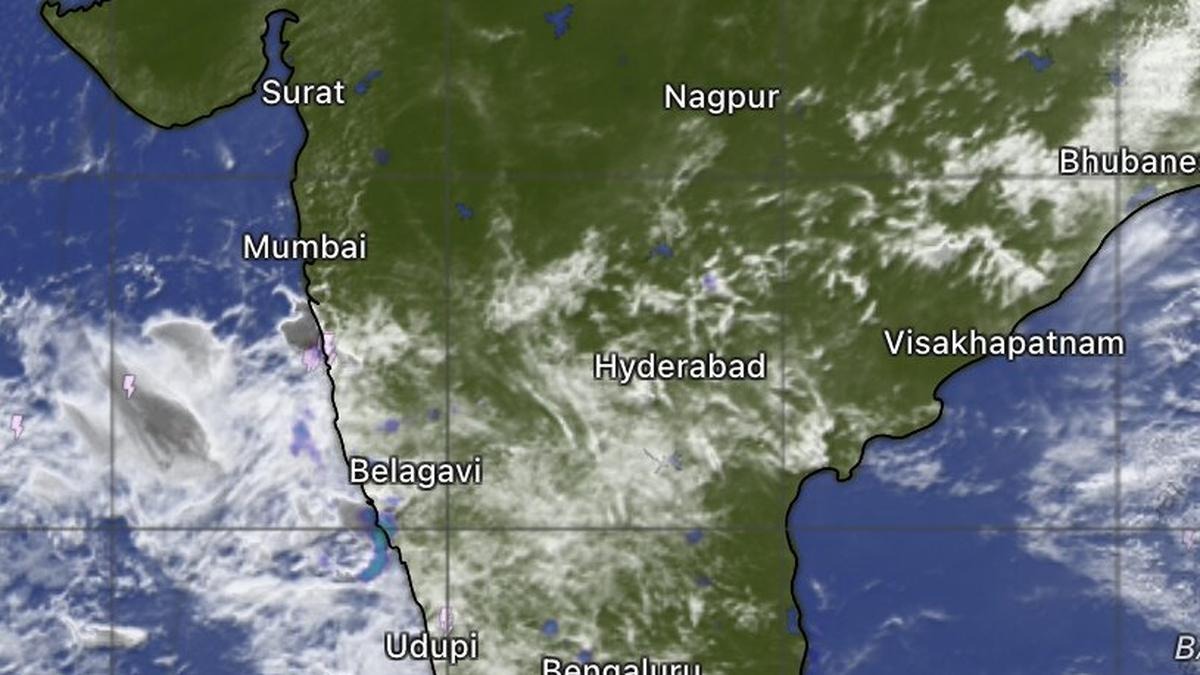
India Meteorological Department officials confirmed that western disturbances have slowed the advance of the southwest monsoon, leading to below-average rainfall projections over the next two weeks. While central and northern crop sowing may face temporary delays, weather experts expect the monsoon to regain momentum and pick up pace from late June.
The seasonal advance of the Indian monsoon has significantly decelerated over central and northern agricultural belts, which is expected to result in below-average rainfall across most parts of the country for the next two weeks. Weather bureau officials reported on Thursday that counter-seasonal atmospheric patterns, specifically persistent western disturbances moving from the Mediterranean region, have temporarily disrupted the steady movement of the rain-bearing front. However, meteorologists project that the vital weather system will recover and begin picking up pace from late June, preserving the broader trajectory of the summer cropping cycle.
Western Disturbances Stall Northern and Central Advancement
According to an operational status update issued by the India Meteorological Department (IMD), the standard northern path of the southwest monsoon has hit a temporary atmospheric block. While the front advanced successfully across the southern states, its migration into the interior food-producing breadbaskets has flattened.
Western disturbances—extra-tropical storm systems originating over the Mediterranean Sea—have altered local pressure gradients across the subcontinental mainland. Instead of allowing the tropical monsoon trough to expand northward smoothly, these interactions have triggered scattered non-monsoonal thunderstorms, hailstorms, and dust storms across Delhi NCR, Himachal Pradesh, and Uttar Pradesh. Bureau officials confirmed that this complex intersection has stalled the monsoon's arrival in central industrial and agricultural zones by several days.
Delayed Sowing Schedules to Impact Primary Summer Crops
The revised short-term outlook indicating below-average rainfall over the next fortnight has generated concern among agricultural planners and commodity market analysts. The annual southwest monsoon contributes roughly 70% of India's aggregate rainfall, serving as the foundational water source for an agrarian economy where nearly half of all total cultivated farmland completely lacks localized artificial irrigation systems.
Agronomists at national commodity tracking divisions indicate that a multi-week rainfall shortfall across June will inevitably delay the planting window for critical summer-sown (Kharif) crops. The delayed deployment of water volumes threatens the early vegetative phases of high-value commodities, including:
Rice: High-volume paddy fields across eastern and northern plains require heavy standing water for transplantation.
Soybeans and Pulses: Key protein crops in Madhya Pradesh and Maharashtra face germination risks if sown in dry topsoil.
Cotton: Commercial acreage across central black soil belts depends heavily on initial June moisture to establish root configurations.
Late June Acceleration Projected to Stabilize Deficits
Despite the immediate dry spell forecast for the middle of June, long-range numerical weather prediction models operated by the state indicate that the overall framework of the season remains intact. The IMD's extended range tracking data projects that the block caused by the western disturbances will weaken substantially after the third week of the month.
As global wind profiles realign, the monsoon is seen picking up pace from late June. The subsequent surge is expected to deliver widespread, heavy precipitation that will help erase early seasonal deficits and cover the remaining states of Central, Western, and Northern India by mid-July, in line with standard historical timelines.
Official Sources Section
The weather tracking metrics, geographical coordinates, and agricultural impact parameters outlined in this dispatch are corroborated by official government data releases:
India Meteorological Department Press Release: Issued June 11, 2026, documenting the current location and advance boundaries of the Southwest Monsoon.
Ministry of Earth Sciences Climate Outlook: Long-range modeling datasets updated for the June-September seasonal block.
Meteorological Bureau Briefings
Senior meteorologists emphasized that while the short-term delay is clear, it does not imply a systemic seasonal failure.
"According to officials, western disturbances have slowed the monsoon's advance, and it could take a few more days before it moves effectively into central India," a senior official with the India Meteorological Department stated during a briefing on regional wind interactions. "Weather bureau officials say the country is likely to receive below-average rainfall over the next two weeks, but we see the monsoon picking up pace from late June as tropical pressures reorganize."
Why It Matters
The timing of the Indian monsoon affects more than just rural communities; it directly shapes national macroeconomic stability. A protracted delay in early rainfall forces rural households to rely on costly groundwater pumping, which drives up initial production overheads. Furthermore, any sustained threat to domestic crop yields can trigger inflationary pressure on food prices, potentially prompting the central bank to adjust interest rates to manage market volatility.
Key Facts at a Glance
Immediate Outlook: Below-average rainfall expected across central and northern India for the next two weeks.
Primary Disruption: Persistent western disturbances from the Mediterranean Sea have temporarily blocked the monsoonal front.
Recovery Projection: Rainfall activity is seen picking up pace from late June onward as regional blocks dissolve.
Economic Reliance: The monsoon yields roughly 70% of India’s annual rainfall, supporting a massive agricultural workforce.
FAQ Section
Q: Why has the progress of the Indian monsoon slowed down this June?
A: The monsoon's advance has slowed due to the presence of western disturbances, which are Mediterranean weather systems that have disrupted the standard northward flow of rain-bearing winds.
Q: Which regions of India are currently receiving adequate monsoonal rainfall?
A: The monsoon has successfully covered Kerala, Tamil Nadu, Karnataka, most parts of Andhra Pradesh, and portions of southern Maharashtra, where seasonal rainfall remains stable.
Q: Will the two-week delay destroy this year's summer crop yields?
A: While it will likely delay the initial sowing of crops like rice, cotton, and soybeans, officials project that the late June acceleration should provide sufficient moisture to stabilize the cultivation cycle.
Source: India Meteorological Department, Press Information Bureau - Government of India