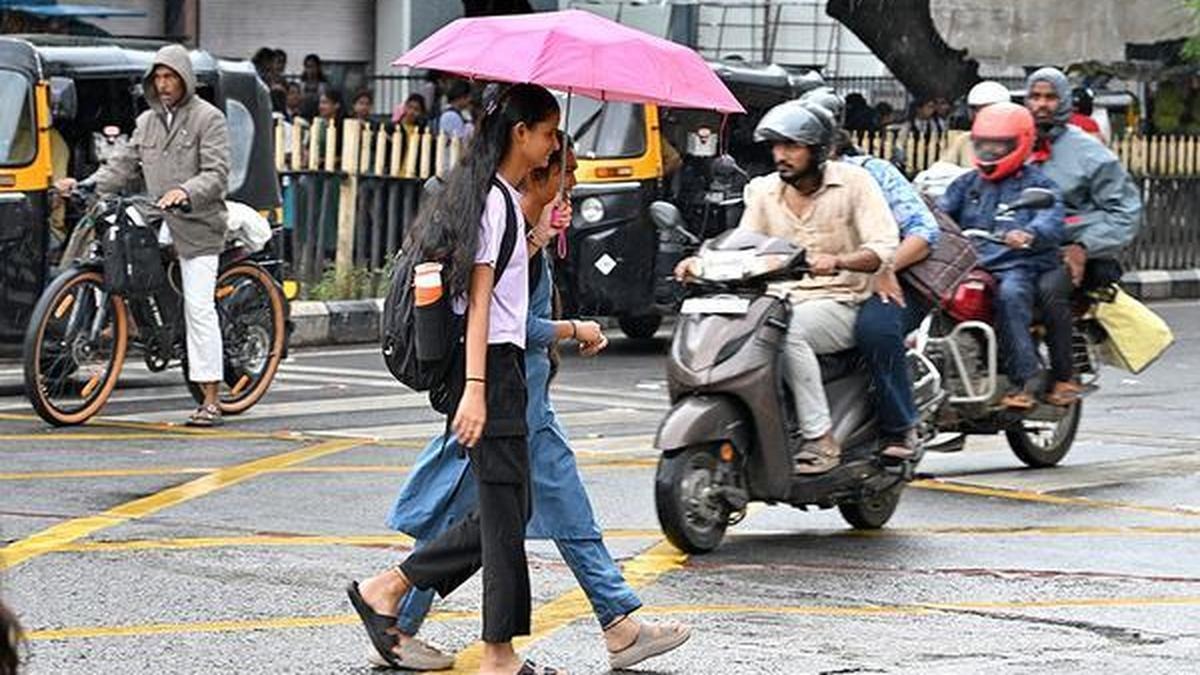
India faces a period of below-average monsoon rainfall in western and southern regions for the next two weeks, according to the IMD. This uneven distribution poses challenges for the Kharif sowing season and reservoir levels, prompting officials to advise water conservation and strategic agricultural planning to mitigate potential economic impacts.
The India Meteorological Department warns of a potential precipitation shortfall in key regions, heightening concerns for agriculture and reservoir management during the critical monsoon window.
India is bracing for a potential period of below-average rainfall across its western and southern regions over the next fortnight, according to recent updates from the India Meteorological Department (IMD). This development comes as the nation navigates a complex monsoon season characterized by uneven precipitation patterns and shifting atmospheric conditions.
The southwest monsoon, which is the lifeblood of India's agrarian economy, has seen varied performance throughout 2026. While the monsoon has advanced across the country, meteorological data indicates that the anticipated rainfall distribution for the coming two weeks will be subdued in several key states, raising concerns for farmers preparing for the Kharif crop sowing season.
Shifting Monsoon Dynamics
The current weather outlook, issued by the Ministry of Earth Sciences, suggests that while certain areas in the north and east may witness normal to above-normal activity, the western and southern peninsular regions are poised for a drier cycle. Meteorologists point to a weakening of moisture-carrying systems that have previously driven heavy downpours.
This forecast follows a June that was significantly drier than the historical average. The IMD noted that the absence of consistent low-pressure systems and unfavorable oscillations played a role in the sluggish start to the season. As the country moves deeper into July—typically the wettest month of the monsoon—the current projected shortfall in the west and south could impact overall seasonal totals.
Impact on Agriculture and Economy
For India’s vast agricultural sector, the timing of monsoon rains is as critical as the volume. The next fortnight is a vital window for sowing paddy, pulses, and oilseeds. A significant deficit in rainfall during this period could necessitate increased reliance on irrigation, potentially straining power grids and depleting water reservoirs that are crucial for both agricultural and municipal water supplies.
Businesses and investors are closely monitoring these meteorological reports. A sustained weak monsoon could influence food inflation and impact the output of water-intensive crops, leading to broader economic ripple effects. Conversely, the IMD has advised stakeholders to prioritize water conservation measures and adopt resilient farming practices to mitigate the risks associated with the uneven rainfall distribution.
Official Sources and Regulatory Outlook
According to official bulletins from the IMD, the nation remains in a state of vigilant monitoring. The meteorological bureau uses a sophisticated ensemble of global climate models, including the Monsoon Mission Climate Forecast System (MMCFS), to track the development of weather patterns.
The department’s latest assessment clarifies that while specific pockets—particularly in the northeast and isolated parts of the north—are expected to receive adequate rainfall, the broader trend for the next two weeks shows a downward deviation in the west and south. Government agencies are coordinating with local authorities to ensure that regions vulnerable to water stress receive updated advisories to support contingency planning.
Why It Matters
Reliable rainfall is essential for India’s food security and economic stability. Because the country relies on the monsoon for more than 70% of its annual precipitation, even minor deviations from the average can have profound consequences for rural incomes and national retail inflation. Managing these fluctuations through data-driven planning is vital for mitigating climate-related risks to the national economy.
Key Facts at a Glance
Below-Average Rainfall: Most of western and southern India is expected to see a reduction in rainfall volume over the next 14 days.
Critical Sowing Window: The current period is essential for Kharif crop planting; weather shifts may affect yield projections.
Regional Variance: While the west and south face a dry spell, the IMD forecasts normal to above-normal precipitation in several areas of north and northeast India.
Water Management: Authorities are urging farmers and urban planners to adopt strict water conservation and efficient resource management strategies.
Frequently Asked Questions (FAQ)
1. Is the monsoon failing across all of India?
No. The monsoon remains active, but distribution is highly uneven. While the west and south face a drier fortnight, other regions, including parts of the north and northeast, are expected to receive normal to above-normal rainfall.
2. How does the current forecast affect food prices?
A significant or prolonged rainfall deficit can impact crop yields, which may influence supply chains and contribute to fluctuations in food prices.
3. What should farmers do during this dry spell?
The IMD advises farmers to implement water-saving irrigation techniques and align their planting schedules with real-time weather updates provided by local agricultural extension services.
4. When will the next weather update be issued?
The IMD provides daily and weekly weather bulletins. Stakeholders are encouraged to monitor the official IMD website for the most recent forecasts and weather warnings.
Source: