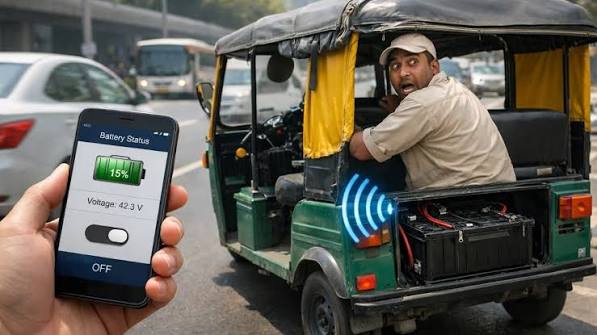
India has banned several e-rickshaw battery management apps following reports of vehicles stalling unexpectedly in traffic due to software vulnerabilities. The government now mandates security audits for these platforms to ensure driver and passenger safety before they are permitted to resume services, aiming to stabilize the critical last-mile transport sector.
NEW DELHI — The Indian government has ordered the immediate removal of multiple mobile applications associated with electric rickshaw battery management and swapping services. The directive, issued by the Ministry of Electronics and Information Technology (MeitY) on Sunday, July 5, 2026, follows a surge in consumer complaints regarding vehicles stalling unexpectedly during transit, posing significant safety and logistical risks to passengers and operators across major metropolitan hubs.
The crackdown targets platforms that facilitate "battery-as-a-service" and real-time power management for the growing e-rickshaw fleet. According to official reports, the apps were found to be harboring critical software vulnerabilities that resulted in communication failures between the battery packs and the vehicle’s drive controller, causing sudden power loss on busy thoroughfares.
Government Investigation into Software Failures
The government's intervention comes after a two-week investigation by the Indian Computer Emergency Response Team (CERT-In). The probe was initiated following a series of high-profile incidents in Delhi, Bengaluru, and Kolkata, where e-rickshaws lost propulsion in heavy traffic, leading to traffic bottlenecks and minor safety incidents.
"The ministry has identified critical flaws in the firmware-to-app communication protocols used by several unverified battery management platforms," stated an official familiar with the investigation. "These vulnerabilities allowed for unauthorized remote-reset commands, which inadvertently caused the vehicles to enter a 'low-power' safety mode while still in motion."
Impact on E-Rickshaw Ecosystem
E-rickshaws have become a cornerstone of India’s last-mile connectivity, with thousands of operators relying on battery swapping models to maintain daily earnings. The abrupt ban on these applications creates an immediate challenge for operators who depend on the software to locate nearby swapping kiosks and monitor charge levels.
"For thousands of e-rickshaw drivers, these apps were the heartbeat of their operation," said a representative from a local transport union. "Without these tools, drivers are unable to track battery health, leading to fears of being stranded mid-journey without a backup power source."
Regulatory Response and Future Safety
To restore operational stability, the Ministry has mandated that all battery management service providers undergo a mandatory security audit by government-empanelled testing laboratories before they can be reinstated on app marketplaces.
The directive also stipulates that these companies must implement a "fail-safe" protocol, ensuring that even if a mobile application loses connectivity or suffers a software glitch, the vehicle's battery controller defaults to a safe-to-reach-destinations mode rather than an immediate power cutoff.
Official Sources
Quote Section
"According to officials," the decision to pull the applications was taken as a temporary safety measure to prevent further traffic disruptions and potential accidents, pending a comprehensive security certification of the platforms' backend infrastructure.
Why It Matters
The shutdown highlights the risks associated with the rapid digitizing of India's electric vehicle (EV) infrastructure. As cities increasingly rely on e-rickshaws to reduce pollution, the reliance on third-party software for critical vehicle operation creates new vulnerabilities. This move forces companies to prioritize cybersecurity and software reliability, which are essential as India scales its EV ecosystem to meet ambitious climate goals.
Key Facts at a Glance
Action: Removal of multiple EV battery management applications from app stores.
Reason: Software bugs causing e-rickshaws to stall unexpectedly in traffic.
Scope: The ban covers platforms facilitating battery-as-a-service and real-time charging monitoring.
Compliance: Reinstatement is contingent upon security audits by government-empanelled labs.
FAQ
Why did the e-rickshaw apps cause vehicles to stall?
Investigation revealed software flaws that allowed remote-reset signals to trigger "low-power" safety modes while vehicles were still on the road.
What should e-rickshaw operators do now?
The government advises operators to rely on physical battery charge indicators on their vehicles and coordinate directly with battery swapping station personnel until apps are verified and restored.
Will this ban affect all e-rickshaw services?
No, the ban is limited to specific battery management applications that failed safety protocols; vehicles using onboard, non-app-dependent power systems are unaffected.
Source: MeitY, CERT-In