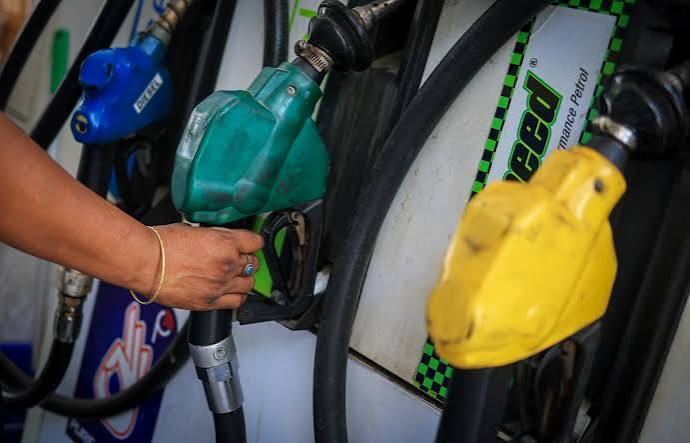
Major Indian automakers have publicly confirmed the safety of E20 ethanol-blended petrol, addressing consumer backlash regarding vehicle damage. Industry leaders stated that extensive scientific testing has cleared the fuel for use in both new and older vehicles, though a minor decline in fuel efficiency is a documented technical reality.
NEW DELHI — Leading Indian automotive manufacturers have launched a coordinated effort to reassure consumers regarding the safety and viability of E20 ethanol-blended petrol. The move, initiated this weekend, comes as the Indian government and industry bodies work to counter widespread social media misinformation regarding the impact of the 20% ethanol blend on vehicle engines and fuel efficiency.
Following a series of public concerns and reports of alleged vehicle malfunctions linked to the fuel, representatives from major players including Maruti Suzuki, Toyota Kirloskar Motor, Hero MotoCorp, Bajaj Auto, and TVS Motor addressed media outlets on Saturday, July 4, 2026. The manufacturers emphasized that the nationwide rollout of E20 fuel—which became the standard at retail petrol pumps earlier this year—is the result of years of rigorous scientific testing and stakeholder consultation.
Industry Assurances on Vehicle Safety
Addressing the most common points of consumer anxiety, industry executives clarified that E20 petrol is compatible even with vehicles manufactured prior to the mandate. Rahul Bharti, Senior Executive Officer at Maruti Suzuki India, noted that the company had internally tested E10-compliant cars on E20 fuel and found no parameters of concern.
"We have tested E10 cars on E20 fuel for all parameters and have not found anything of concern," Bharti stated. "We have built sufficient safety margins into vehicle design to ensure there are no issues related to wear and tear, corrosion, or component life, even in pre-2023 models."
Similarly, Hero MotoCorp’s Chief Business Officer, Ashutosh Verma, pointed to massive field datasets. "We analyze millions of service records, and there is no evidence of higher damage with vehicles running on E20 compared to those running on traditional fuels," Verma added.
Addressing Mileage and Performance Concerns
While industry leaders dismissed claims of engine failure or corrosion as "misconceptions," they acknowledged a minor impact on fuel efficiency. Executives admitted to a marginal drop in mileage—estimated between 3% and 3.5%—for older vehicles. This reduction is attributed to the lower calorific value of ethanol compared to conventional petrol.
Vikram Gulati, Country Head and Executive Vice President at Toyota Kirloskar Motor, defended the fuel’s performance, describing ethanol as a high-performance, zero-carbon alternative. "Vehicles in India are extremely well-engineered and subject to rigorous testing by technically sound agencies," Gulati said. He noted that as more Flex-Fuel Vehicles (FFVs) hit the market, the compatibility and performance of higher ethanol blends would improve further.
Official Sources and Regulatory Oversight
The Ministry of Petroleum & Natural Gas and the Press Information Bureau (PIB) have urged the public to disregard "rage bait" and unsubstantiated claims circulating online. Officials maintain that the E20 mandate is a science-driven initiative, supported by the Automotive Research Association of India (ARAI) and the Society of Indian Automobile Manufacturers (SIAM).
The government’s ethanol blending programme, which scaled from 1.5% in 2014 to 20% by December 2025, is a centerpiece of India’s strategy to reduce crude oil import dependence and support agricultural income.
Key Facts at a Glance
Safety Status: Extensive testing by ARAI and manufacturers confirms E20 is safe for both new and older vehicles.
Efficiency Impact: A slight reduction in mileage (3–3.5%) is expected due to the lower calorific value of ethanol.
Scientific Validation: The E20 rollout was implemented following a phased, multi-year testing process involving major Indian automakers.
Flex-Fuel Future: Manufacturers are actively supporting the transition to FFVs, with E85 fuel already being piloted at select retail outlets.
FAQ
Is it safe to use E20 fuel in an older car?
Yes, manufacturers have confirmed that even vehicles designed for E10 fuel have sufficient safety margins to handle E20 without long-term damage.
Will using E20 void my vehicle warranty?
No, automakers and insurers have confirmed that using E20 fuel as recommended by the government does not affect warranty coverage or insurance claims.
Why are consumers experiencing lower mileage?
The drop in fuel efficiency (approximately 3%) is a technical reality of ethanol having a lower calorific value than pure petrol, not a sign of engine damage.
Source: Ministry of Petroleum & Natural Gas, Press Information Bureau (PIB), Society of Indian Automobile Manufacturers (SIAM)