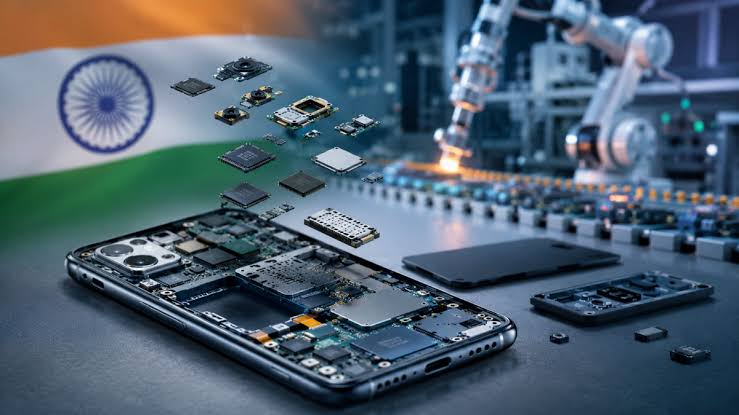
India's Ministry of Electronics and IT has notified a ₹62,500-crore Mobile Phone Manufacturing Scheme to build a domestic smartphone brand competing with Samsung, Vivo, and Xiaomi. Offering up to 9.5% combined incentives for Indian design, R&D, and local sourcing, the policy targets commercial market launch by mid-2027.
NEW DELHI — The Indian government has formally notified a ₹62,500-crore ($7.5 billion) Mobile Phone Manufacturing Scheme (MPMS) aimed at building a homegrown global smartphone brand capable of competing with established market leaders such as Samsung, Vivo, and Xiaomi. Announced by the Ministry of Electronics and Information Technology (MeitY), the strategic policy marks a decisive transition from third-party contract assembly to the development of domestically owned intellectual property, industrial design, and local component ecosystems. The five-year program, effective retrospectively from April 1, 2026, and running through financial year 2030–31, comes as New Delhi seeks to capture higher-margin value creation in global electronics supply chains.
Dual-Track Architecture and Incentive Framework
The comprehensive scheme is structured into two distinct operating tracks designed to scale mass electronics manufacturing while simultaneously incubating domestic consumer tech brands.
The first track targets large-scale manufacturers and electronics manufacturing services (EMS) providers with a minimum financial year 2025–26 turnover of ₹10,000 crore. Eligible participants can access a sliding production-linked incentive of 2.25% to 5% on incremental net sales, alongside an additional 1.5% bonus for sourcing domestic components.
The second track focuses exclusively on nurturing homegrown Indian smartphone brands. Qualifying companies must meet strict ownership criteria: they must be incorporated in India, maintain more than 51% equity shareholding with Indian citizens, retain management control domestically, and register all underlying intellectual property and product trademarks within the country. The entry threshold for domestic brands is pegged at a turnover of ₹1,000 crore for financial year 2025–26.
Indian-owned brands will receive a baseline 5% financial incentive on eligible sales, supplemented by an additional 3% incentive specifically earmarked for domestic research and development (R&D) and product design. Both tracks qualify for a 1.5% local sourcing bonus provided at least 25% of sub-assemblies and components used in annual production are procured from domestic suppliers.
Breaking Foreign Market Dominance
While India has expanded domestic mobile phone production 33-fold over the past decade—rising from ₹18,000 crore in 2014–15 to ₹6.27 lakh crore in 2025–26—the local retail market remains dominated by overseas conglomerates.
According to industry data from Counterpoint Research, foreign entities control more than 85% of India’s smartphone shipments. Chinese manufacturers including Vivo (17.8%), Oppo (13.6%), Xiaomi (13.4%), and Realme (10%) account for over half of total device volumes, while South Korea's Samsung and the United States' Apple control roughly 17.6% and 7% of shipments, respectively.
Domestic manufacturers such as Lava International, Micromax, and Reliance Jio maintain localized footholds in feature phones and entry-level 4G/5G handsets but have struggled to challenge multinational incumbents in mid-to-premium segments. MeitY officials confirmed that three domestic enterprise consortiums have commenced preliminary project discussions with the government, with the first commercial flagship devices projected to hit retail shelves by mid-2027.
Component Ecosystem and Semiconductor Integration
A critical objective of the MPMS blueprint is deepening the local electronics value chain beyond surface-mount technology (SMT) and basic casing assembly. Industry leaders point out that achieving price parity against foreign rivals requires seamless integration with India's expanding component programs.
The initiative directly interfaces with the 106 industrial projects cleared under the Electronics Components Manufacturing Scheme and the domestic fab developments under the India Semiconductor Mission. By aligning local display module fabrication, camera sensor packaging, printed circuit boards (PCBs), and advanced chip packaging with homegrown handset assembly, the government projects cumulative production of nearly ₹39 lakh crore and the creation of approximately 60,000 direct engineering and manufacturing jobs over the scheme's duration.
Why It Matters
Creating a domestic technology brand addresses significant economic, data security, and geopolitical vulnerabilities. When foreign multinationals dominate consumer hardware, value addition, software royalties, and engineering intellectual property flow outward.
For Indian consumers and enterprise buyers, a competitive homegrown brand could reduce device acquisition costs, provide localized hardware features tailored to regional climate and network conditions, and ensure stronger data sovereignty. For investors and component manufacturers, the initiative establishes a captive domestic customer base for emerging semiconductor, display, and printed board fabrication plants across Gujarat, Tamil Nadu, and Uttar Pradesh.
Key Facts at a Glance
Total Budget Outlay: ₹62,500 crore approved under the Mobile Phone Manufacturing Scheme (MPMS).
Timeline: Operational from FY 2026–27 through FY 2030–31, with first homegrown flagship expected by mid-2027.
Incentive Slabs for Indian Brands: 5% baseline incentive, 3% design and R&D bonus, and 1.5% component localization credit.
Eligibility Criteria: >51% Indian shareholding, Indian management control, domestic IP retention, and ₹1,000 crore baseline turnover.
Economic Target: Projected ₹39 lakh crore in cumulative output and 60,000 direct skilled jobs.
Official Sources
According to official gazette notifications and policy directives released by the Ministry of Electronics and Information Technology (MeitY) and the Union Cabinet:
"The Mobile Phone Manufacturing Scheme creates a dedicated pathway to support domestic companies in developing indigenous intellectual property, local product design, and sustainable supply chain self-reliance."
Quote Section
According to official statements delivered by Union Minister for Electronics and IT Ashwini Vaishnaw:
"We used to have a mobile manufacturing ecosystem, but tax issues and intense foreign competition made it difficult for Indian players to compete. Having rebuilt our manufacturing scale, the time has arrived to focus on building an Indian brand, with Indian IP and Indian design, capable of reaching global scale."
Frequently Asked Questions
What is the objective of the new Mobile Phone Manufacturing Scheme?
The scheme aims to scale large-scale domestic electronics manufacturing and provide targeted financial incentives to establish Indian-owned smartphone brands capable of competing globally with foreign manufacturers.
What incentives can an Indian smartphone brand claim?
Eligible domestic brands can claim a 5% incentive on eligible sales, an additional 3% incentive for in-house R&D and design, and up to 1.5% for sourcing local sub-assemblies.
When will the first homegrown smartphone under this scheme launch?
Government officials project that the first fully indigenous brand developed under the scheme will reach commercial markets by mid-2027.
What qualifications must a company meet to apply as an Indian brand?
A company must be incorporated in India, maintain at least 51% Indian citizen shareholding, keep intellectual property and trademarks in India, and report a minimum turnover of ₹1,000 crore in FY 2025–26.
Source: Ministry of Electronics and Information Technology (MeitY) | Press Information Bureau (PIB) | India Cellular and Electronics Association (ICEA)