The Government of India has secured a combined $2.5 billion infrastructure loan from the World Bank and the Asian Development Bank. Split equally at $1.25 billion per institution, the funding will drive key rapid transit systems, urban water management setups, and sustainable clean energy grids under national development mandates.
NEW DELHI — The Government of India has formally initiated loan documentation with the World Bank and the Asian Development Bank (ADB) to secure a combined $2.5 billion capital pool dedicated to public infrastructure projects. The economic development Ministry finalized the financing parameters on Thursday, June 18, 2026, marking a significant step forward in the nation's multi-modal connectivity push under the PM Gati Shakti initiative.
This major financial development aims to insulate key domestic logistics networks from near-term macroeconomic shifts. By utilizing targeted multilateral development assistance, the funding package avoids adding immediate strain to the sovereign domestic bond market while ensuring a steady pipeline of capital for ongoing smart city initiatives, interstate green energy corridors, and high-capacity regional rapid transit frameworks.
Detailed Allocation of the Multilateral Capital Injection
According to preliminary project frameworks reviewed by federal planning bodies, the $2.5 billion capital infusion will be divided equally between the two global lending institutions. The World Bank is set to administer $1.25 billion focused primarily on municipal climate adaptation, state-level water treatment logistics, and sub-surface urban drainage systems.
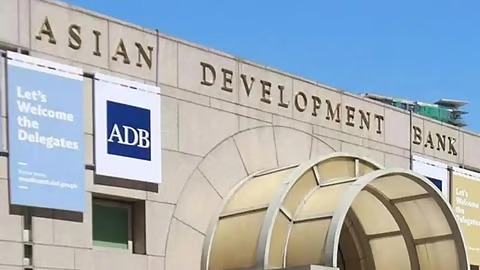
Concurrently, the Asian Development Bank (ADB) will deploy its matching $1.25 billion tranche across heavy transport and renewable energy grids. Regulatory briefs state that the ADB-backed allocation will directly target the expansion of the Delhi-Meerut Regional Rapid Transit System (RRTS) alongside metropolitan metro construction networks in Chennai and Indore. Furthermore, a slice of the funding will support localized solar installations under the PM Surya Ghar Muft Bijli Yojana.
Contextual Background and Macroeconomic Structural Benefits
Financing public works through international development lenders forms a key pillar of the government's strategy to balance long-term asset building with fiscal discipline. By borrowing in foreign currencies backed by extended repayment terms—often stretching across 20 to 25 years—the country reduces the need to issue short-term domestic treasury bills, helping keep corporate borrowing benchmarks predictable.
The multi-billion dollar agreements build upon a long-standing history of institutional co-financing in the South Asian region. Economists point out that India's current account trajectory is well-positioned to manage these extended debts. The ongoing stabilization of global energy import prices lowers foreign exchange volatility risks, ensuring steady debt-servicing capability.
Official Sources Section
The operational details, project definitions, interest parameters, and transit priorities detailed in this report originate from official announcements published by the Ministry of Finance, Government of India, statutory funding briefs from the Asian Development Bank (ADB) media desk, and project documentation updated on the World Bank Group institutional platform.
Quote Section
"According to officials familiar with the loan drafting process, utilizing external multilateral lines ensures uninterrupted execution schedules for our highest-priority logistics corridors. Organizers stated that the operational agreements incorporate strict transparency clauses, with funds being disbursed in distinct phases based on verified engineering milestones."
Why It Matters
For everyday citizens and daily commuters, this major funding injection translates directly into shorter transit times, more reliable local utility access, and cleaner municipal environments as modernized rapid transit and water networks go live. For manufacturing enterprises and international cargo operators, the optimization of national trade corridors lowers long-term shipping fees and removes supply chain bottlenecks, boosting domestic economic output.
Key Facts at a Glance
Total Value Secured: Formally locked at a combined $2.5 billion from global lenders.
Institutional Split: World Bank and the Asian Development Bank are contributing equal tranches of $1.25 billion each.
Transit Target: Capital is directly earmarked to expand high-speed regional rapid rail lines and urban metro grids.
Green Energy Integration: Funding will support rooftop solar arrays and localized clean energy infrastructure.
FAQ Section
Which specific transit networks will benefit from the $2.5 billion package?
The funds are primarily directed toward the continuous expansion of the Delhi-Meerut Regional Rapid Transit System (RRTS) and the secondary lines of the ongoing Chennai and Indore metro rail networks.
Will this international debt increase inflation within the domestic economy?
No. Because the capital is strictly tied to creating supply-side physical assets such as transportation links and energy grids it improves efficiency and lowers overall logistics friction, which helps curb inflation over time.
What is the repayment timeframe for these multilateral loans?
Standard infrastructure funding packages from development bodies like the World Bank and ADB are structured with long-term horizons, typically including a grace period followed by a 20 to 25-year repayment cycle.
Source: Ministry of Finance, Government of India, Asian Development Bank (ADB) India Desk, and The World Bank Open Data Repository.