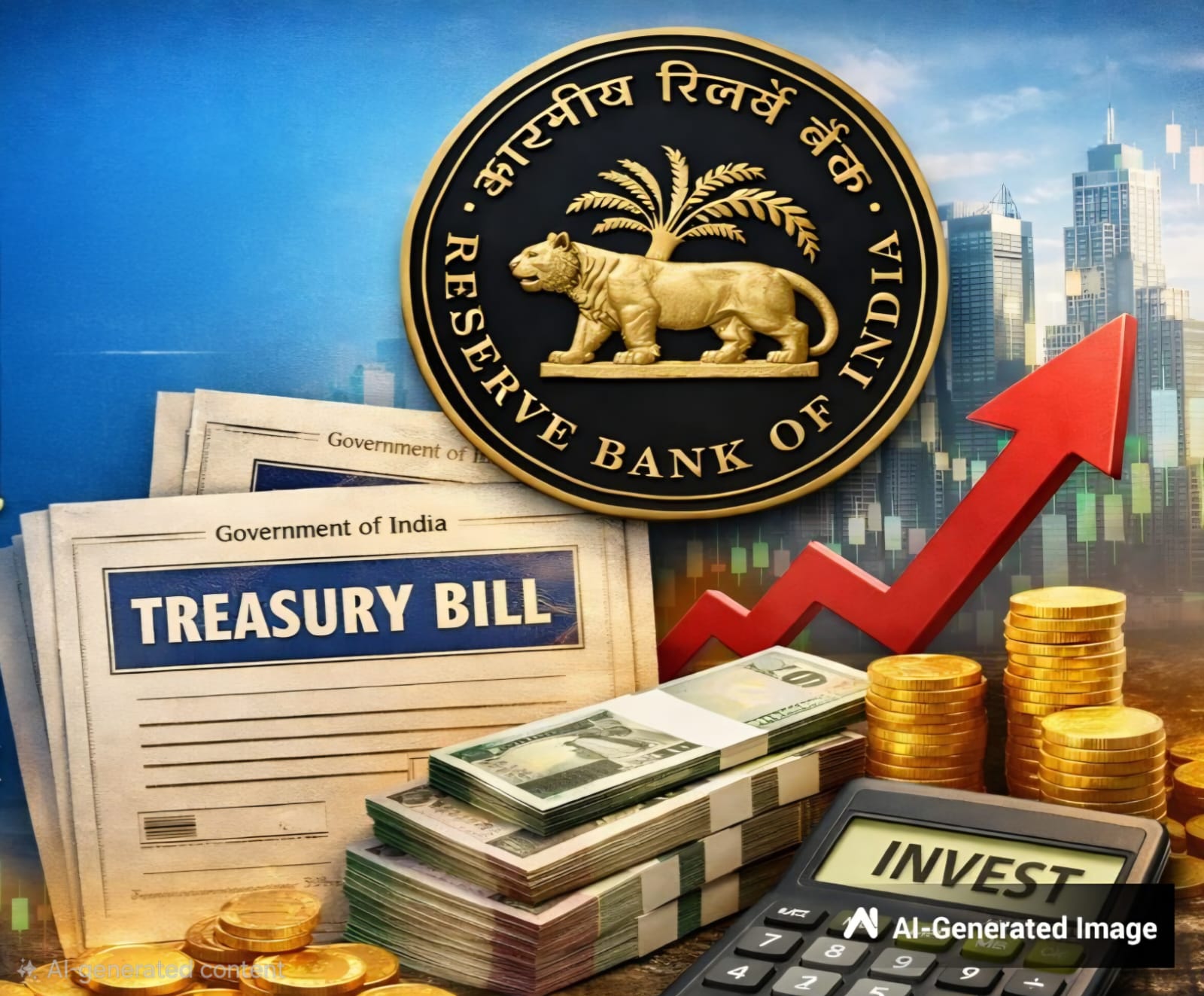
The Reserve Bank of India announced an auction of ₹240 billion in Government of India Treasury Bills scheduled for September 2, 2026. The issuance includes ₹90 billion in 91-day paper, ₹80 billion in 182-day paper, and ₹70 billion in 364-day paper, with settlement occurring on September 3, 2026.
MUMBAI — The Reserve Bank of India (RBI) announced on Friday, August 28, 2026, that the central government will conduct an auction of short-term Treasury Bills (T-Bills) worth ₹240 billion (₹24,000 crore) on Wednesday, September 2, 2026.
The competitive and non-competitive bidding for the debt securities will be conducted on the RBI’s E-Kuber platform, with final funds settlement scheduled for Thursday, September 3, 2026. The planned issuance represents a routine short-term borrowing exercise undertaken by the central bank on behalf of the Government of India to manage sovereign cash flows and fulfill institutional demand for risk-free liquid assets.
Detailed Breakdown of Offered Debt Tenors
According to official notification Press Release 2026-2027/987, the total auction amount of ₹240 billion will be split across three maturity profiles using a multiple price auction method:
91-Day T-Bills: ₹90 billion (₹9,000 crore) aggregate notified amount.
182-Day T-Bills: ₹80 billion (₹8,000 crore) aggregate notified amount.
364-Day T-Bills: ₹70 billion (₹7,000 crore) aggregate notified amount.
The sale remains subject to the general conditions outlined in the Government of India's notification dated March 26, 2025, as amended over time.
Investor Categories and Bidding Guidelines
Bidding will open electronically on the RBI's Core Banking Solution (E-Kuber) on September 2, 2026. Competitive bids must be submitted between 10:30 a.m. and 11:30 a.m. IST, while non-competitive bids will be accepted from 10:30 a.m. to 11:00 a.m. IST.
State governments, union territories, eligible provident funds, and designated foreign central banks are permitted to participate on a non-competitive basis outside the notified amount. Individual retail investors can also submit non-competitive bids through the dedicated RBI Retail Direct portal. Retail allocations are capped at a maximum of 5% of the total notified amount.
Technical Infrastructure and Contingency Protocols
Results of the bidding process will be released on the day of the auction, with settlement following on September 3, 2026.
In the event of electronic system disruptions, physical bids may be submitted to the Public Debt Office in the prescribed format. The Central Bank's Core Banking Operations Team and the Internal Debt Management Department (IDMD) will provide administrative and technical support throughout the operation.
Official Sources Section
According to official releases published by the Reserve Bank of India and public debt releases issued in coordination with the Ministry of Finance, the weekly auction forms part of the government's announced calendar for short-term borrowing.
Quote Section
"According to officials from the Reserve Bank of India, the sovereign Treasury Bill auction will offer ₹240 billion across 91-day, 182-day, and 364-day instruments to ensure orderly liquidity management and provide benchmark risk-free paper to market participants."
Why It Matters
Treasury Bill issuances maintain short-term liquidity within the domestic money market and establish benchmark short-term interest rates for short-term corporate paper and banking credit. Retail access via the Retail Direct framework allows individual investors to secure government-backed short-term returns directly from the central bank.
Key Facts at a Glance
Total Sovereign Issuance: ₹240 billion (₹24,000 crore).
Auction Date: Wednesday, September 2, 2026.
Settlement Date: Thursday, September 3, 2026.
Bidding Platform: RBI E-Kuber system and RBI Retail Direct portal.
Tenor Allocations: ₹90 billion (91-day), ₹80 billion (182-day), and ₹70 billion (364-day).
Frequently Asked Questions
What is the primary purpose of the September 2 Treasury Bill auction?
The Government of India issues Treasury Bills through the RBI to manage short-term cash flow mismatches and maintain short-term money market stability.
How can retail investors participate in the sovereign auction?
Retail investors can submit non-competitive bids directly online using the RBI Retail Direct portal.
What is the allotment ceiling for retail investors?
Retail investors can be allocated up to 5 percent of the total notified amount in the non-competitive segment.
When will the successful bidders pay for their allocated T-Bills?
Payment and settlement for all successful competitive and non-competitive bids will occur on Thursday, September 3, 2026.
Source: Official press release issued by the Reserve Bank of India (Press Release: 2026-2027/987) on August 28, 2026.