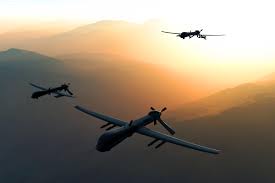
In a significant move to bolster national security and promote "Aatmanirbhar Bharat" (Self-Reliant India), the Indian government is set to place a record order for military drones worth approximately ₹16,000 crore ($2 billion) with domestic manufacturers this year. Industry leaders and defense officials confirm that the procurement process is in an advanced stage, utilizing a dedicated "fast-track" route to ensure the rapid induction of unmanned aerial vehicles (UAVs) into the tri-services.
Fast-Track Procurement for Modern Warfare
The decision to utilize a fast-track acquisition route reflects the urgency of the evolving security landscape. By bypassing traditional, lengthy procurement cycles, the Ministry of Defence aims to address immediate operational gaps along the borders. This procurement covers a wide spectrum of requirements, ranging from surveillance and reconnaissance drones to advanced loitering munitions and AI-enabled combat platforms.
According to industry representatives, the shift to a fast-track process is designed to support domestic startups and MSMEs that have developed battle-proven technologies. The strategy is not merely about volume; it is about building a sovereign technological ecosystem. Winning firms are required to ensure at least 60% indigenous content, encompassing source codes, sensor payloads, and communication hardware, ensuring that India retains full control over the lifecycle and upgrades of these critical assets.
Building a Sovereign Drone Ecosystem
This massive procurement drive is the result of years of policy reform. Since 2021, the government has implemented several measures to catalyze innovation, including:
Production Linked Incentive (PLI) Scheme: Providing financial backing for drone and component manufacturing.
Liberalized Drone Rules: Simplifying compliance and registration through the Digital Sky platform.
Import Bans: Restricting the purchase of foreign drones to encourage domestic research, development, and scaling.
The government's dual-vendor model—which typically splits large contracts between the lowest and second-lowest bidders—is also expected to play a role in this order, fostering healthy competition and ensuring supply chain redundancy.
Why It Matters
For India, these drones are no longer experimental niche technology; they are now the vanguard of robotic warfare. Integrating these indigenous platforms into the Indian Army, Navy, and Air Force allows for superior battlefield awareness and precision strike capabilities in challenging terrains, from the high-altitude regions of Ladakh to the vast Indian Ocean. This procurement will solidify India's position as a burgeoning global hub for unmanned systems, potentially paving the way for future exports.
Key Facts at a Glance
Order Value: Approximately ₹16,000 crore ($2 billion) targeted for this fiscal year.
Procurement Route: Fast-track acquisition to ensure rapid military induction.
Indigenous Mandate: Minimum 60% local content requirement, covering core tech like software and sensors.
Strategic Objective: To transition from drone operation to total technology ownership, reducing dependence on foreign supply chains.
Frequently Asked Questions
Q: Why is the government using a fast-track route for these drones?
A: Fast-tracking is necessary to meet urgent operational requirements and mitigate security risks in a dynamic threat environment where technology rapidly evolves.
Q: What kind of drones are being procured?
A: The order includes a mix of surveillance UAVs, long-endurance tactical drones, loitering munitions (kamikaze drones), and AI-integrated platforms capable of swarm operations.
Q: How does this help Indian startups?
A: This record order provides the consistent demand and multi-year contract visibility that startups need to scale production and move from pilot projects to large-scale industrial manufacturing.
Q: Will foreign companies be involved?
A: While foreign collaborations are permitted for technology transfer, the Ministry of Defence strictly mandates that core intellectual property, such as software source codes and sensor integration, must remain under Indian control.
Source: Ministry of Defence (Procurement and Modernisation Updates), Drone Federation of India, Press Information Bureau (PIB)