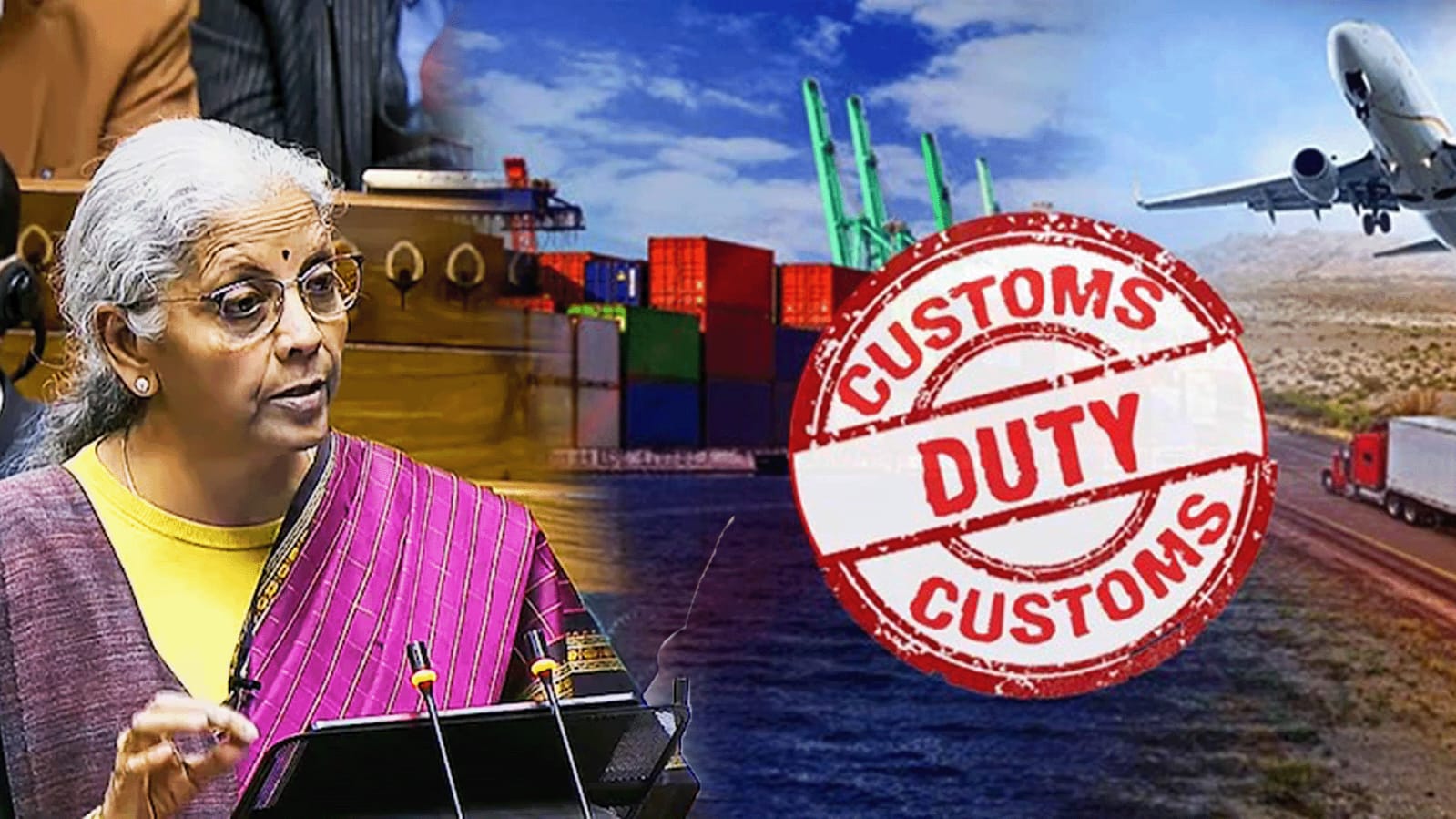
Union Finance Minister Nirmala Sitharaman announced on August 6, 2026, that India aims to rationalise customs tariffs across most items by Budget 2027-28. The initiative targets single-digit duty rates, eliminating duty inversions and lowering input costs to enhance domestic manufacturing and streamline cross-border trade administration.
NEW DELHI — Union Finance Minister Nirmala Sitharaman announced on August 6, 2026, in New Delhi that India plans to rationalise customs tariffs across most product categories by the Union Budget for 2027-28 (FY28). Speaking at a government review meeting on foreign trade and fiscal policy, Sitharaman outlined a comprehensive roadmap aimed at lowering customs duties on a majority of imported items to single-digit rates. The policy shift is designed to simplify India's complex duty structure, lower input costs for domestic manufacturers, improve ease of doing business, and integrate local supply chains more deeply into global trade networks.
Major Overhaul of Duty Slabs Planned by FY28
The announcement marks a strategic pivot toward a predictable and streamlined border tax framework. According to the Ministry of Finance, the government intends to phase out legacy exemption notifications and compress the existing multi-tiered customs duty slabs into a simplified structure.
By fiscal year 2027-28, the majority of dutiable goods will see basic customs duty (BCD) rates reduced to single digits, aligning Indian import taxes more closely with emerging market peers and major trading partners. The planned overhaul builds upon incremental rate compressions initiated in recent union budgets, moving away from high, multi-layered tariffs toward a standardized framework.
Government officials indicated that technical committees within the Department of Revenue and the Central Board of Indirect Taxes and Customs (CBIC) are reviewing thousands of tariff lines under the Harmonized System (HS) code. The review focuses on identifying inverted duty structures—where raw materials or intermediate inputs face higher tariffs than finished goods—and rectifying them to bolster local manufacturing efficiency.
Support for Domestic Manufacturing and Trade Integration
The commitment to rationalise customs tariffs comes as India expands its network of bilateral trade agreements, including recent comprehensive free trade pacts with key global economies. Lowering standard tariff rates narrows the margin between preferential FTA duties and Most Favored Nation (MFN) rates, reducing administrative friction and procedural disputes at ports of entry.
For domestic industries, the systematic effort to rationalise customs tariffs is structured to reduce the cost of imported raw materials, machinery, and specialized technology inputs. Key sectors expected to benefit include electronics assembly, renewable energy equipment, automotive components, chemicals, and pharmaceutical manufacturing. By lowering tax overheads on critical capital goods and raw components, the government aims to increase export competitiveness for Indian goods in global markets.
At the same time, policy experts emphasize that sensitive agrarian products and strategic domestic sectors will retain calibrated protection measures to prevent market distortion from international price volatility.
Official Sources Section
According to official briefings from the Ministry of Finance and disclosures issued via the Press Information Bureau, the tariff rationalization strategy will be executed in phases leading up to the FY28 budget presentation. Tax administrators noted that stakeholder consultations with industry bodies, export promotion councils, and trade associations will commence in late 2026 to evaluate sector-specific impact before final rate adjustments are codified in upcoming finance bills.
Quote Section
According to officials present during the economic review briefing:
"The primary objective of the proposed tariff roadmap is to establish a predictable, transparent, and low-rate customs framework that eliminates inverted duty anomalies and supports sustainable industrial growth through Budget 2027-28."
Why It Matters
The government's goal to rationalise customs tariffs carries practical significance for industrial producers, commercial importers, and retail consumers:
For Businesses and Manufacturers: Lower duty rates on raw components and capital equipment reduce operational expenditure, making Indian goods more competitive globally.
For Retail Consumers: Reduced import duties on finished electronics, consumer goods, and specialized products are expected to lower retail prices over the medium term.
For Foreign Investors: A simplified tariff regime with single-digit rates enhances regulatory predictability, encouraging long-term foreign direct investment (FDI) in manufacturing infrastructure.
For Trade Compliance: Fewer tariff slabs streamline customs clearance procedures, minimizing classification disputes and tax litigation at major ports.
Key Facts at a Glance
Policy Target: Plans announced on August 6, 2026, aim to fully rationalise customs tariffs by the Budget 2027-28 presentation.
Duty Benchmark: Basic customs duties on the majority of imported non-agricultural items will be targeted for single-digit rates.
Core Objective: Eliminate inverted duty structures, reduce input costs for domestic industries, and simplify trade administration.
Implementation Mechanism: Multi-stage consultations led by the Department of Revenue and CBIC ahead of upcoming fiscal cycles.
Frequently Asked Questions
What does it mean to rationalise customs tariffs?
To rationalise customs tariffs means simplifying the import tax structure by reducing the total number of duty slabs, lowering tariff rates, and eliminating tax anomalies where raw materials face higher duties than finished goods.
When will the new single-digit customs duty rates take effect?
The Finance Minister stated that the complete rationalization process across most item categories is targeted for implementation by the Union Budget for fiscal year 2027-28 (FY28).
Which sectors are expected to benefit most from reduced tariffs?
Manufacturing sectors relying on imported machinery, tech components, capital equipment, and chemical raw materials—such as electronics, automotive, and renewable energy—are projected to see significant cost savings.
Source: Ministry of Finance, Press Information Bureau