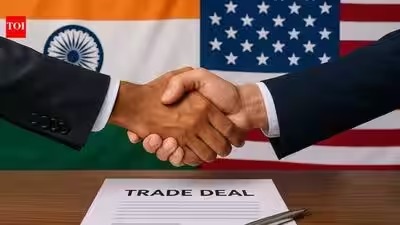
Trade negotiations between India and the U.S. continue as both parties work toward a bilateral trade agreement. While officials report substantial progress, India is holding out for terms that protect its domestic farmers and industries, balancing the strategic importance of the U.S. partnership with the need for sustainable economic outcomes.
Negotiations for a landmark bilateral trade agreement between India and the United States remain ongoing as both nations work to align their economic interests.
NEW DELHI — Trade officials from India and the United States continue to navigate complex discussions regarding a comprehensive Bilateral Trade Agreement (BTA), as New Delhi maintains a cautious approach to ensure the pact delivers balanced benefits for its domestic sectors. Despite high-level meetings and "substantial progress" noted by both sides in recent months, officials have refrained from committing to a specific deadline, signaling that India is prioritizing favorable terms over a rushed settlement.
The ongoing deliberations follow a series of high-level engagements, including a recent visit to New Delhi by U.S. Trade Representative Jamieson Greer. While both Washington and New Delhi remain committed to the framework of an interim trade agreement—a milestone intended to pave the way for a broader BTA—India’s strategic economic position and recent growth projections have provided the country with significant leverage in the current round of talks.
Navigating Trade Complexity
The path toward a finalized India-U.S. trade agreement has been marked by intricate negotiations, particularly concerning market access, tariff structures, and the protection of local industries. Prime Minister Narendra Modi’s administration has consistently emphasized the need to safeguard the interests of Indian farmers and domestic manufacturers. According to officials, these "red lines" remain a core focus of New Delhi’s negotiating strategy.
Discussions have also focused on addressing non-tariff barriers, enhancing digital trade rules, and fostering cooperation in strategic technology sectors. The partnership, which has seen bilateral trade grow to approximately $220 billion, is viewed by both administrations as a critical component of their long-term economic and security alignment. However, finding common ground on agricultural and industrial tariffs remains a primary challenge.
Strategic Economic Outlook
India’s decision to hold out for more favorable terms is supported by a robust economic outlook, with growth forecasts for 2026 holding steady. By diversifying its trade partnerships—having recently finalized agreements with the European Free Trade Association (EFTA) and other regions—India has enhanced its negotiating capacity, allowing the government to focus on securing a deal that aligns with its long-term industrial goals rather than an expedited timeline.
According to officials, the focus remains on "pathways to conclude an interim agreement" that delivers tangible benefits for businesses, workers, and consumers in both countries. While U.S. Ambassador to India Sergio Gor has expressed optimism regarding the finalization of these terms in the coming months, New Delhi’s stance underscores a shift toward a more emboldened negotiating posture.
Why It Matters
A successful bilateral trade agreement between the world’s two largest democracies would significantly reshape supply chains, enhance technology cooperation, and reduce trade barriers in critical sectors such as agriculture, digital services, and advanced manufacturing. For businesses and investors, the conclusion of such an agreement would provide greater certainty, lower operational costs, and unlock new avenues for cross-border investment.
Key Facts at a Glance
Negotiation Status: Talks are ongoing with both sides noting "substantial progress," but no firm deadline has been set for the final signing.
Strategic Goal: The nations are working toward an interim agreement that will serve as a milestone for a broader Bilateral Trade Agreement (BTA).
Core Interests: India is prioritizing the protection of its agricultural sector and local manufacturing, while the U.S. continues to push for increased market access for its exports.
Trade Volume: Bilateral trade between the two nations has reached approximately $220 billion in goods and services.
FAQ
Q: Why hasn’t the India-U.S. trade agreement been signed yet?
A: Both nations are navigating complex issues related to tariffs, market access for agricultural products, and non-tariff barriers, with India seeking to ensure the deal aligns with its domestic economic and farmer-centric interests.
Q: What is the purpose of the "Interim Agreement"?
A: The interim deal is intended as a constructive milestone to address immediate trade concerns and build momentum for a more comprehensive and long-term bilateral trade agreement.
Q: Are there any specific sectors being prioritized?
A: Yes, discussions cover a broad range of sectors, including energy, information and communication technology, advanced manufacturing, digital trade, and agriculture.
Official Sources