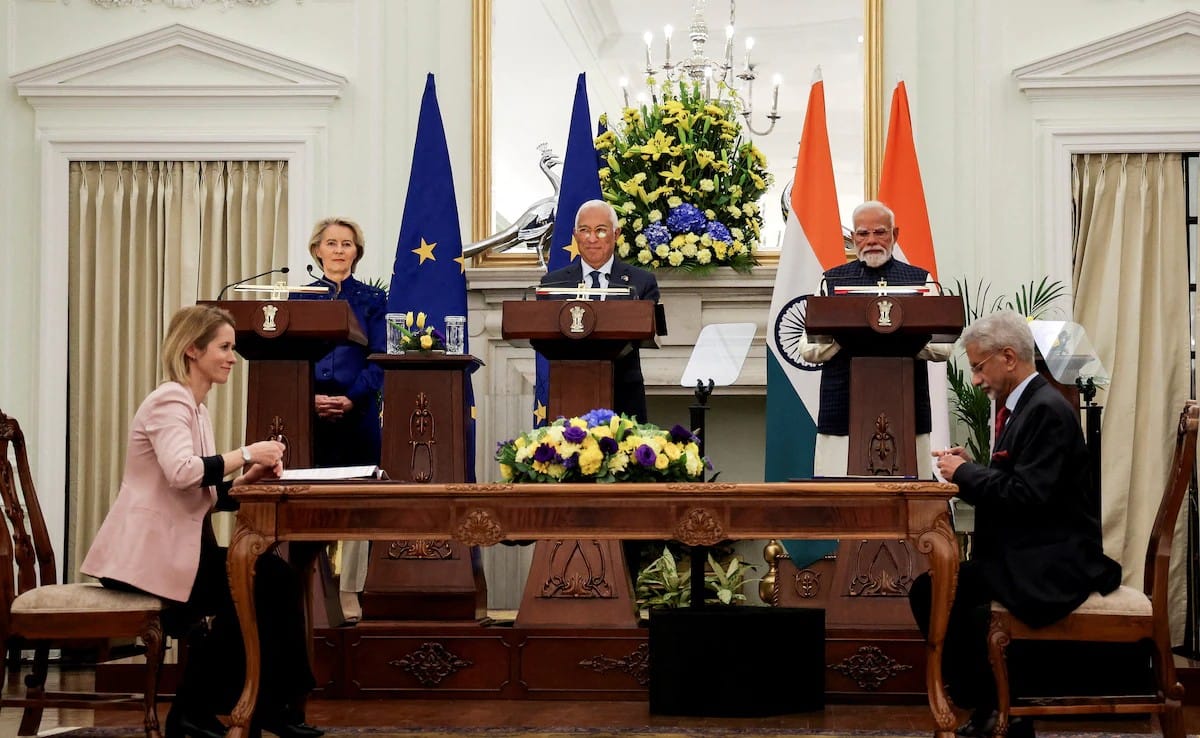
The European Commission has advanced proposals to sign the India-EU Free Trade Agreement, aiming to slash tariffs on 96.6% of EU goods exports. Set for a 2027 rollout, the pact promises billions in duty savings, enhanced market access, and improved professional mobility across two global economic powerhouses.
The European Commission formally submitted its proposals to the European Council for the signing and conclusion of the India-EU Free Trade Agreement (FTA), marking a definitive procedural step toward formalizing the historic pact. Announced initially after negotiations concluded in January 2026, this comprehensive bilateral accord links two economic powerhouses representing a combined market of two billion people and roughly a quarter of global GDP. As the text moves through legal finalization and internal institutional reviews ahead of a projected entry into force in early 2027, policymakers and industry leaders anticipate sweeping structural shifts across manufacturing, consumer goods, and professional services.
Scope of Tariff Liberalization and Market Access
Under the terms of the India-EU Free Trade Agreement, India will systematically eliminate or reduce tariffs on 96.6% of European Union goods exports, creating extensive avenues for European machinery, medical equipment, and chemical manufacturers. Conversely, Indian exporters secure broader, more predictable access to the lucrative single European market across sectors including textiles, refined petroleum products, and engineering goods.
The agreement carefully balances sweeping trade liberalization with protections for sensitive domestic sectors. While industrial tariffs face rapid or phased reductions over periods spanning up to ten years, specific quotas have been instituted for sensitive automotive categories—allowing European motor vehicles into India under restricted volume thresholds. Similarly, high duties on imported European agricultural goods and beverages, such as wines and spirits, are slated for gradual reductions rather than immediate total elimination.
Strategic Timing and Regulatory Fast-Tracking
The acceleration of the India-EU Free Trade Agreement reflects a deliberate strategy by international trade leadership to insulate bilateral commerce against rising global economic fragmentation and geopolitical friction. Utilizing a streamlined fast-track mechanism proposed by European trade authorities, the executive branch aims to bypass traditional bureaucratic bottlenecks to secure final parliamentary consent.
Beyond physical goods, the comprehensive pact establishes binding modern chapters governing digital trade, intellectual property rights, sustainable development, and competition policy. Accompanying frameworks signed alongside the India-EU Free Trade Agreement also feature dedicated mobility and migration pacts, designed to ease legal pathways and visa processes for skilled professionals, technical workers, and students moving between the two regions.
Official Announcements and Institutional Perspectives
According to official announcements from the European Commission and the Council of the European Union, the submitted text represents the culmination of rigorous legal scrubbing following the political conclusion of talks.
Organizers stated that "the submission of these proposals to the Council clears the path for early authorization and signature, ensuring that businesses and citizens can capture the economic dividends of the pact without undue delay." Government ministries in New Delhi reiterated that parallel internal administrative procedures are progressing smoothly to prepare domestic industries for compliance adjustments ahead of the 2027 implementation window.
Practical Implications for Stakeholders
The eventual enactment of the India-EU Free Trade Agreement will reshape financial and operational realities across multiple constituencies:
Consumers: Shoppers can anticipate a wider influx of European specialty foods, beverages, and technology products at more competitive price points, though domestic retail markets will retain baseline safety and regulatory standards.
Businesses: Exporters and importers will benefit from reduced customs friction and simplified administrative compliance, though industrial operators must adapt to stricter digital and environmental reporting standards.
Travelers and Students: Educational exchange and professional mobility will become significantly more streamlined via complementary migration agreements.
Investors: Cross-border capital flows between European institutional funds and Indian tech or infrastructure ventures are projected to stabilize under more transparent, legally protected frameworks.
Key Facts at a Glance
Bilateral Volume: Existing trade in goods and services between India and the EU surpasses 180 billion euros annually.
Tariff Impact: The pact reduces or eliminates tariffs on 96.6% of EU goods exports to India, saving European exporters an estimated 4 billion euros annually in duties.
Timeline: Following European Council authorization and European Parliament consent, the FTA is targeted to enter into force in early 2027.
Scope: Incorporates 24 distinct chapters covering goods, services, digital trade, intellectual property, and investment protection.
Frequently Asked Questions
What is the current status of the India-EU Free Trade Agreement?
The European Commission has formally forwarded its proposals for the signature and conclusion of the FTA to the European Council, initiating the final legislative approval steps.
When will the trade deal officially take effect?
While political negotiations concluded in January 2026, the agreement is expected to formally enter into force in early 2027 following European Parliament consent and Indian internal ratification procedures.
How will consumer wallets be affected by the tariff cuts?
Consumers may see lower prices on imported European machinery-based appliances, select medical goods, and specialized food products or beverages as phased tariff reductions take hold.
Does the agreement cover services and professional mobility?
Yes, the agreement includes extensive provisions on digital trade and services alongside a parallel mobility agreement designed to ease visa frameworks for skilled workers and students.
Source: European Commission, Ministry of Finance, Government of India, Delegation of the European Union to India