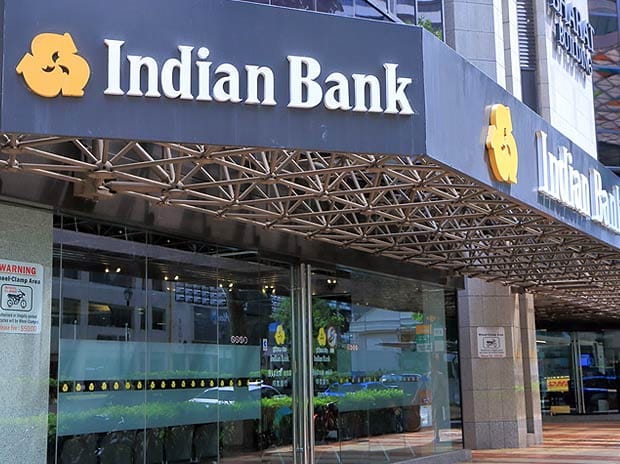
Indian Bank has announced a targeted revision to its Treasury Bills Linked Lending Rates (TBLR) effective July 3, 2026. Short-term rates below three months decrease to 5.30%, while longer tenors up to three years rise to 5.85%. Core metrics like the MCLR, Base Rate, and RBLR remain unchanged.
MUMBAI, INDIA — In a regulatory submission filed on July 2, 2026, state-owned Indian Bank announced a targeted realignment of its interest rate structures following a comprehensive performance review by its internal asset management council. The board’s Asset Liability Management Committee (ALCO) has approved a specific revision to the bank’s Treasury Bills Linked Lending Rates (TBLR) across multiple maturities. Effective July 3, 2026, these updated Indian Bank benchmark rates will impact borrowing costs for various corporate and retail financing products linked directly to sovereign treasury yields, while other foundational lending rates remain completely unchanged.
Targeted Adjustments to Treasury Bills Linked Rates
The latest operational directive focuses explicitly on the TBLR matrix, which prices loans against prevailing government bill auctions. ALCO implemented a minor reduction in the ultra-short-term bracket while raising yields for longer-dated assets. For lending tenors of three months or less, the financial institution cut the benchmark rate by 5 basis points, dropping it from 5.35% to 5.30%.
Conversely, the bank increased the pricing for longer maturities. For tenors stretching beyond six months up to one year, as well as long-term allocations between one and three years, the Indian Bank benchmark rates were raised by 10 basis points, climbing from 5.75% to 5.85%. The medium-term bracket, covering durations greater than three months up to six months, held firm at its existing rate of 5.55%.
Stability Across Core Commercial Lending Benchmarks
Beyond the adjustments made to the TBLR structure, the Chennai-headquartered lender confirmed that its principal lending benchmarks will remain steady at their current operational levels. The Marginal Cost of Funds based Lending Rate (MCLR), which serves as the primary transmission vehicle for legacy floating-rate home and business advances, was left completely untouched across all internal tenors.
According to the compliance tables disseminated to market bourses, the overnight MCLR is fixed at 7.90%, while the highly watched one-year MCLR stays anchored at 8.85%. Additionally, Indian Bank's historical Base Rate and Benchmark Prime Lending Rate (BPLR) remain flat at 9.55% and 13.80%, respectively.
The institutional framework for newer retail loan agreements also remains unchanged. The bank's Policy Repo Rate is maintained at 5.25%, keeping the external Repo Linked Benchmark Lending Rates (RBLR) steady at 7.95%. This split approach allows the entity to selectively manage its treasury spreads without disrupting its core retail loan portfolio.
Impact on Borrowers and Industrial Capital Costs
The strategic modifications to the Indian Bank benchmark rates carry distinct operational implications for domestic corporate treasuries, micro-enterprise borrowers, and general banking consumers. Institutional clients utilizing short-term working capital loans or cash-credit lines tied to short-term TBLRs will see an immediate decrease in financing costs.
However, mid-to-long-term corporate expansions funded via treasury-linked credit instruments will face marginally higher interest expenses due to the 10-basis-point increase in the one-to-three-year maturity band. Because retail home loans and vehicle loans are typically tied to the RBLR or one-year MCLR, standard consumer segments will not experience any immediate volatility in their monthly installment schedules from this revision.
Official Sources Section
The financial adjustments and specific interest tables highlighted in this market brief are compiled from the formal investor relations document issued by Indian Bank to the regulatory desks of the domestic capital markets on July 2, 2026. The official communication was formally authorized, digitally certified, and submitted by Dina Nath Kumar, the Assistant General Manager (AGM) and Company Secretary for the banking corporation.
Quote Section
"According to officials who finalized the pricing review on Thursday, the adjustments reflect a routine calibration of asset-liability mismatches based on changing short-term domestic debt yields. Organizers stated that the operational modifications to the TBLR structures ensure the bank's lending yields stay aligned with changing macro liquidity environments in the sovereign bond market."
Why It Matters
For fixed-income investors and commercial corporate borrowers, slight adjustments to banking benchmarks signal how financial institutions are managing their internal cost of funds relative to market liquidity. By adjusting the TBLR while keeping the broader repo-linked benchmarks steady, Indian Bank can fine-tune its margins on market-sensitive assets without changing pricing for standard consumer accounts. This strategy helps preserve its competitive position in a crowded retail lending market.
Key Facts at a Glance
Short-Term Reduction: TBLR for tenors under three months drops by 5 basis points to 5.30%.
Long-Term Increase: TBLR for tenors between six months and three years rises by 10 basis points to 5.85%.
Core Rates Flat: Foundational lending anchors including the one-year MCLR (8.85%) and the RBLR (7.95%) remain unchanged.
Effective Timing: The revised treasury-linked lending structure officially takes effect on July 3, 2026.
FAQ Section
Q1: How do these changes to the Indian Bank benchmark rates affect home loan borrowers?
A1: Standard retail home loans are generally pegged to the Repo Linked Benchmark Lending Rate (RBLR) or the one-year MCLR. Because both of these indicators remain completely unchanged, existing mortgage holders will see no changes to their loan costs.
Q2: What exactly is the TBLR used for in corporate banking?
A2: The Treasury Bills Linked Lending Rate is an external benchmark that prices institutional credit lines against the yields of short-term government debt securities, offering transparent, market-driven pricing for corporate treasuries.
Q3: When was the last time the bank's Asset Liability Management Committee adjusted these parameters?
A3: The committee conducts periodic structural assessments of asset-liability balances. This specific TBLR adjustment was finalized during their executive assembly on July 2, 2026, to go into effect the following day.
Source: Statutory disclosure filed by Indian Bank with BSE Limited and the National Stock Exchange of India Limited on July 2, 2026. Complete corporate rate structures can be verified directly on the portal of Indian Bank.