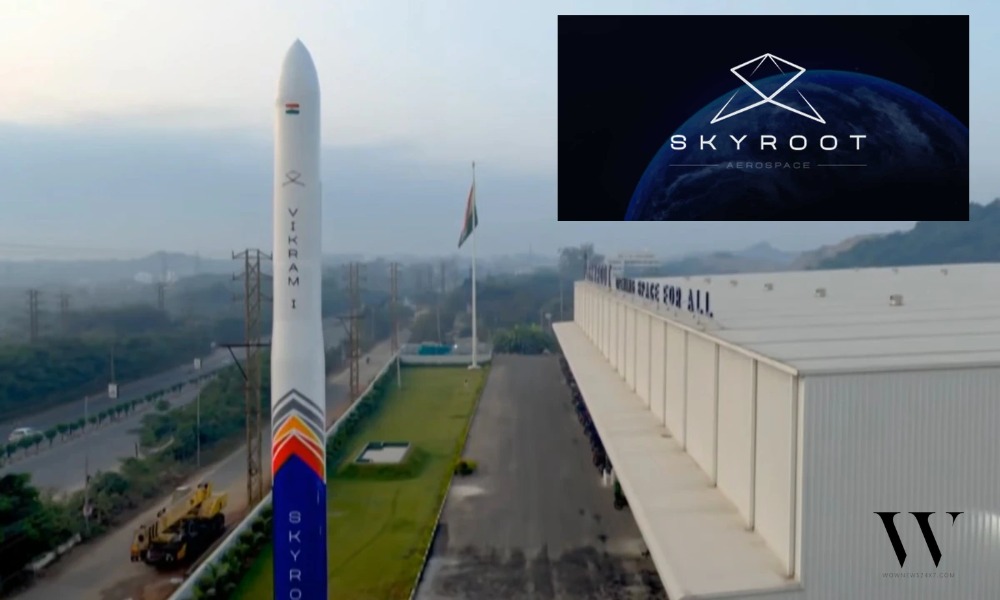
Skyroot Aerospace has set a launch window of July 12 to August 4, 2026, for the maiden orbital flight of its Vikram-1 rocket from Sriharikota. Named "Mission Aagaman," the flight will test the vehicle's propulsion and guidance systems, marking a significant milestone for India's private space industry.
SRIHARIKOTA, India — Hyderabad-based space-tech startup Skyroot Aerospace has officially announced a launch window between July 12 and August 4, 2026, for the maiden test flight of its Vikram-1 rocket. This historic mission, officially titled "Mission Aagaman" (Sanskrit for "the arrival"), will be the first time a privately developed orbital-class rocket launches from Indian soil.
The launch will take place from the First Launch Pad at the Satish Dhawan Space Centre in Sriharikota. The final liftoff date within the established window remains contingent upon the completion of final assembly and testing operations at the site, alongside favorable weather conditions, range safety protocols, and necessary regulatory clearances.
Advancing India’s Commercial Space Capabilities
Mission Aagaman represents a critical step in the evolution of India's "NewSpace" ecosystem. While Skyroot successfully launched the Vikram-S suborbital rocket in November 2022, the upcoming Vikram-1 mission is a full-scale orbital attempt.
The seven-story-tall launch vehicle is engineered to carry small satellites weighing up to 350 kg into Low Earth Orbit (LEO). For this inaugural flight, the rocket is programmed to target an altitude of 450 km with a 60-degree orbital inclination.
"The moment Vikram-1 lifts off, India's private space industry will cross a threshold it has never crossed before," said Pawan Kumar Chandana, co-founder and CEO of Skyroot Aerospace. "The single most important objective of Mission Aagaman is to capture real in-flight performance data from every system on Vikram-1. This data cannot be fully replicated through ground testing."
Technical Design and Objectives
The Vikram-1 rocket features an all-carbon composite structure and is powered by in-house propulsion systems, including 3D-printed engines and high-thrust solid-fuel rocket boosters. According to the company, these technologies are designed to facilitate rapid manufacturing and a high-cadence launch schedule, allowing the startup to provide "on-demand" access to space for small satellite operators globally.
During this developmental flight, engineers will focus on validating critical systems:
Propulsion and stage separation performance.
Guidance, navigation, and control algorithms.
Overall structural integrity during ascent.
Official Sources and Industry Impact
The mission is supported by the Indian Space Research Organisation (ISRO) and the Indian National Space Promotion and Authorisation Centre (IN-SPACe). By leveraging government infrastructure, Skyroot aims to transition from its current developmental phase to a reliable commercial launch service provider.
Naga Bharath Daka, co-founder and COO of Skyroot Aerospace, emphasized the strategic importance of the mission: "With Vikram-1, we take our biggest step yet toward a reliable, high-cadence launch program built in India, for India and the world."
The flight will be partially commercial, carrying a mix of domestic and international customer payloads. The company expects to commence full-scale commercial operations following one or two successful demonstration flights to orbit.
Key Facts at a Glance
Launch Window: July 12 – August 4, 2026.
Vehicle: Vikram-1, India’s first privately developed orbital-class rocket.
Mission Goal: Validate propulsion, guidance, and stage separation systems in orbit.
Payload Capacity: Up to 350 kg to Low Earth Orbit (LEO).
Flight Type: Developmental flight carrying mixed domestic and international payloads.
Frequently Asked Questions (FAQ)
What is the primary goal of Mission Aagaman?
The mission aims to capture real-time, in-flight performance data from all vehicle systems to validate designs for future commercial operations.
Is this the first time Skyroot has launched a rocket?
No, this is the company's second mission. In November 2022, Skyroot launched the Vikram-S, which became India's first privately built suborbital rocket to reach space.
What kind of satellites can Vikram-1 carry?
Vikram-1 is designed for small satellites used in sectors such as communications, navigation, agriculture, disaster management, and national security.
Where can I watch the launch?
Official launch updates and streaming information are typically provided by Skyroot Aerospace via their official X (formerly Twitter) account and YouTube channel.
Source: Skyroot Aerospace, Indian Space Research Organisation (ISRO), IN-SPACe, and Satish Dhawan Space Centre.