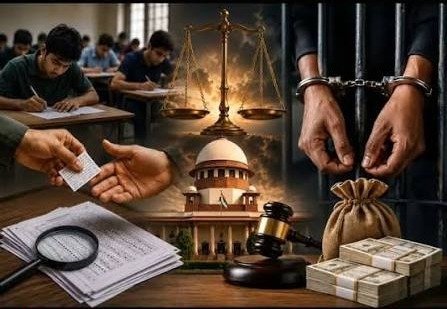
Indian Parliament is set to debate the Public Examinations (Prevention of Unfair Means) Amendment Bill, 2026, following a week-long legislative deadlock. Speaker Om Birla facilitated cross-party consensus to allow discussions on the tougher anti-paper leak legislation, which proposes up to 10 years imprisonment and ₹10 crore fines for organized examination fraud.
NEW DELHI — The Lok Sabha is scheduled to commence a detailed discussion on the Public Examinations (Prevention of Unfair Means) Amendment Bill, 2026, breaking a week-long parliamentary logjam caused by protests over competitive examination paper leaks.
The breakthrough occurred after Lok Sabha Speaker Om Birla held consultations with floor leaders across party lines to resolve the legislative stalemate. Minister of State in the Prime Minister's Office Jitendra Singh introduced the proposed legislation in the House, which significantly enhances legal penalties for cheating, organized paper leak syndicates, and administrative malpractice in public recruitment and entrance tests.
Escalated Penalties and Structural Legal Reforms
The Public Examinations (Prevention of Unfair Means) Amendment Bill, 2026, seeks to strengthen the statutory framework enacted in 2024. The new provisions significantly elevate punitive measures for individuals and organized entities involved in compromising public examination integrity:
Individual Offenders: Maximum imprisonment is raised from five years to ten years, with fines increased up to ₹50 lakh.
Organized Syndicates: Minimum prison sentences for organized examination crime are raised to seven years, accompanied by fines extending up to ₹10 crore.
Special Fast-Track Courts: Enables states and Union Territories to establish dedicated Fast-Track Courts mandated to complete trials within three months of chargesheet submission.
Investigation Deadlines: Sets a strict two-month statutory limit for completing investigations into reported paper leak cases.
Parliamentary Consensus and Political Context
The parliamentary session experienced repeated adjournments since opening on July 20 due to Opposition demands regarding student protests and examination governance.
Treasury floor managers and Opposition leaders reached an understanding to allow eight to ten hours of substantive floor debate on the amendment bill. Parliamentary Affairs Minister Kiren Rijiju emphasized that the legislation addresses the critical interests of millions of competitive examination aspirants across the country.
Official Sources Section
According to official parliamentary bulletins issued by the Lok Sabha Secretariat and public announcements from the Ministry of Personnel, Public Grievances and Pensions, the bill has been formally tabled for consideration and passing. Detailed legislative records and statutory drafts are published on the official gazette portal maintained by the Ministry of Law and Justice.
Official Statement
"According to officials, floor leaders across all major political parties agreed to discuss the Public Examinations (Prevention of Unfair Means) Amendment Bill, 2026, following sustained dialogue initiated by the Speaker to restore regular legislative function."
Why It Matters
Enacting stricter statutory penalties and fast-track prosecution mechanisms provides deterrence against organized paper leak syndicates. For millions of students and job applicants nationwide, the legislative framework seeks to restore institutional credibility and administrative transparency in public service recruitment and university entrance examinations.
Key Facts at a Glance
Legislation: Public Examinations (Prevention of Unfair Means) Amendment Bill, 2026.
Penalty Revisions: Up to 10 years imprisonment and ₹10 crore fine for organized crime.
Judicial Mechanism: Establishment of Fast-Track Courts with three-month trial completion mandates.
Investigation Window: Statutory requirement to conclude inquiries within two months.
Frequently Asked Questions (FAQ)
What is the primary objective of the Anti-Paper Leak Bill 2026?
The bill aims to curb organized examination syndicates, cheating, and administrative paper leaks in public recruitment and competitive entrance tests through stricter legal penalties.
What are the proposed penalties for organized examination fraud?
Organized paper leak operations face a minimum sentence of seven years imprisonment and fines up to ₹10 crore.
How does the bill expedite trials for paper leak offenses?
The legislation provides for Special Fast-Track Courts that must hold daily hearings and conclude trials within three months of chargesheet filing.
Where can official legislative texts be verified?
Official bills, debate transcripts, and parliamentary updates are published on the official portals of the Lok Sabha Secretariat and the Ministry of Law and Justice.
Source: Official parliamentary notices from the Lok Sabha Secretariat, statutory updates from the Ministry of Personnel, Public Grievances and Pensions, and legislative archives from the Ministry of Law and Justice.