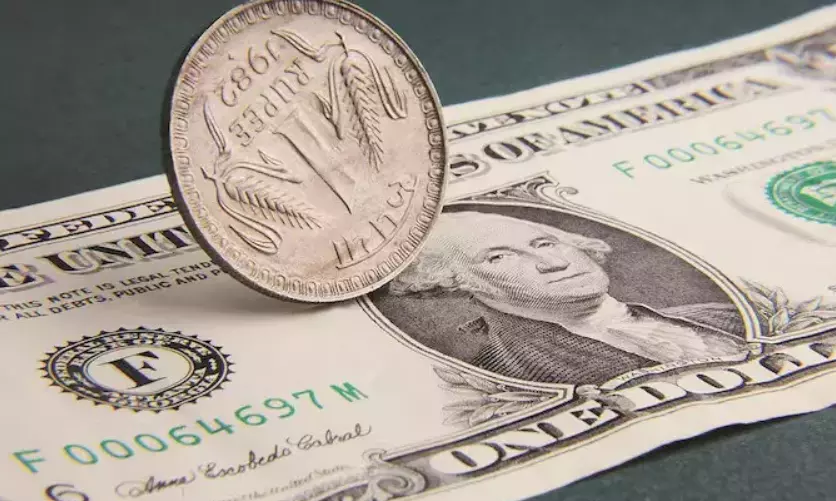
The Indian rupee depreciated by 0.06% to close at 94.73 per US dollar on June 23, 2026. Persistent global strength in the greenback and foreign institutional equity outflows drove the marginal decline, though lower international crude oil prices helped stabilize the local currency and limit steeper losses.
MUMBAI — The Indian rupee weakened slightly against the US dollar today, June 23, 2026, closing at 94.73 in interbank foreign exchange trade. According to exchange tracking desks, the domestic currency registered a single-day decline of 0.06%, shedding roughly 8 paise compared to its previous corporate close of 94.6475.
The marginal depreciation marks a day of steady defensive trading. Early morning pressure initially pushed the local currency down to an opening low of 94.7300 per dollar, before active commercial exporter hedging and routine central bank monitoring helped establish a localized floor.
Persistent Greenback Momentum and FII Liquidations Weigh on INR
Foreign exchange analysts attribute the ongoing pressure on the rupee to a stronger US dollar index, which continues to hover near a 13-month high. Global currency markets are increasingly factoring in hawkish monetary tightening signals from the US Federal Reserve, forcing speculative capital out of emerging market ecosystems.
The domestic downside was further aggravated by localized capital flight on Dalal Street. Data compiled from national stock exchanges showed that Foreign Institutional Investors (FIIs) remained net sellers, liquidating over ₹635 crore in domestic equities during the preceding multi-session cycle. This institutional offloading generated immediate demand for dollars at the spot market desks.
However, a steep multi-day decline in global energy benchmarks acted as an economic cushion, preventing a more severe depreciation. Brent crude oil futures stabilized below $78 per barrel following progress in regional trade negotiations and supply channels through the Strait of Hormuz. Because India relies on international imports for over 80% of its crude oil requirements, lower global energy prices directly reduce the corporate demand for dollars needed to settle large import bills.
Macro Policy Context and RBI Capital Defense Buffers
The current exchange rate levels follow a comprehensive policy package introduced by the Reserve Bank of India (RBI) earlier this month under Governor Sanjay Malhotra. To counter a net outflow of over $13 billion recorded between April and June, the central bank implemented targeted regulatory adjustments to attract foreign capital.
These structural interventions include expanding the Fully Accessible Route (FAR) to grant foreign investors unlimited access to long-term 15-year, 30-year, and 40-year Government Securities (G-Secs). Additionally, the RBI introduced special concessionary forex swap lines and eliminated interest rate caps on non-resident foreign currency deposits until September 30, 2026. Treasury desks note that these measures, paired with the country’s sizable foreign exchange reserves, provide the central bank with sufficient tools to manage excessive volatility.
Official Sources Section
The final daily transaction data, reference pricing fixes, and interbank closing averages were officially validated by daily reporting bulletins managed by the Reserve Bank of India and synchronized across corporate trade tracking sheets at the Financial Benchmarks India Private Limited.
Quote Section
"According to officials and treasury advisors, the rupee's spot market behavior remains well within expected boundaries given the broader strength of the US dollar against Asian currencies. The ongoing decline in global crude prices is helping offset institutional equity outflows, allowing the currency to consolidate."
Why It Matters
A fluctuating exchange rate directly shapes the financial landscape for cross-border businesses, consumers, and travelers. A weaker rupee raises procurement costs for raw material importers and can increase expenses for students funding overseas education. Conversely, export-oriented sectors like information technology and textiles gain a competitive edge, as their dollar-denominated revenues yield higher returns when converted back into the domestic currency.
Key Facts at a Glance
Closing Level: The Indian rupee finished local trading hours down 0.06% at 94.73 per US dollar.
Opening Baseline: The currency opened the session at its daily low of 94.73, down from the previous close of 94.6475.
Countering Factors: Sustained institutional equity outflows were balanced by lower global crude oil prices, which held below $78 per barrel.
Policy Backdrop: The currency remains supported by recent RBI reforms, including expanded foreign access to long-term government bonds and specialized swap lines.
FAQ Section
Q1: What was the exact closing rate of the Indian rupee today? A: The Indian rupee closed at 94.73 against the US dollar as of 3:30 p.m. IST, down from its previous close of 94.6475.
Q2: Why is the Indian rupee facing downward pressure against the US dollar? A: The weakness is primarily driven by broad-based global strength in the US dollar index, rising US Treasury yields, and consistent capital outflows by foreign portfolio investors from Indian equity markets.
Q3: How are lower international crude oil prices helping the rupee? A: Since India imports the vast majority of its crude oil, cheaper global oil prices reduce the country's import expenses. This lowers the volume of rupees sold for dollars, easing downward pressure on the local currency.
Q4: Is the Reserve Bank of India actively targeting a specific exchange rate level? A: No. According to official RBI policy statements, the central bank does not target a specific rate or band. Instead, it allows market forces to determine the value while stepping in to control excessive volatility.
Source: Live interbank currency telemetry and official foreign exchange reference data published by the Reserve Bank of India.