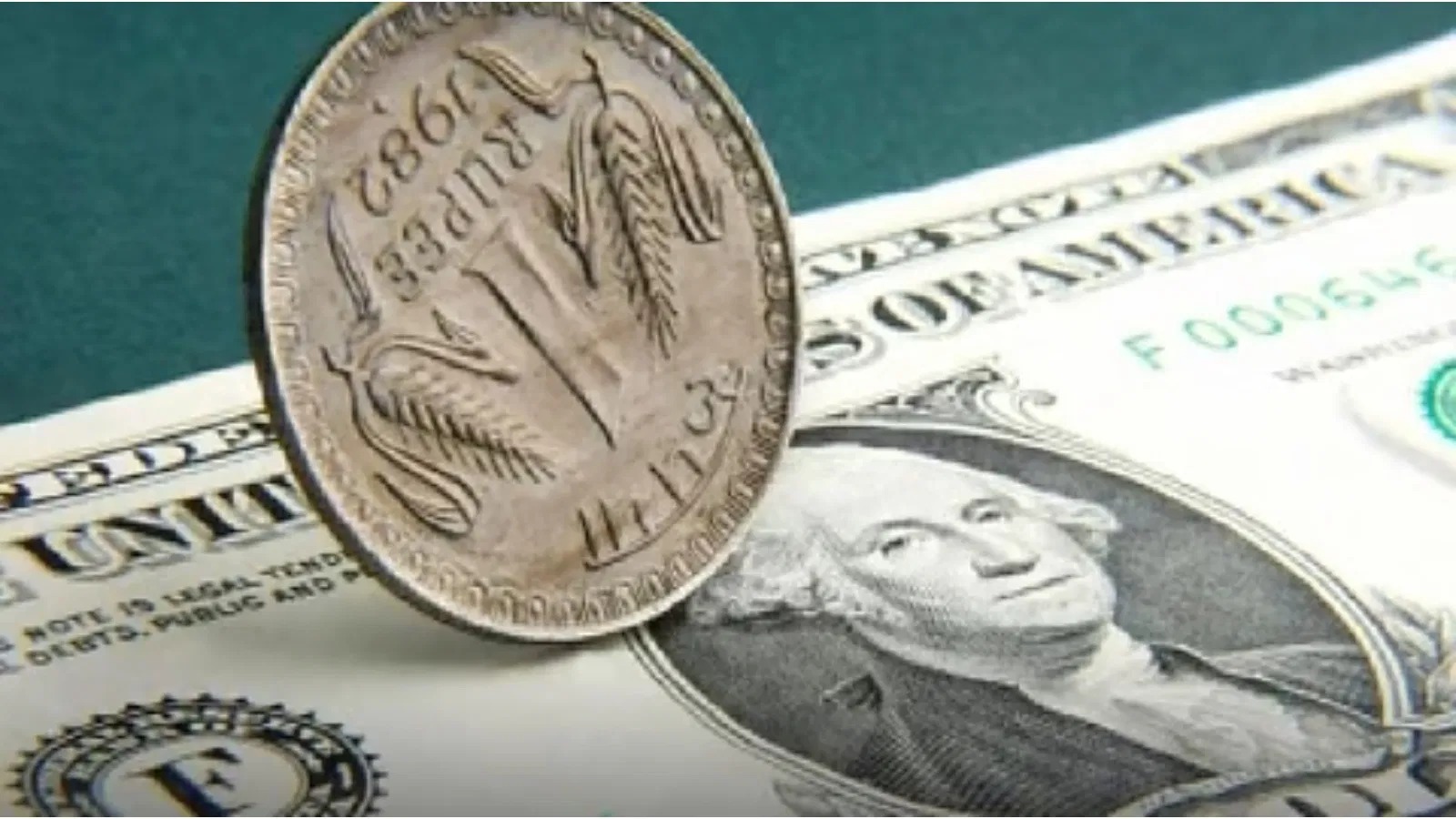
The Indian Rupee closed Wednesday at 94.5350 against the US dollar, maintaining stability amid cooling geopolitical tensions and a subsequent decline in global oil prices. While the currency has benefited from the prospects of a US-Iran peace deal, market participants remain watchful of domestic monsoon delays and inflationary trends.
The Indian Rupee (INR) maintained a stable position in the interbank foreign exchange market on Wednesday, June 17, 2026, closing at 94.5350 against the US dollar. This follows a period of notable volatility and a recent recovery trend driven by shifting dynamics in global energy markets and cooling geopolitical concerns.
The currency's performance remains closely watched by analysts, particularly as the broader market continues to digest the impact of a burgeoning peace framework between the United States and Iran. As of the latest close, the rupee demonstrated marginal movement from the previous session's close of 94.60, indicating a phase of consolidation for the local unit.
Geopolitical Cues and Energy Markets
The recent stabilization of the rupee is largely attributed to the emerging peace deal between Washington and Tehran. The prospect of reopening the Strait of Hormuz—a vital global artery for oil and gas transit—has led to a sharp cooling in crude oil prices, which had previously pressured the Indian Rupee. Brent crude prices have eased toward the $79–$80 per barrel range, providing relief to India, a nation that imports over 85% of its crude oil requirements.
Lower energy costs have historically been supportive of the rupee, as reduced import bills alleviate pressure on the current account deficit and lower the domestic demand for US dollars. Market experts suggest that the currency’s bias has shifted, with strong resistance zones now forming as investors look toward the formalization of the peace deal in Switzerland this Friday.
Market Sentiment and Economic Indicators
Domestic equity markets mirrored the cautious optimism seen in the currency market. The S&P BSE Sensex advanced by 214.65 points, or 0.25%, to settle at 77,023.13, while the Nifty 50 climbed 37.10 points to 24,030.30. Despite the positive index performance, foreign institutional investors (FIIs) remained net sellers, offloading equities worth ₹749.18 crore on Tuesday, according to exchange data.
Caution persists regarding domestic economic factors, specifically the progress of the southwest monsoon. Data released by the India Meteorological Department (IMD) shows a rainfall deficit of 35% as of June 16, with significant shortfalls in central and eastern India. Analysts warn that delays in monsoon rainfall could heighten food inflation concerns, potentially impacting the central bank's future policy trajectory.
Official Perspective on Liquidity
The Reserve Bank of India (RBI) continues to monitor liquidity conditions, employing tools like the Variable Rate Repo (VRR) auction to maintain stability. Financial institutions are navigating an environment where the central bank is focused on aligning the Weighted Average Call Rate (WACR) with the policy repo rate of 5.25%. These interventions are designed to ensure that the Indian Rupee remains insulated from extreme short-term shocks.
Why It Matters
For businesses and travelers, the rupee's current stability at the 94.50 level is a welcome development. Import-reliant sectors, particularly manufacturing and oil refining, benefit from the reduced pressure on foreign exchange reserves, while the broader stabilization provides a more predictable environment for corporate planning. However, investors are advised to monitor the upcoming G7 Summit and monsoon developments, which are expected to provide the next set of directional cues for the Indian Rupee.
Key Facts at a Glance
Closing Rate: The Indian Rupee settled at 94.5350 against the US dollar.
Previous Close: The currency ended the previous session at 94.60.
Crude Influence: Brent crude oil prices have softened, trading near $79.37 per barrel.
Market Sentiment: Domestic markets show modest gains, though FIIs remain net sellers.
FAQ
What is driving the current stabilization of the Indian Rupee?
The rupee is finding support from easing geopolitical tensions between the US and Iran, which has led to lower global oil prices and reduced pressure on India’s import bill.
How does the rupee impact the common citizen?
A stable rupee helps manage the cost of imported goods, such as fuel and electronic components, which in turn helps keep domestic inflation in check.
What should investors watch for in the coming days?
Investors should keep an eye on the outcome of the US-Iran peace deal signing in Switzerland, monsoon progress, and inflationary trends.
Source: The Hindu (Business), ICICI Direct Market News, Reserve Bank of India