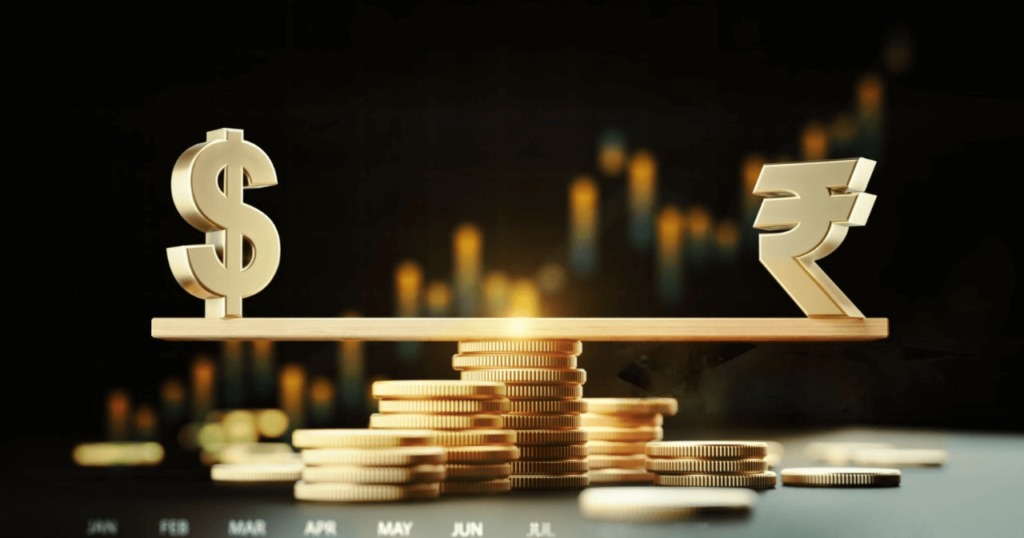
The Indian rupee strengthened by 0.16% on July 28, 2026, opening at 95.76 per U.S. dollar compared to its previous close of 95.91. The appreciation was supported by steady foreign portfolio inflows, moderate global crude oil prices, and dollar sales by foreign banks in early interbank currency trading sessions.
MUMBAI — The Indian rupee opened higher against the U.S. dollar on July 28, 2026, rising 0.16% to trade at 95.76 per dollar.
According to interbank foreign exchange market data, the local currency gained 15 paise from its previous daily close of 95.91 per dollar. Currency desk dealers attributed the morning gain to soft overnight U.S. dollar index movements, steady foreign portfolio investor (FPI) inflows into domestic equity and bond markets, and routine dollar supply from exporter conversions and custodian banks.
Interbank Forex Dynamics and Market Catalysts
The rupee's positive opening reflects broader stability across Asian emerging market currencies in early trading sessions.
Forex traders noted that Brent crude futures hovering in a manageable trading range provided immediate cost relief for India's import bill. Furthermore, steady participation by offshore funds in domestic primary capital markets provided underlying liquidity support. Importers and commercial banks were observed covering short-term dollar requirements, keeping interbank trading within a narrow morning band.
Central Bank Oversight and Macroeconomic Context
The Reserve Bank of India (RBI) monitors spot foreign exchange markets to smooth excessive exchange rate volatility and ensure orderly liquidity conditions without targeting specific currency price levels.
For corporate treasuries, import-export businesses, and cross-border investors, the 95.76 opening level aligns with ongoing macroeconomic adjustments. Market participants continue to track foreign capital flows, US Federal Reserve interest rate policy indications, and domestic trade deficit metrics for directional cues across foreign exchange desks.
Official Sources Section
According to official daily exchange rate disclosures published by the Reserve Bank of India (RBI) and market trading updates via the Foreign Exchange Dealers' Association of India (FEDAI), spot rate movements are logged across interbank trading networks. Public finance and economic indicators are maintained by the Ministry of Finance.
Official Statement
"According to officials, domestic foreign exchange markets continue to trade in an orderly manner, reflecting underlying macroeconomic balances, balanced capital inflows, and adequate central bank foreign exchange reserves."
Why It Matters
A stronger domestic currency helps reduce landed import costs for raw materials, crude oil, and industrial machinery, easing input cost inflation for manufacturing enterprises. For investors and market participants, short-term currency stability reduces hedging overheads and supports institutional portfolio allocation across Indian capital markets.
Key Facts at a Glance
Opening Exchange Rate: 95.76 per U.S. dollar on July 28, 2026.
Previous Closing Rate: 95.91 per U.S. dollar.
Morning Performance: Appreciated by 0.16% (15 paise).
Primary Drivers: Moderate global crude oil prices, soft U.S. dollar index, and institutional inflows.
Frequently Asked Questions (FAQ)
What was the opening rate for the Indian rupee against the U.S. dollar today?
The Indian rupee opened at 95.76 per U.S. dollar on July 28, 2026, marking a 0.16% gain from its previous close.
What factors influenced the rupee's gain in morning trade?
The currency's appreciation was supported by a weaker dollar index, stable international crude oil prices, and foreign portfolio inflows into Indian financial markets.
Who regulates foreign exchange operations in India?
The Reserve Bank of India (RBI) oversees foreign exchange market operations and monetary policy under statutory provisions of the Foreign Exchange Management Act (FEMA).
Where can investors verify official daily exchange reference rates?
Official daily foreign exchange reference rates are published on the portal of the Reserve Bank of India (RBI) and verified on the Financial Benchmarks India Private Limited (FBIL) platform.
Source: Official daily foreign exchange data from the Reserve Bank of India (RBI), trade updates from the Foreign Exchange Dealers' Association of India (FEDAI), market dispatches from the National Stock Exchange of India (NSE), and macro updates from the Ministry of Finance.