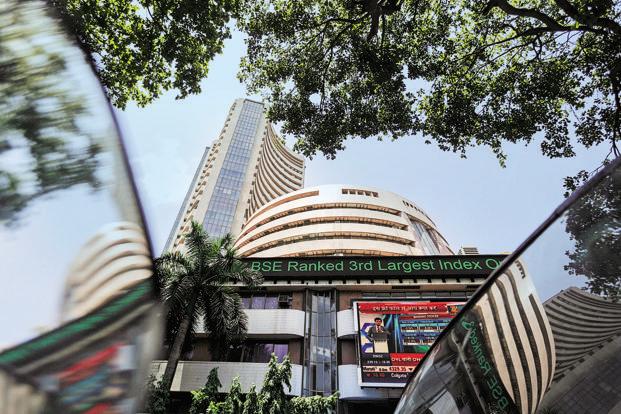
India's BSE Sensex ended 0.06 percent higher while the Nifty 50 Index settled 0.05 percent up on August 10, 2026. The range-bound trading session reflected market consolidation as investors balanced steady Q1 corporate earnings and positive Asian market cues against elevated crude oil prices and global inflation dynamics.
MUMBAI — India’s benchmark equity indices, the BSE Sensex and the Nifty 50 Index, ended marginally higher on Monday following a narrow, range-bound trading session. On August 10, 2026, the S&P BSE Sensex settled up 0.06 percent, while the NSE Nifty 50 Index closed 0.05 percent higher. The subtle gains reflect investor caution on Dalal Street as market participants weigh ongoing corporate Q1 FY27 earnings disclosures, international commodity price movements, and persistent foreign institutional portfolio flows.
Market Performance and Index Movements
According to official trading data published by stock exchange operators, the 30-share S&P BSE Sensex edged up by approximately 40 to 50 points to end near 78,550. Concurrently, the broader 50-share NSE Nifty 50 Index added roughly 12 points to settle near the 24,580 level. Both frontline benchmarks fluctuated within tight boundaries throughout the session, reflecting a consolidation phase following recent volatility.
Sectoral performance across the National Stock Exchange presented a mixed picture. Sectoral indices tracking real estate, consumer durables, and technology equities logged moderate buying interest, while state-owned banking stocks faced selective profit-booking. Mid-cap and small-cap indices exhibited resilient undertones, outperforming the frontline indices as broader market breadth remained balanced across advance-decline ratios.
Key Market Drivers and Global Cues
Market commentators attributed the steady close to a interplay of domestic financial disclosures and international market signals. Globally, Asian stock bourses traded with a mild positive bias, taking direction from gains recorded on Wall Street late last week. However, global crude oil benchmarks remained elevated, with Brent crude trading near $84 per barrel, maintaining a level of underlying caution among domestic market participants due to India's reliance on energy imports.
Domestically, the ongoing quarterly earnings season provided targeted support to individual equities. Institutional activity updates indicated stabilized foreign institutional investor (FII) participation alongside sustained domestic institutional investor (DII) inflows, preventing sharper downside slides despite lingering macroeconomic uncertainties.
Impact on Investors and Business Sentiment
The range-bound close of India's BSE Sensex underscores a period of tactical positioning for domestic and institutional market participants. For retail investors, the steady indices signal lower immediate volatility, providing an opportunity to evaluate underlying fundamental performance across mid-cap and sector-specific opportunities.
For commercial enterprises and corporate borrowers, market stability maintains favorable conditions for primary equity offerings and capital-raising initiatives. Market analysts note that as long as benchmark support levels hold firm, market depth across industrial, banking, and technology sectors will remain healthy.
Official Sources Section
Market metrics, index closing levels, and sectoral performance figures reported in this article are derived directly from official end-of-day market summaries released by leading financial market infrastructure operators. Official trading statistics and order-book data were published on August 10, 2026, by the National Stock Exchange of India Limited (NSE) and BSE Limited.
Quote Section
"According to officials and market dispatches from stock exchange trading desks, benchmark indices maintained a range-bound structure throughout the session on August 10, 2026, supported by selective buying in core sectors while participants monitored global commodity movements."
Why It Matters
The mild uptick in India's BSE Sensex highlights fundamental resilience across Indian capital markets amidst global monetary policy shifts and fluctuating commodity costs. Stable equity valuations sustain wealth creation across domestic mutual funds and retail portfolios, reinforcing broader financial stability and capital deployment across key commercial sectors.
Key Facts at a Glance
BSE Sensex Closing: Ended 0.06 percent higher on August 10, 2026.
NSE Nifty 50 Closing: Settled 0.05 percent higher, maintaining levels near 24,580.
Top Outperforming Sectors: Realty, Consumer Durables, and Information Technology.
Primary Market Drivers: Corporate Q1 FY27 earnings results and firm Asian market cues.
Macroeconomic Factors: Stable foreign portfolio flows offset by elevated international crude oil prices.
FAQ Section
What were the closing percentage gains for India's primary stock indices?
On August 10, 2026, India's BSE Sensex closed 0.06 percent higher, while the Nifty 50 Index settled 0.05 percent higher.
Which sectors led the gains during the trading session?
Real estate, consumer durables, and IT equities recorded positive momentum, whereas public sector banking stocks experienced mild profit-booking.
What global factors influenced the Indian equity markets today?
Indian equities tracked positive Asian market trends and Wall Street cues, though upside was capped by elevated global crude oil prices.
Where can market participants verify official exchange closing prices?
Investors can verify official daily market reports directly through the platforms of the National Stock Exchange of India Limited (NSE) and BSE Limited.
Source: National Stock Exchange of India, BSE Limited, Investing.com India Markets.